The season is also the reason to plan early rather than late. December into January is the busiest window of the Cape Town year, when the city fills with both international visitors and South Africans on their own summer holiday. The houses worth having in Camps Bay, Clifton and Constantia are committed months ahead, and the good weeks go first. If you are reading this in spring with December in mind, you are early enough.
If you are reading it in November, you are choosing from what is left. The homes in this collection sit in four neighbourhoods that behave differently from each other: Camps Bay and Clifton on the Atlantic side for sea, sunset and walking distance to the beach; Constantia and Bishopscourt on the mountain side for gardens, space, and quiet. They range from a three-bedroom house with direct access to Clifton Second Beach to an eight-bedroom estate in Bishopscourt with a tennis court and a cinema. What follows is how to choose between them, and how to place your week inside the season.
When to go inside the season
The Cape Town summer is a Southern Hemisphere summer, so it runs opposite to Europe and North America. December, January and February are the heart of it, with January and February the driest and most settled months. March is a quieter extension that many people who know the city prefer, because the weather often holds while the crowds thin and the restaurants become possible to book again at short notice.
Inside the season there are really two different trips. The fortnight from roughly mid December to mid January is the peak: the city is full, the beaches are busy, the best restaurants are booked out weeks ahead, and traffic on the Atlantic Seaboard road is real. That window suits groups who want the city at its loudest and most social, and it is the window to commit to earliest. Late January and February are the other trip: the same weather, most of the same light, and a city that has gone back to work. For a family who wants the beaches and the mountain without the queue, that is the better fortnight and it is easier to book.
One local feature is worth planning around rather than being surprised by. Cape Town summers carry a persistent south-easterly wind, known locally as the Cape Doctor, which can blow hard for days at a time. It is what keeps the air clear and it is also what can make an exposed terrace unusable on a given afternoon. Houses vary enormously in how sheltered they are, and it is a question worth asking us about the specific property rather than the city in general. Some of our homes have both a sheltered courtyard and an open sea-facing terrace for exactly this reason.
Atlantic Seaboard or the mountain side
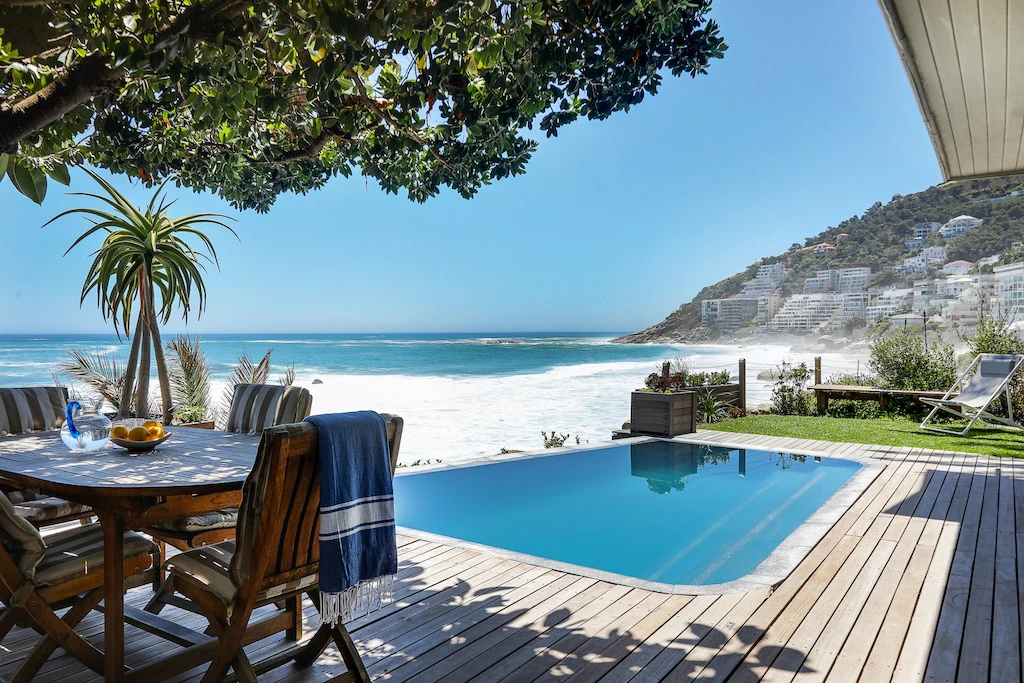
Camps Bay and Clifton sit on the Atlantic side, below the Twelve Apostles, facing west. That west-facing position is the whole argument for them: the sun sets into the sea in front of the house, and in midsummer that happens late enough that a long dinner outside is the normal shape of the evening. Camps Bay has the strip of restaurants and bars along the beachfront and a walkable beach. Clifton is a set of four sheltered coves reached by stairs, quieter and more private, and the water there is genuinely cold, which surprises people every year. Our Clifton house has direct access to Second Beach, which removes the parking problem that defines Clifton in January.
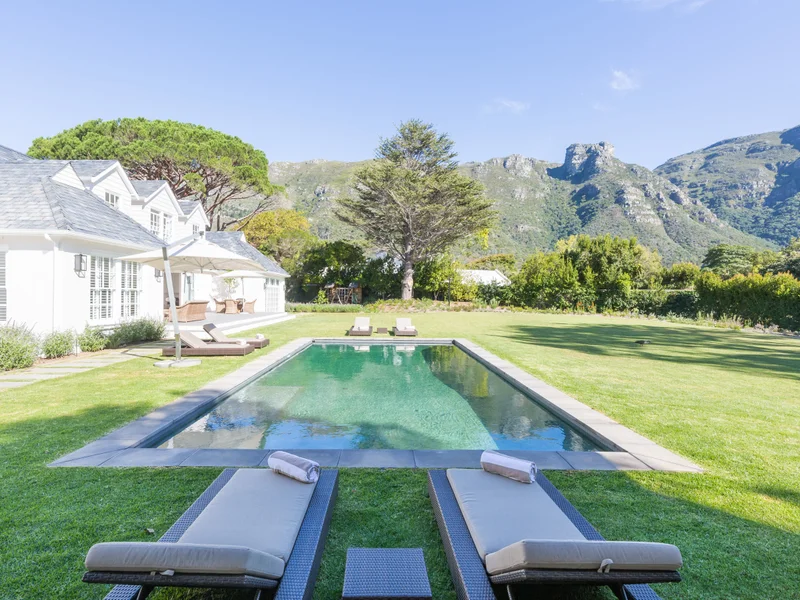
Constantia and Bishopscourt are the other Cape Town. They sit on the eastern slopes behind the mountain, in old gardens, near Kirstenbosch and the wine estates of the Constantia valley. There is no sea view and no sunset over water. What there is instead is space: bigger plots, mature trees, lawns that children can actually run on, and a quiet at night that the Atlantic Seaboard does not have in December. Families with young children and groups travelling with grandparents very often end up here once they understand the trade.
The honest way to choose is by how you intend to spend the day. If the group wants to walk to a beach and eat out most nights, take the Atlantic side and accept the traffic and the wind. If the group wants a base with a garden, a pool nobody is queuing for, and easy access to the wine estates and Kirstenbosch, take the mountain side and accept a fifteen to twenty minute drive to the sea. Neither is the better house. They are different weeks.
How a Cape Town summer week actually runs
We suggest seven nights as the floor and ten to fourteen if the flights are long, which for most of our guests they are. Cape Town rewards a slow week. The single most common mistake is treating it as a three-night city stop, then losing one of those days to wind or cloud on the mountain and leaving having seen very little.
The fixed points most groups build around are Table Mountain, best done early on a clear still morning before the cloud settles and before the queue for the cableway builds; Kirstenbosch, which is a short drive from Constantia and Bishopscourt and easy to combine with a slow lunch; the Cape Peninsula drive down to Cape Point through Chapman's Peak; and a day in the Constantia or Stellenbosch winelands. Our concierge books the restaurants, which in peak season is the part guests most underestimate, and arranges a driver for the wine days so nobody has to make the obvious calculation about driving afterwards.
The rest of the week is why you took a house. On the properties with a house manager and housekeeper, the practical parts of the day stop being anyone's problem. Breakfast happens at the house, the pool is there in the afternoon when the wind comes up, and dinner can be at the long table rather than at a restaurant you had to book in October. For groups travelling with children, that combination is the entire reason a villa beats a hotel in this city.
Choosing the right house for the group
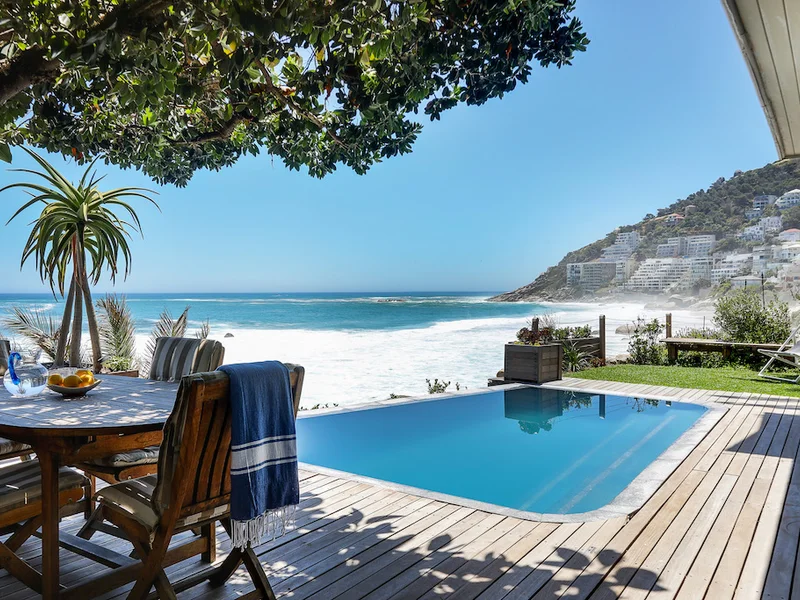
For a couple or a small family, Clifton Sommerhus is the most specific house we have in Cape Town. Three bedrooms, two of them en suite plus a bunk room, an infinity pool, a sunset-facing position, twenty-four hour security, and direct access to Clifton Second Beach. The bunk room makes it work for a family of four to six, and the beach access is the thing that cannot be bought later.
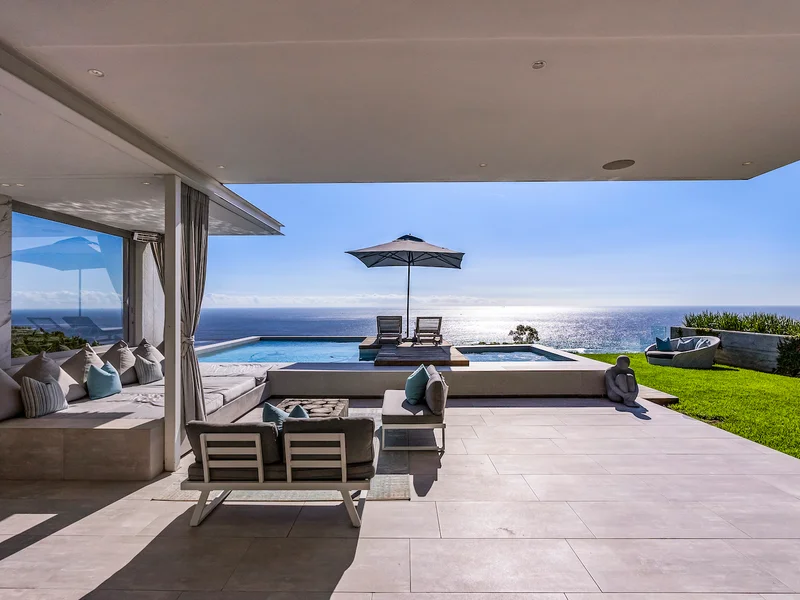
For a family of eight, Ocean Breeze in Camps Bay is four en-suite bedrooms across four living levels, with a rim-flow pool, sea and mountain views, a gym, a sauna, a wine cellar and a walk down to Camps Bay beach. The fourth bedroom is a self-contained flatlet, which suits a nanny, a pair of grandparents, or older teenagers who want their own door. Chas Booth, also in Camps Bay, is the step up: five en-suite bedrooms, a pool and a jacuzzi, three hundred and sixty degree views, two gardens, and both a house manager and a housekeeper on the property.
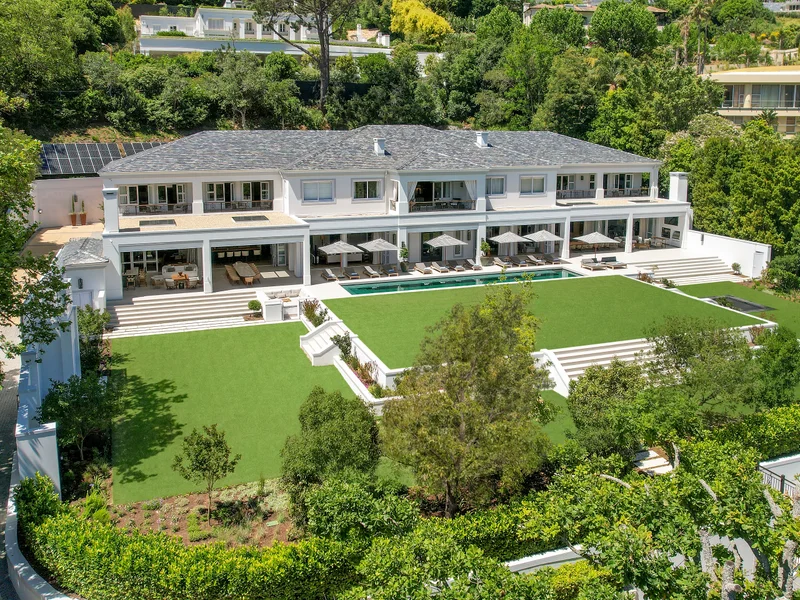
For larger groups, the mountain side carries them better. Skydance in Constantia has six bedrooms, four en suite plus two twin rooms sharing a bathroom, a pool, a pool room, a gym, a study, a garden, and it is listed as child-friendly, which is the configuration multigenerational families keep asking for. Villa Norwich in Bishopscourt is the largest we have in the city: eight bedrooms, nine bathrooms, a heated pool, a tennis court, a home cinema, a billiards room, a gym and a bar, on a large garden under the mountain. It is the house for a milestone birthday or a family reunion where the point is that everyone stays under one roof.
Where we would place you
Clifton Sommerhus
Three bedrooms in Clifton with direct access to Second Beach, an infinity pool and a sunset-facing position. Two en-suite bedrooms plus a bunk room, with twenty-four hour security and housekeeping. The beach access is what makes it worth booking early.
3 BR | sleeps 6 | From $1,629 per night
Clifton, South Africa
Ocean Breeze
Four en-suite bedrooms over four living levels in Camps Bay, with a rim-flow pool, sea and mountain views, gym, sauna and wine cellar. The fourth bedroom is a self-contained flatlet, which suits a nanny or grandparents.
4 BR | sleeps 8 | From $4,074 per night
Camps Bay, South Africa
Chas Booth
Five en-suite bedrooms in Camps Bay with a pool, a jacuzzi, three hundred and sixty degree views and two gardens. A house manager and a housekeeper are on the property, which matters on a fourteen-night summer stay.
5 BR | sleeps 10 | From $4,074 per night
Camps Bay, South Africa
Skydance Villa
Six bedrooms in Constantia near Kirstenbosch, with a pool, pool room, gym, study and garden. Listed child-friendly, with four en-suite bedrooms plus two twin rooms, which is the usual multigenerational configuration.
6 BR | sleeps 12 | From $3,259 per night
Constantia, South Africa
Villa Norwich
Eight bedrooms and nine bathrooms in Bishopscourt, with a heated pool, tennis court, home cinema, billiards room, gym and bar on a large garden. The largest home in our Cape Town collection and the one for a reunion.
8 BR | sleeps 16 | From $5,704 per night
Bishopscourt, South Africa
Frequently asked
When is summer in Cape Town?
Cape Town is in the Southern Hemisphere, so its summer runs opposite to Europe and North America. The season covers December through February, with January and February usually the driest and most settled months. March is a quieter extension that often holds good weather with far fewer people.
When should I book a Cape Town villa for December or January?
As far ahead as you can. Mid December to mid January is the busiest window of the Cape Town year, and the best houses in Camps Bay, Clifton, Constantia and Bishopscourt are committed months in advance. Booking in spring for the following December is normal. Booking in November means choosing from what is left.
Camps Bay or Constantia, which should I choose?
Camps Bay and Clifton are the Atlantic side: west-facing, sunset over the sea, walkable beaches, restaurants nearby, and more traffic and wind. Constantia and Bishopscourt are the mountain side: bigger gardens, more space, quiet at night, near Kirstenbosch and the wine estates, and a fifteen to twenty minute drive to the sea. Groups who want to eat out most nights take the Atlantic side. Families with young children and multigenerational groups usually end up on the mountain side.
What is the Cape Doctor and will it ruin my trip?
It is the persistent south-easterly wind that blows across Cape Town in summer. It keeps the air clear and it can also blow hard for several days, which can make an exposed terrace unusable on a given afternoon. It will not ruin a trip, but it is worth asking us how sheltered a specific house is rather than assuming. Some of our homes have both a sheltered courtyard and an open sea-facing terrace.
How long should we stay?
Seven nights is the floor and ten to fourteen is better, particularly if you are flying long haul. Cape Town punishes a short stay: lose one morning to cloud on Table Mountain out of three and you have lost a third of the trip. A longer stay lets you take the mountain on the clear still morning rather than the morning you happened to book.
Can we see whales from these houses in summer?
Not reliably, and we would rather say so. The Western Cape whale season is winter and spring, roughly June through November, and it is centred on Hermanus and Walker Bay rather than the Atlantic Seaboard. If whales are the point of the trip, come in the second half of the year instead. Summer is for the beaches, the mountain and the winelands.
Do the villas have staff?
It varies by house and we list it per property rather than promising it across the collection. Chas Booth carries a house manager and a housekeeper. Clifton Sommerhus carries housekeeping and twenty-four hour security. Every home in the collection has concierge service. Where you want a chef or a driver for the week, we arrange it and tell you what it costs before you commit.
Is a villa better than a hotel for a group in Cape Town?
For six or more on a stay of a week or longer, usually yes, and for two people on a short trip usually not. The case for the house in this city is specific: outdoor space you are not sharing, a pool for the windy afternoons, and a table everyone eats at. In peak season it also means you are not trying to book a restaurant for ten every night in the busiest fortnight of the year.
What is worth doing beyond the beaches?
Table Mountain early on a clear still morning, Kirstenbosch, the peninsula drive through Chapman's Peak to Cape Point, and a day in the Constantia or Stellenbosch winelands. Our concierge books the restaurants, which is the part most guests underestimate in December, and arranges a driver for the wine days.