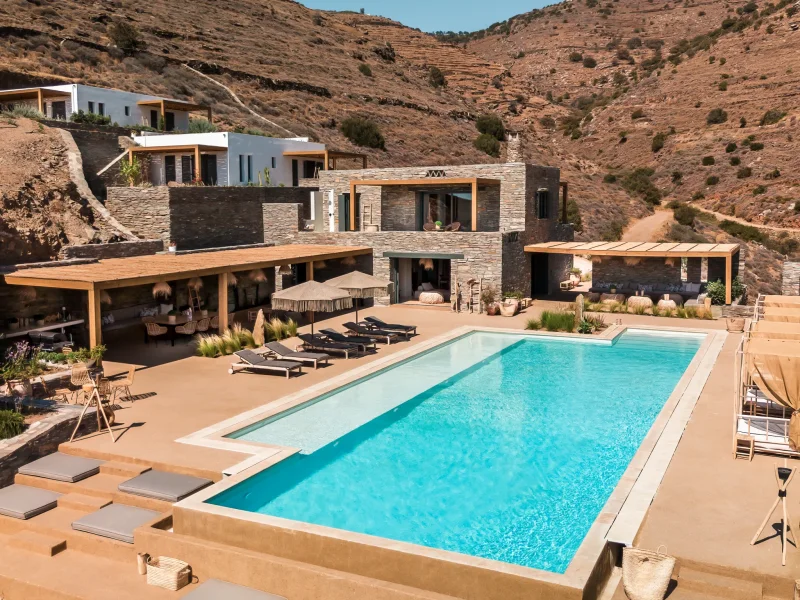
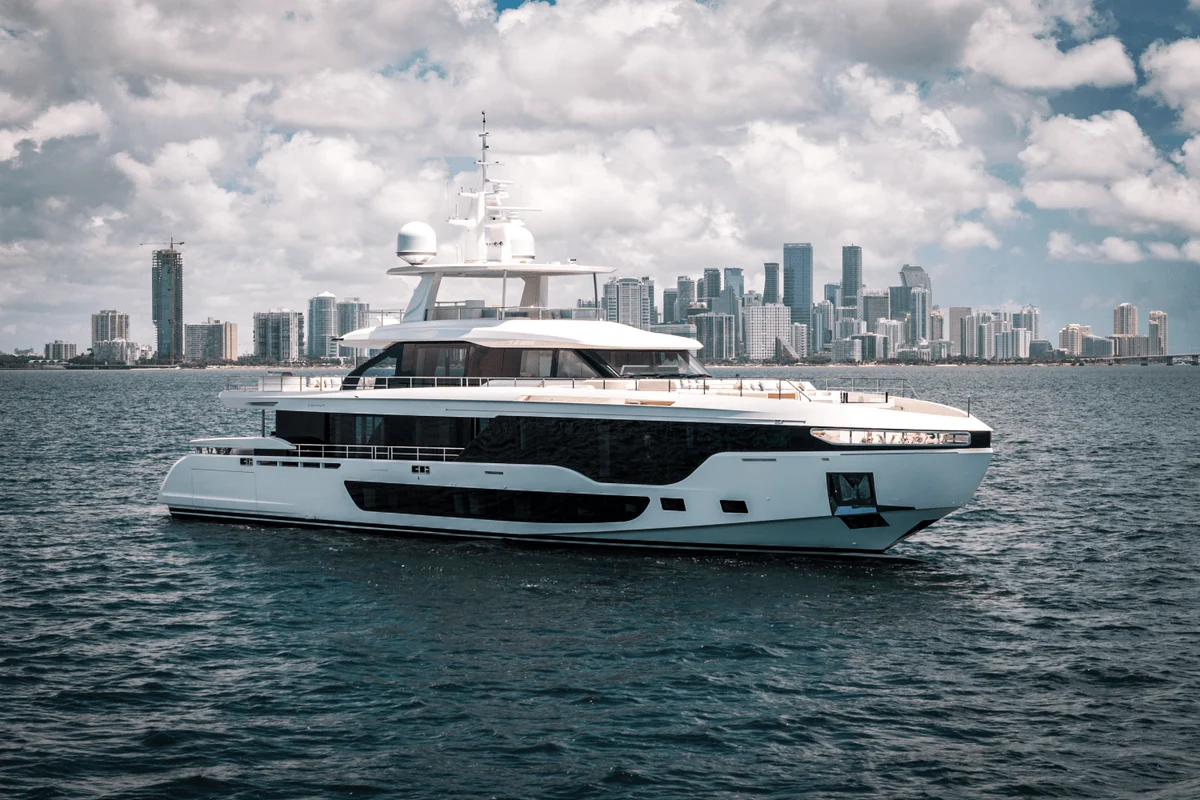
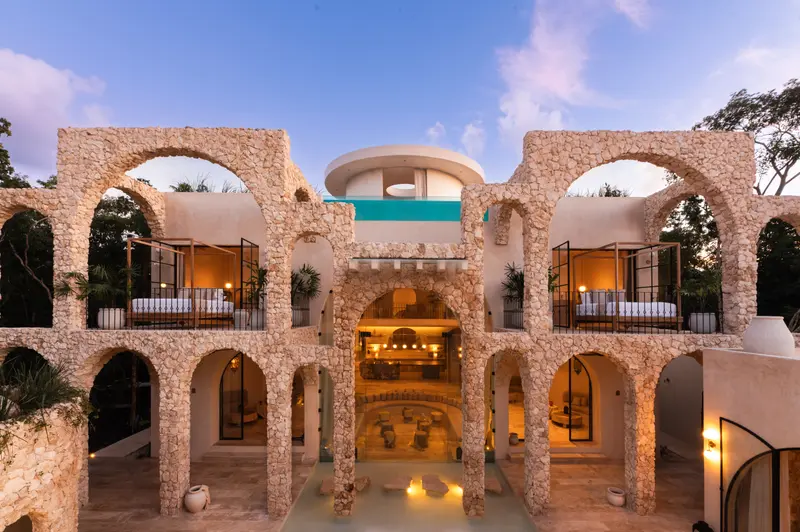
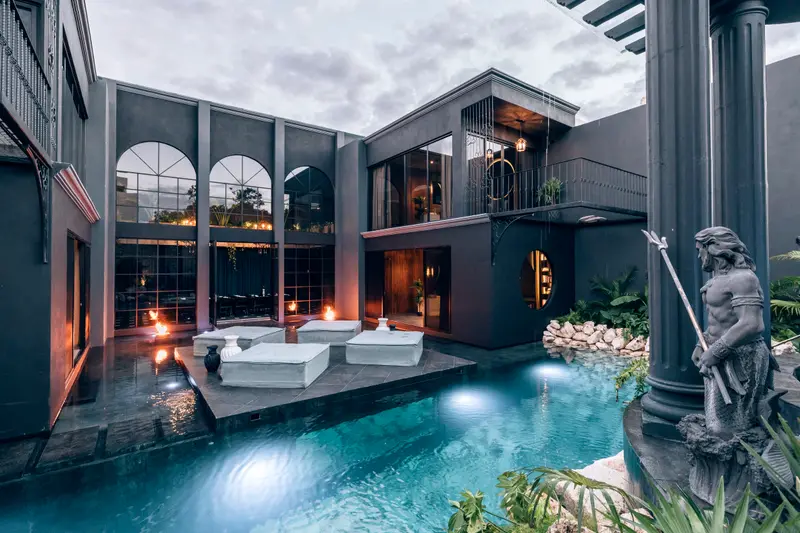
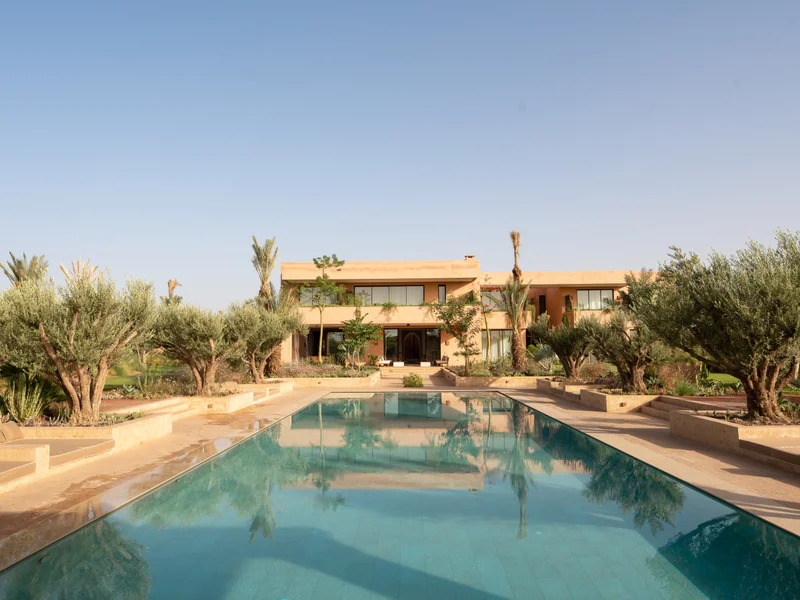
The operator guide to Cabo San Lucas and Los Cabos luxury villa rentals. Pedregal, Palmilla, Diamante, San José, whale season timing, hurricane cutoff, and the houses we actually book direct.
Discover Luxury
Curated collection of exclusive villas, yachts, and premium transport
Where the Pacific meets the Sea of Cortez, the whales winter offshore, and the private cliffside villa outperforms the resort every time.
Cabo San Lucas is the destination the American traveler already understands and still books wrong. Two hours by air from Los Angeles, three from Dallas, four from Chicago, direct nonstops from more than twenty US cities into Los Cabos International (SJD), and yet most first-time visitors default to the resort corridor without ever realizing that the villa here is a genuinely different category of stay, not a marginal upgrade. The geography is the reason. The Baja California Sur peninsula ends at Land's End, the arch called El Arco where the Pacific Ocean and the Sea of Cortez physically meet. That collision creates two coastlines, two water temperatures, two swell patterns, and two microclimates inside a 33-kilometer stretch of highway. The corridor road (Mexico Federal Highway 1) runs from Cabo San Lucas at the tip to San José del Cabo at the airport end, and every luxury address in Los Cabos sits somewhere along that ribbon. Pedregal on the Pacific cliffs. Palmilla in the middle. Puerto Los Cabos and San José at the eastern end. Diamante on the Pacific dunes. The right villa is not the one with the best photos. It is the one on the right side of the peninsula for what you actually came to do. The villa outperforms the hotel here for reasons the hotel brochures never explain.
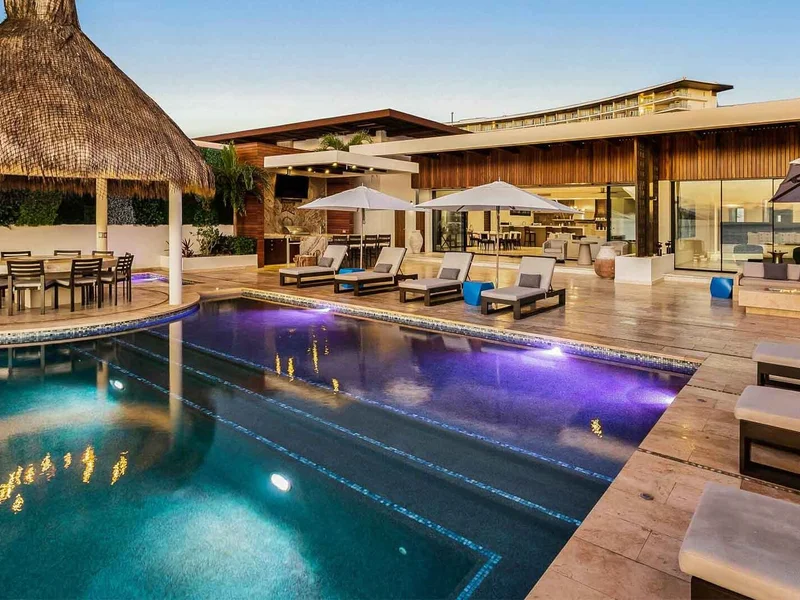
Cabo built its resort economy around the corridor timeshare model, and the five-star hotel stock is heavily concentrated in the middle third of that road. Rooms trade at 900 to 1,800 US dollars a night in peak weeks, staff-to-guest ratios sit at the hotel norm of one-to-four or worse, and the ocean view is shared with three hundred other rooms. A comparable clifftop villa in Pedregal delivers a private pool cantilevered over the ocean, an eight-hour daily butler included in rate, a full-day chef bookable for the cost of what a family of eight would spend on hotel dinners anyway, and the same El Arco view from a terrace with only your group on it. Per bed, an eight-guest Pedregal estate lands under the equivalent hotel-suite spend once you count restaurant dinners, resort fees, and the beach-club day passes the hotel starts adding around lunch. For a group of ten or more, the math is not close. The other reason villas win in Cabo is the water. Most first-time visitors assume they will walk out of their hotel onto a swimming beach. That is true at exactly one location: Medano Beach, the two-kilometer stretch inside Cabo San Lucas Bay that is protected from the Pacific swell by Land's End itself. Everywhere else along the Pacific side of the corridor, from Diamante through Pedregal down to El Tule, the ocean is dramatic, photogenic, and structurally unsafe to swim in. Rip currents, undertow, and shore break the size of a car. The corridor beaches carry black flags for a reason. What that means practically: if you want a house on the ocean AND you want to walk into the water, either you book Hacienda Beach Club on Medano or you accept that your villa's pool is your swimming pool and the ocean is the view. The villa concierges who know this build the day around it.
The travelers who do not learn it at the airport transfer. The market. Los Cabos luxury villa inventory concentrates in six neighborhoods along the corridor, and the operators who hold the top tier work with a handful of licensed property-management companies rather than the aggregators. The best Pedregal, Palmilla, and Diamante estates are held by owner families who list only through vetted operators, take direct-booking deposits, and never appear on the OTA sites. Rate cards move seasonally on a schedule the corridor understands: January through June and October through late November are the walk-up rack, Thanksgiving week jumps 15 to 25 percent with a five-night minimum, the Christmas-to-New-Year window jumps 40 to 70 percent above rack with a seven-night minimum, and July through September (heat and hurricane season) drops 30 to 45 percent as the shoulder. These are the same numbers on the same properties year to year, and any villa quoting outside this pattern is either mispriced or worth asking about. One last thing worth naming before neighborhoods. Cabo is a two-airport, one-name destination. Los Cabos International (SJD) is the only commercial airport, and it sits 15 minutes north of San José del Cabo and 45 minutes east of Cabo San Lucas proper. The pillar covers the entire Los Cabos peninsula: Cabo San Lucas at the tip, the Tourist Corridor between them, San José del Cabo at the eastern end, and the Pacific-side developments (Diamante, Quivira) that sit just north of the marina town. Book once, decide by neighborhood, and the villa is the trip.
8
Villas
9
Bedrooms up to
24
Guests up to
When to visit Los Cabos
Peak season runs mid-October through late April, driven by weather and whales. Daytime highs sit between 72 and 85 Fahrenheit (22 to 29 Celsius), overnight lows in the low-60s (16 to 18 Celsius), humidity below 50 percent, and rainfall essentially zero. The Sea of Cortez side stays swimmable through the entire window. Whale season is the anchor: gray and humpback whales migrate down from Alaska and up from the equator between mid-December and mid-April, and by late January the bay outside Cabo San Lucas holds dozens of individuals visible from any clifftop terrace. Peak-of-peak is the week between Christmas and New Year, when top villas commonly clear at 40 to 70 percent above rack, book twelve months out, and enforce seven-night minimums. Presidents Day week and Easter are the second and third crunches.
March and April are the operator-favorite peak weeks. The whales are still in the bay through early April, the water has warmed enough for real swimming, and the rack rates start softening around April 15 as the corridor begins its transition into shoulder. Spring break in mid-March floods the Cabo San Lucas Marina with a college crowd for roughly ten days, which is exactly why booking a villa in Pedregal, Palmilla, or Diamante becomes the sharper move that week. The gated communities are structurally insulated from downtown; the marina bars are 15 minutes away when you want them and invisible when you do not.
May through September is heat-and-hurricane season, and the calendar decisions matter. May and June are the sleeper months: daytime highs climb to 88 to 95 Fahrenheit (31 to 35 Celsius) but the humidity is still manageable, the Sea of Cortez sits at 78 to 82 Fahrenheit (26 to 28 Celsius), rack rates drop 20 to 30 percent, and the corridor is quiet. July, August, and September deliver the highest temperatures (95 to 105 Fahrenheit, 35 to 40 Celsius) and the actual hurricane risk. Baja hurricane season peaks August 15 through October 15, and roughly one named storm every one-to-two years reaches Cabo directly. Storms are tracked five to seven days out, which is enough lead time to move or cancel, and villa contracts in this window typically carry weather-cancellation clauses. Any trip planned inside this window should build the flexibility in at deposit.
October 15 through November 15 is the second value window of the year, and it is arguably the strongest bet on the calendar for repeat travelers. Hurricane season is functionally over by late October, temperatures drop into the 80s, the water is at its warmest of the year (82 to 84 Fahrenheit), and rack rates are still 15 to 25 percent below Christmas peak. Los Cabos Open of Surf runs mid-October and the Bisbee's Black and Blue tournament (the world's largest marlin purse) runs mid-to-late October, both of which firm demand around specific weeks but neither of which sells out the corridor. Book that window early September at the latest.
The neighborhoods that decide your Cabo trip
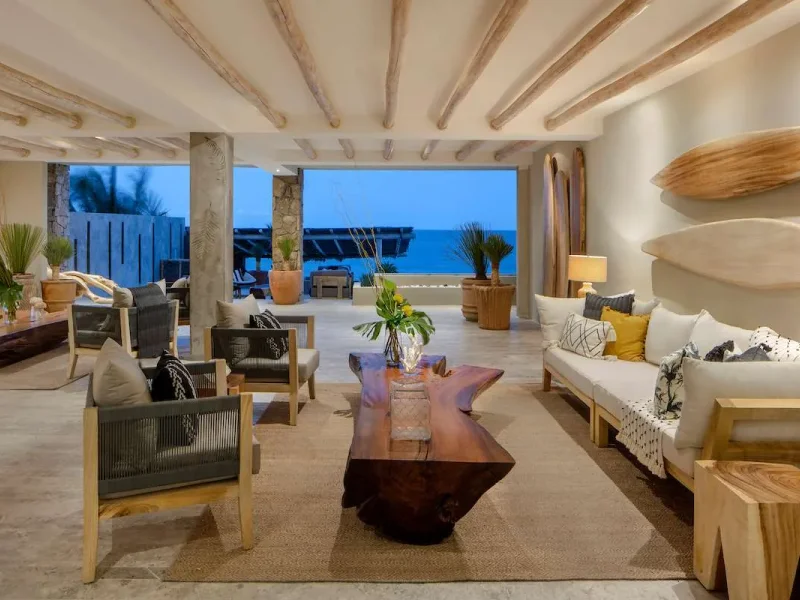
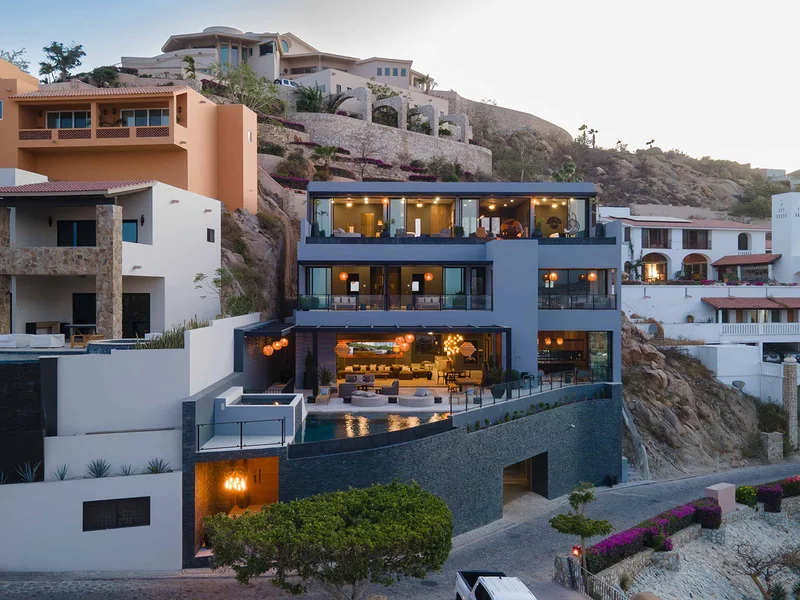
Pedregal is the flagship villa address of Cabo San Lucas and the answer to the question of where the discerning book. It is a gated community carved into the granite cliffs on the Pacific side of the marina town, entered through a single guarded gate off the main road, with 24-hour security and multi-acre plots stacked up the hillside. The community splits into two orientations that matter operationally. The Pacific side (west-facing) delivers the sunset view, whale-watching from the terrace in season, and the dramatic clifftop pools; the marina side (east-facing) delivers sunrise over the Sea of Cortez, quieter water, and shorter drives to the marina restaurants. Casa Acantilado sits on the Pacific side with stone steps carved into the cliff face and an included eight-hour daily butler; Lucia Noir sits on the marina side, an eight-bedroom estate for 24 guests with a full-day chef included in rate. The tradeoff of Pedregal is that the beaches directly below are not swimmable and Medano Beach is a 10-minute drive. The upside is complete privacy at a scale the resorts cannot deliver.
The Tourist Corridor is the 33-kilometer stretch of Federal Highway 1 that connects Cabo San Lucas to San José del Cabo and holds the concentration of golf resorts, corridor villas, and the majority of the branded five-star inventory (One and Only Palmilla, Waldorf Astoria Pedregal, Chileno Bay Auberge, Nobu Los Cabos). The corridor works for travelers who want a Sea-of-Cortez-side base with beach access at specific swimmable coves (Chileno Bay, Santa Maria Bay, Palmilla Beach), full-service resort spa and restaurant access as walk-in guests, and a location that splits the difference between the two towns. It is less atmospheric than Pedregal proper and the villa options are smaller in scale, but it is measurably closer to both the airport (roughly 25 minutes to SJD) and to San José's Gallery District.
Palmilla is the corridor address with the longest track record, developed around the One and Only Palmilla resort and the Jack Nicklaus Ocean Course from the early 1990s. It sits on the Sea of Cortez side at kilometer 27 of the corridor, roughly 15 minutes from either town. The neighborhood delivers Palmilla Beach (one of the few genuinely swimmable Sea of Cortez beaches inside the corridor), gated residential streets, and the highest concentration of long-term American ownership. Palmilla villas skew smaller than Pedregal (four to six bedrooms is the norm) and slightly newer in build quality. The tradeoff versus Pedregal is less dramatic ocean drama and more country-club feel; the upside is walkable beach access and immediate proximity to the corridor's best resorts and restaurants.
Diamante and Quivira sit on the Pacific side just north of Cabo San Lucas, past Pedregal, on the sand dunes overlooking a series of Davis Love III and Jack Nicklaus golf courses. This is the Pacific-links golf address of Los Cabos, and villa inventory here concentrates around Diamante Cabo San Lucas and the Quivira Los Cabos residential community. It is the correct answer for travelers whose trip is anchored around the tee time. It is the wrong answer for travelers who want to walk into the water: Pacific-side, no swimming, and 20 to 30 minutes back to the marina or Medano.
The Cabo San Lucas Marina and downtown is the walkable, restaurant-and-nightlife heart of Cabo proper. This is where Sunset Monalisa, Edith's, and the marina taco stands live, where the sportfishing fleet ties up at the Wyndham dock, and where Medano Beach begins. Hacienda Beach Club 5203 sits directly on Medano at the quieter end of the beach, with resort pool access, walkable proximity to the marina, and the only true beachfront-swimmable position in this pillar. The tradeoff is scale (four bedrooms, condo-style rather than standalone estate) and noise from the surrounding beach clubs; the upside is the swimming beach at your door.
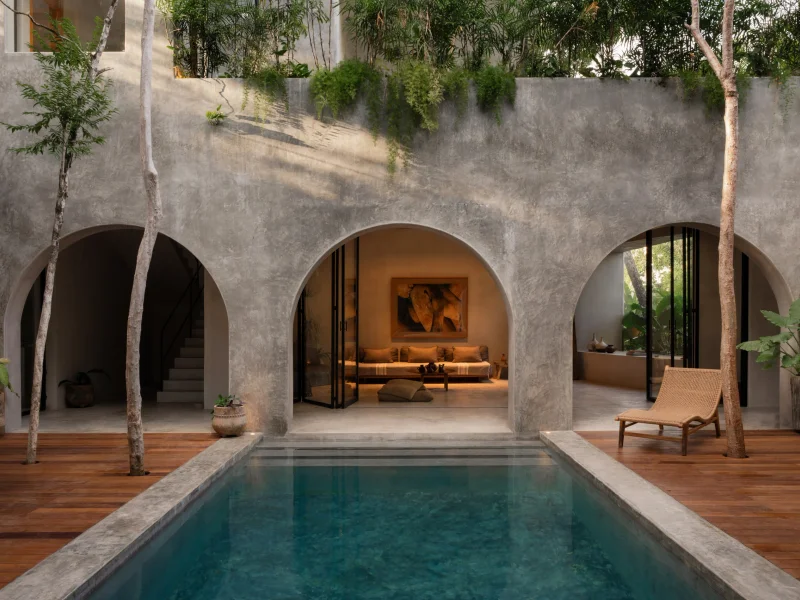
San José del Cabo is the quieter, more Mexican half of Los Cabos, at the airport end of the corridor. Colonial-town center with the Mission of San José del Cabo on the plaza, a Thursday-evening Gallery District (November through June) where roughly a dozen galleries open their doors and pour wine, boutique restaurants along Boulevard Mijares, and a growing East Cape villa market north of town. Casa Margaux is the architectural anchor here (dramatic white concrete, central courtyard pool, open-air sky showers) and the surf-condo option (Paradisiacal 2BR) sits directly on the Sea of Cortez with direct beach and break access at a price point most of the corridor cannot match. Book San José if you want the Mexican art-town experience, the airport is 15 minutes away, and Cabo San Lucas nightlife is a 30-to-40-minute drive when you want it.
Santa Carmela and the East Cape are the outer-orbit addresses for travelers who want to disappear entirely. Santa Carmela sits at the top of the corridor east of San José with newer villa build and quieter beach access. The East Cape proper (Los Barriles, Cabo Pulmo, and up the coast toward La Ribera) is a 60-to-90-minute drive north from SJD into a different Baja: sandy beaches, the Cabo Pulmo Marine National Park (the only living hard-coral reef in the Sea of Cortez), and a level of remoteness that the corridor lost twenty years ago. This is the seven-to-ten-night second-visit trip, not the first-timer answer.
Top villas in Cabo San Lucas
Filter by group size
Beyond the villa gates
Whale watching between mid-December and mid-April is the single most-recommended and most-underweight experience in this destination. Gray whales and humpbacks travel the length of the Baja peninsula annually, and by late January the bay off Cabo San Lucas Marina holds dozens of individuals at any given time. The correct booking is a private panga or small vessel out of the marina at 8am before the wind picks up, not the two-hour cattle-boat option. Cabo Adventures, Cabo Trek, and the villa concierge network run private three-hour charters at 400 to 900 US dollars per boat (up to 8 guests) with a certified marine-biologist guide. Booked from the villa terrace with the correct captain, this is the two-hour experience that lands on every trip-recap conversation.
Sportfishing is the historic reason Cabo exists as a resort destination and remains the single strongest half-day booking here. The Bisbee's Black and Blue tournament in late October runs the largest marlin purse in the world (over 11 million US dollars in 2025). Outside tournament week, the fishery is stronger between June and November for marlin, year-round for dorado and yellowfin tuna. Private 31-to-42-foot sportfishers run 1,200 to 3,500 US dollars for a full day out of Cabo San Lucas Marina or Puerto Los Cabos, boat, crew, tackle, and bait included. Pisces Sportfishing and Bisbee's own charter fleet are the operators the villa concierges default to. The catch cleans at the marina and the villa chef cooks it the same evening, which is worth doing at least once per trip.
The El Arco and Land's End boat tour is the postcard experience, and the way to do it properly is a private glass-bottom or panga charter for 90 minutes out of the marina at sunset, not the shared water-taxi from Medano at midday. Combine it with a lands-end swim at Lover's Beach and a paddle to Divorce Beach on the Pacific side. The one caveat: since 2021 the beach at Land's End itself is off-limits to visitors during California sea lion breeding season, so ask the operator before booking. Flora Farm in San José del Cabo is the second must-book: a working farm with a restaurant on the property, 30 minutes from Pedregal or 15 from San José, dinner reservations required three to four weeks out in peak season. Acre Baja is the sibling farm-to-table option nearby. Nobu Los Cabos opened on the corridor in 2019 and remains the strongest sushi in Baja California Sur; Sunset Monalisa on the Pacific cliffs is the sunset dinner reservation to book first. Wellness anchors: the Waldorf Astoria Pedregal spa and the Auberge Chileno Bay spa are open to villa guests as walk-ins by advance booking.
Logistics + practicalities
The airport is Los Cabos International (SJD), 15 minutes north of San José del Cabo and 45 minutes east of Cabo San Lucas proper. Direct nonstops run daily from Los Angeles (2 hours 30 minutes), San Francisco, Phoenix, Denver, Dallas, Houston, Chicago, Atlanta, New York (JFK/EWR, 5 hours 45 minutes), Toronto, Vancouver, and Mexico City on American, United, Delta, Alaska, JetBlue, Aeromexico, Volaris, WestJet, and Air Canada. From Europe the standard routing connects through Los Angeles or Mexico City at 15 to 18 hours door-to-door. Pre-arrange the villa transfer at every booking. The airport arrivals hall has an aggressive timeshare-solicitor gauntlet that catches first-timers, and a driver holding your name at the doors removes the friction entirely. Transfer runs 120 to 250 US dollars one-way for a Suburban or Sprinter to any corridor address, included in most villa packages.
Ground transport on the peninsula runs three tiers. Villa drivers booked through the concierge run 60 to 90 US dollars per hour with a four-hour minimum, which is the default for restaurant dinners and marina runs. Uber and DiDi operate legally in Cabo since 2019 and work reliably in the corridor and downtown (typical fare 8 to 25 US dollars for corridor trips), though airport pickups by rideshare are still restricted. Taxis are cash-only, meterless, and priced by zone at the marina and hotels (agree the fare before getting in). Rental cars are viable for anyone comfortable driving Federal Highway 1, which is well-paved and clearly signed, and open up the East Cape and San José day trips; skip the rental if the trip is villa-plus-marina.
The currency is the Mexican peso; every villa, resort, and corridor restaurant takes US dollars and cards, though smaller San José tavernas and the marina taco stands prefer cash and give a better rate in pesos. Tipping: 15 to 20 percent at restaurants (check for propina automatica already added, common at corridor resorts), 100 to 200 pesos per bag with the porter, 200 to 400 US dollars per staff member on a fully-staffed villa as an end-of-stay envelope. US visitors need only a passport (no visa for stays under 180 days). Withdraw pesos at the SJD airport ATMs on arrival, and a Telcel prepaid tourist SIM runs 200 pesos for a data package at the same terminal. Tap water is not potable; every villa provides bottled or filtered water.
The mistake I watch every first-time Cabo traveler make is booking the resort corridor for the beach and then discovering that the beach in front of the resort is not swimmable. The villa answer here is not about the upgrade in room size. It is about picking the right side of the peninsula for what you actually want to do all day. Pedregal for the drama and the whales, Palmilla for the swimmable Sea of Cortez, San José for the art-town and airport ease, Medano for the walk-into-the-water beach day. Pick the neighborhood first, then the house.
Cameron Elder, ERentals Exclusive
Frequently asked
When is the best time to visit Cabo San Lucas?
Late March through mid-April, or the October 15 to November 15 window. Both windows carry warm-water swimming, low humidity, no hurricane risk, and rack rates 15 to 25 percent below the Christmas peak. Whale season overlaps the first window through early April. The Christmas-to-New-Year week is the highest-demand and highest-priced week of the year and books twelve months out; if the trip is fixed to those dates, deposit the villa a full year in advance.
Is Cabo San Lucas safe?
The tourist corridor, Pedregal, Palmilla, San José del Cabo, and the gated villa communities operate at a security standard broadly consistent with other high-end Mexican resort destinations, with 24-hour gated security at every villa community in this pillar. Standard traveler practice applies: use villa drivers or rideshare rather than street taxis for late-night runs, keep valuables in the villa safe, and stay in the corridor after dark. Baja California Sur is not on the US State Department elevated-caution list for the corridor zone at the time of writing; check current advisories before travel.
Can I swim at the beach in front of my villa?
Depends entirely on which side of the peninsula the villa sits on. The Pacific side (Pedregal, Diamante, Quivira, most of the Cabo San Lucas cliffs) is not swimmable, with strong currents, undertow, and heavy shore break; villas on this side use the pool as the swimming water and the ocean as the view. The Sea of Cortez side (Palmilla Beach, Chileno Bay, Santa Maria Bay, Medano Beach) has calm swimmable water year-round. Medano Beach inside Cabo San Lucas Bay is the single walkable-from-villa swimming beach in the town proper. Ask the concierge which flag color the beach flies daily before entering the water anywhere on the Pacific side.
Do I need a car in Cabo?
Usually not. Villa drivers are the default for restaurant nights and marina runs, Uber and DiDi work in the corridor for shorter trips, and every villa in this collection includes airport transfers. A rental car earns its cost if the trip includes the East Cape (Cabo Pulmo, Los Barriles) or self-driven San José Gallery District days. For a corridor-and-marina trip, book the villa driver and skip the rental.
When is whale season and how do I book it right?
Gray whales and humpbacks arrive off Cabo between mid-December and mid-April, with peak concentration late January through mid-March. Book a private three-hour panga or small-boat charter through the villa concierge at 400 to 900 US dollars per boat (up to 8 guests) with a marine-biologist guide, not the shared cattle-boat tour. Depart at 8am before the afternoon wind. The whales are visible from any Pedregal terrace on the Pacific side; on a still morning the spouts are the ambient soundtrack.
What about hurricanes in September?
Baja hurricane season peaks mid-August through mid-October, and Cabo is on the historical track. A named storm reaches the peninsula directly roughly once every one-to-two years. Storms are tracked five to seven days out, so cancellation and re-book decisions can be made with real lead time. Villa contracts in this window typically include weather-cancellation clauses; get this in writing at deposit. Rates in this window run 30 to 45 percent below peak, so for a flexible traveler with trip insurance the value math is real.
Cabo San Lucas or San José del Cabo?
Cabo San Lucas for the marina, sportfishing fleet, El Arco boat tours, walkable Medano swimming beach, and downtown nightlife. San José del Cabo for the colonial-Mexican town center, Thursday Gallery Night, boutique restaurants on Mijares, and a 15-minute airport transfer. The correct move on a longer trip is a villa in Pedregal or Palmilla (which splits the two) and dinner reservations across both towns. First-timers should stay closer to Cabo San Lucas; repeat travelers frequently shift to San José for the quieter Mexican-town experience.
What is the cancellation norm for Los Cabos villas?
Peak-week bookings (Christmas, New Year, Thanksgiving, Easter, spring break) are typically non-refundable from deposit, with 50 percent due at booking and balance 30 to 45 days before arrival. Standard-week bookings run 50 percent at booking, balance 30 days out, with re-rental credit language rather than direct refunds (100 percent credit or roughly 85 percent refund minus an admin fee if the villa is re-booked). Weather cancellation for hurricane-window trips is negotiated separately at deposit. The villa contracts in this collection are transparent on all of this; ask the operator to walk through the specific clauses at quote.