Luxury Villas in Camps Bay
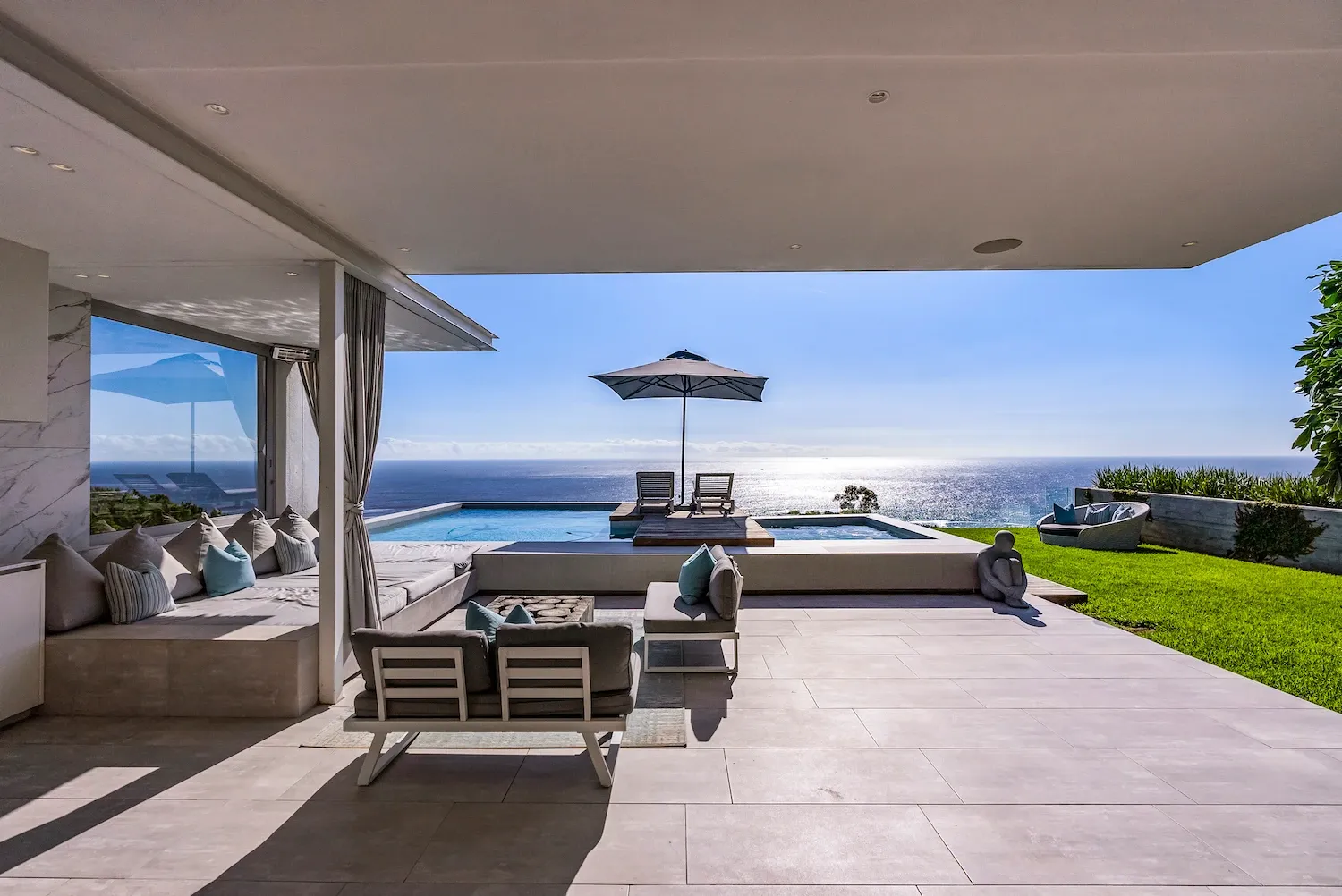
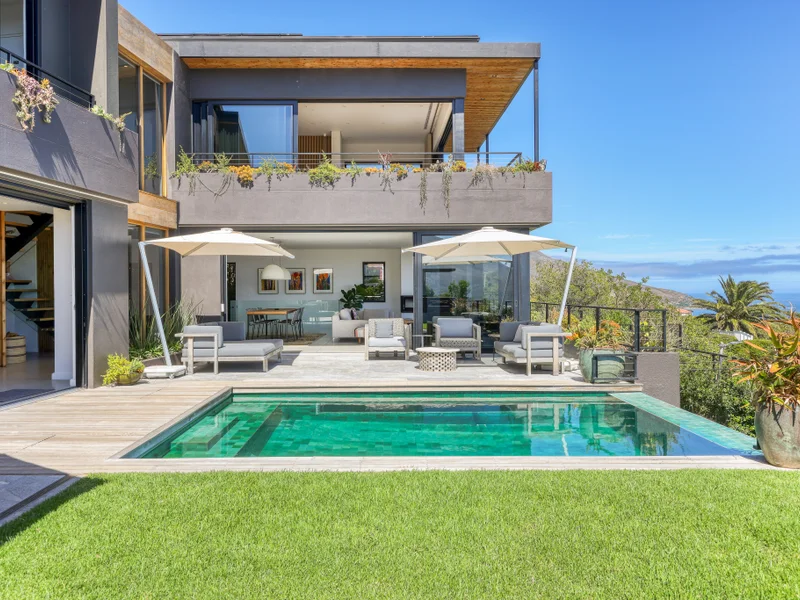
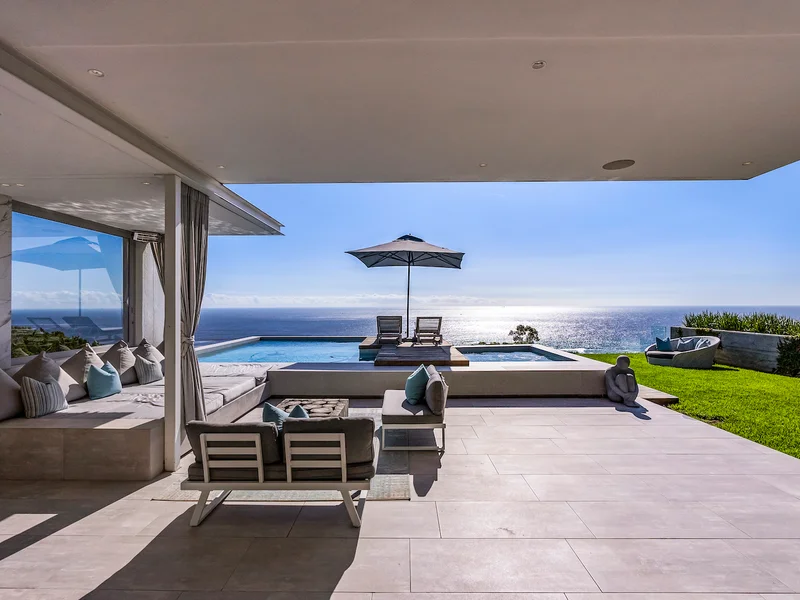
Villas on the Camps Bay slope with Atlantic views and the Twelve Apostles behind. Walking distance to the beach and the strip. Cape Town’s best address. Book direct.
Camps Bay is a shelf of land between the Twelve Apostles and the Atlantic, and the geography does all the work. The mountains rise directly behind the suburb, catching the last light long after the sun has gone off the water, and the sea sits flat and blue in front of a white beach lined with palms. Villas here are built into the slope in levels, which is why almost every one of them has an ocean view from most rooms: the house above you is higher up the hill, not in front of you. The strip along Victoria Road carries the restaurants and bars, the beach is a short walk down, and the city bowl and Table Mountain cableway are ten minutes over Kloof Nek. Two honest notes before you book. The Atlantic here is cold, genuinely cold, because the Benguela current runs up this coast, so the swimming is bracing and brief and the beach is for lying on. And the southeaster wind, the one locals call the Cape Doctor, blows hard in midsummer. Neither is a reason not to come. Both are reasons to know which side of the peninsula you are on.
The Camps Bay Slope
The terraced residential streets climbing from Victoria Road toward the mountain. Higher means bigger views and more stairs, and it also means quieter. This is where our villas sit, walking distance above the beach.
The Beachfront and Victoria Road
The strip: restaurants, bars, the palm-lined promenade and the beach itself. Busy in high season and the social centre of the Atlantic Seaboard. Close enough to walk to from the slope, far enough up that you do not hear it.
Clifton
The four cove beaches immediately south, sheltered by boulders and noticeably more protected from the wind than Camps Bay itself. Fourth Beach is the easiest to reach. A five-minute drive or a determined walk.
Bakoven and the Twelve Apostles
The quieter southern end, where the road narrows and the houses thin out under the mountain range. Fewer people, rockier shoreline, and the best of the coastal drive toward Llandudno and Hout Bay.
What Camps Bay Is Known For
Sunset from the slope or from Signal Hill, which is the canonical Cape Town evening and genuinely lives up to it. Table Mountain by cableway or on foot via Platteklip Gorge, ten minutes away over Kloof Nek. Lion’s Head at full moon, the walk locals actually do, roughly an hour up. The Cape Winelands at Stellenbosch and Franschhoek, under an hour inland for the day. Chapman’s Peak Drive south toward Hout Bay and Noordhoek, one of the great coastal roads anywhere. Clifton’s four coves for the sheltered swimming Camps Bay beach does not offer when the wind is up.
Best Time to Visit Camps Bay
Southern hemisphere, so the seasons invert: November through March is summer and the high season, with December and January the peak and the most expensive window by a distance. February and March are the sweet spot, warm, drier, and with the southeaster easing off compared with midsummer. April and May are quieter and still pleasant. June through August is the Cape winter, wet and windy on this coast, when villa rates drop sharply and the trip becomes about wine, food and the mountain rather than the beach.
Getting There
Cape Town International (CPT) is roughly 25 to 30 kilometres away, typically 25 to 40 minutes by road depending on traffic, over or around the mountain. A car is strongly advised: the peninsula rewards driving and the distances between Camps Bay, the winelands and the southern beaches are real. The drive into the city bowl over Kloof Nek takes about ten minutes.
Can you swim at Camps Bay beach?
You can, briefly. The Atlantic on this side is cold year round because of the Benguela current, often in the mid-teens Celsius even in high summer. Most people wade, swim hard for a few minutes and get out. The beach is for lying on and for the sunset, and Clifton’s coves are more sheltered when the wind is blowing.
How bad is the wind?
The southeaster, the Cape Doctor, blows hardest in midsummer and can make the beach unpleasant on a given afternoon while being perfectly calm elsewhere on the peninsula. It is a real feature of a December or January trip, not a rumour. February and March are noticeably easier, and Clifton is more protected than Camps Bay on a windy day.
How far is Camps Bay from central Cape Town?
About ten minutes over Kloof Nek into the city bowl, which puts the V&A Waterfront, the museums and the restaurants of Bree and Kloof Street well within reach. Camps Bay is a suburb of Cape Town rather than a separate destination, which is exactly why people base here and go in.
Are the villas walkable to the beach and restaurants?
The properties we list sit on the slope above the strip, so it is a walk down to the beach and Victoria Road and a climb back up. That elevation is what buys the view and the quiet. Bring shoes, or plan on driving the two minutes if you are carrying things.
What is the best time to visit?
February and March. Summer warmth without the peak December crowds or the worst of the southeaster, and rates well below the Christmas and New Year window. If you are coming for the winelands and the mountain rather than the beach, the winter months are dramatically better value.
Do we need a car?
Yes, in practice. Camps Bay itself is walkable within the suburb, but the winelands, Chapman’s Peak, the Cape Point road and the southern beaches all need one, and they are most of the reason to come to this part of the world.