Best Restaurants in Tulum

Where to eat in Tulum without overpaying. The beach-road names worth it, the town kitchens locals use, cash and reservation rules, and why the villa chef often wins.

Tulum has two eating economies running side by side and almost no guide says so plainly. On the beach road, the strip between the town and the sea, you are paying Miami prices in pesos for rooms with extraordinary design, generators humming behind the palms, and a crowd that flew in for the photograph. In Tulum Pueblo, ten minutes inland, the same country is charging Mexican prices and some of the best food in the region is being cooked by people who have been doing it for twenty years. Neither is wrong. A week that only eats on the beach road will be beautiful, exhausting and roughly three times more expensive than it needed to be. A week that only eats in town will save a lot of money and miss some genuinely world-class cooking. The trick is knowing which of the expensive rooms are actually excellent and which are charging for the setting, and that is the part a guide can usefully answer. The beach road, and which of it is real The honest sorting rule for the beach road is this: the places worth their prices are the ones doing something specific with fire, local produce or Mayan technique, and the places that are not are the ones whose menu could be transplanted to any beach club on earth. Tulum has a genuine open-fire and wood-smoke tradition among its better kitchens, and when it is done seriously it is remarkable. When a room is selling you a candlelit table in the jungle and a tuna tartare, you are paying for the lighting. What you are buying at the top end is real and worth naming: chefs working with Yucatecan ingredients, cenote-adjacent dining rooms built into the jungle, and a level of design ambition you will not find anywhere else in Mexico. What you are also buying is a generator, imported wine, a hostess with a clipboard and a dress code. Our advice is to pick two of those nights across a week rather than five, and to spend the other evenings somewhere the money goes into the food. Casa Arka, Tulum Tulum Pueblo, where the value is The town is a ten-minute drive from most of the beach road and it is where the region actually eats. This is where you find proper cochinita pibil, the slow-cooked Yucatecan pork that is the dish of this peninsula, sold in the morning from places that will be sold out by two. It is where the taquerias run late and cost a fraction of anything on the beach, and it is where the seafood is priced like seafood in a fishing region rather than like an imported luxury. Guests are often reluctant to make the drive and then make it every other night once they have. Take a driver, eat in town, and use the beach road for the evenings where the room is the point. That single change is the biggest cost difference available on a Tulum week and it improves the food rather than compromising it. The practical rules that catch people out Reserve, and reserve early in high season. Between late December and early January, and again around the spring festival weeks, the good tables on the beach road are committed well in advanc

Tulum has two eating economies running side by side and almost no guide says so plainly. On the beach road, the strip between the town and the sea, you are paying Miami prices in pesos for rooms with extraordinary design, generators humming behind the palms, and a crowd that flew in for the photograph. In Tulum Pueblo, ten minutes inland, the same country is charging Mexican prices and some of the best food in the region is being cooked by people who have been doing it for twenty years.

Neither is wrong. A week that only eats on the beach road will be beautiful, exhausting and roughly three times more expensive than it needed to be. A week that only eats in town will save a lot of money and miss some genuinely world-class cooking. The trick is knowing which of the expensive rooms are actually excellent and which are charging for the setting, and that is the part a guide can usefully answer.

The beach road, and which of it is real

The honest sorting rule for the beach road is this: the places worth their prices are the ones doing something specific with fire, local produce or Mayan technique, and the places that are not are the ones whose menu could be transplanted to any beach club on earth. Tulum has a genuine open-fire and wood-smoke tradition among its better kitchens, and when it is done seriously it is remarkable. When a room is selling you a candlelit table in the jungle and a tuna tartare, you are paying for the lighting.

What you are buying at the top end is real and worth naming: chefs working with Yucatecan ingredients, cenote-adjacent dining rooms built into the jungle, and a level of design ambition you will not find anywhere else in Mexico. What you are also buying is a generator, imported wine, a hostess with a clipboard and a dress code. Our advice is to pick two of those nights across a week rather than five, and to spend the other evenings somewhere the money goes into the food.

Tulum Pueblo, where the value is

The town is a ten-minute drive from most of the beach road and it is where the region actually eats. This is where you find proper cochinita pibil, the slow-cooked Yucatecan pork that is the dish of this peninsula, sold in the morning from places that will be sold out by two. It is where the taquerias run late and cost a fraction of anything on the beach, and it is where the seafood is priced like seafood in a fishing region rather than like an imported luxury.

Guests are often reluctant to make the drive and then make it every other night once they have. Take a driver, eat in town, and use the beach road for the evenings where the room is the point. That single change is the biggest cost difference available on a Tulum week and it improves the food rather than compromising it.

The practical rules that catch people out

Reserve, and reserve early in high season. Between late December and early January, and again around the spring festival weeks, the good tables on the beach road are committed well in advance and walking in is not a plan. Our concierge books these for guests, which matters more here than in most destinations because the road makes a failed booking expensive in time as well as temper.

Carry cash. A number of the better places in town are cash-only or prefer it, ATMs on the beach road are unreliable and expensive, and card terminals depend on connectivity that is not guaranteed. Expect the power situation to be visible: much of the beach road runs on generators, and occasional outages are a normal part of the evening rather than a crisis.

Factor the traffic. In peak weeks the beach road can take forty minutes to cover two kilometres, and that turns an eight o clock booking into a fight. Build in time, keep a driver on call rather than hunting a taxi at eleven at night, and consider eating earlier than you would at home. The restaurants adjust; the road does not.

Why the villa chef usually wins for a group

For a group of eight or more, the arithmetic on the beach road gets uncomfortable quickly, and the experience is often worse than the price suggests: a long table in a loud room, a slow kitchen under pressure, and a taxi problem at the end of it. A chef at the house changes all three. You eat what you asked for, at the hour you wanted, by your own pool, and nobody is negotiating transport at midnight.

Several of our Tulum houses carry a chef or room service as standard and the rest can have one arranged. The pattern that works over a week is dinners at home on the nights the group is tired or has been in the sun all day, and two or three planned nights out where the room genuinely justifies the trip. That is also, not incidentally, how most people who live here actually eat.

One last honest note. The best food in this region is not on the beach road and it is not in a restaurant with a waiting list. It is cochinita from a place in town that opens at seven and closes when it runs out, eaten standing up, for the price of a coffee on the beach. Do that once and the rest of the week makes more sense.

What to drink, and the cenote question

Mezcal is the drink of the moment here and the quality range is enormous. The bars worth your time will pour you three things to taste before you commit and will tell you which village a bottle came from; the ones that will not are selling a cocktail with a smoky note. Ask what is from Oaxaca and what is local, and drink it neat rather than mixed if you want to understand why people care about it. Tequila is widely available and generally worse value than the mezcal at the same price.

On water, stick to bottled for drinking and for brushing teeth, which is standard across the region rather than a comment on Tulum. Reputable restaurants and every villa in our collection use purified water for ice and cooking. The cenotes are safe to swim in with proper operators, and a morning cenote followed by a long lunch in town is one of the better shapes a day here can
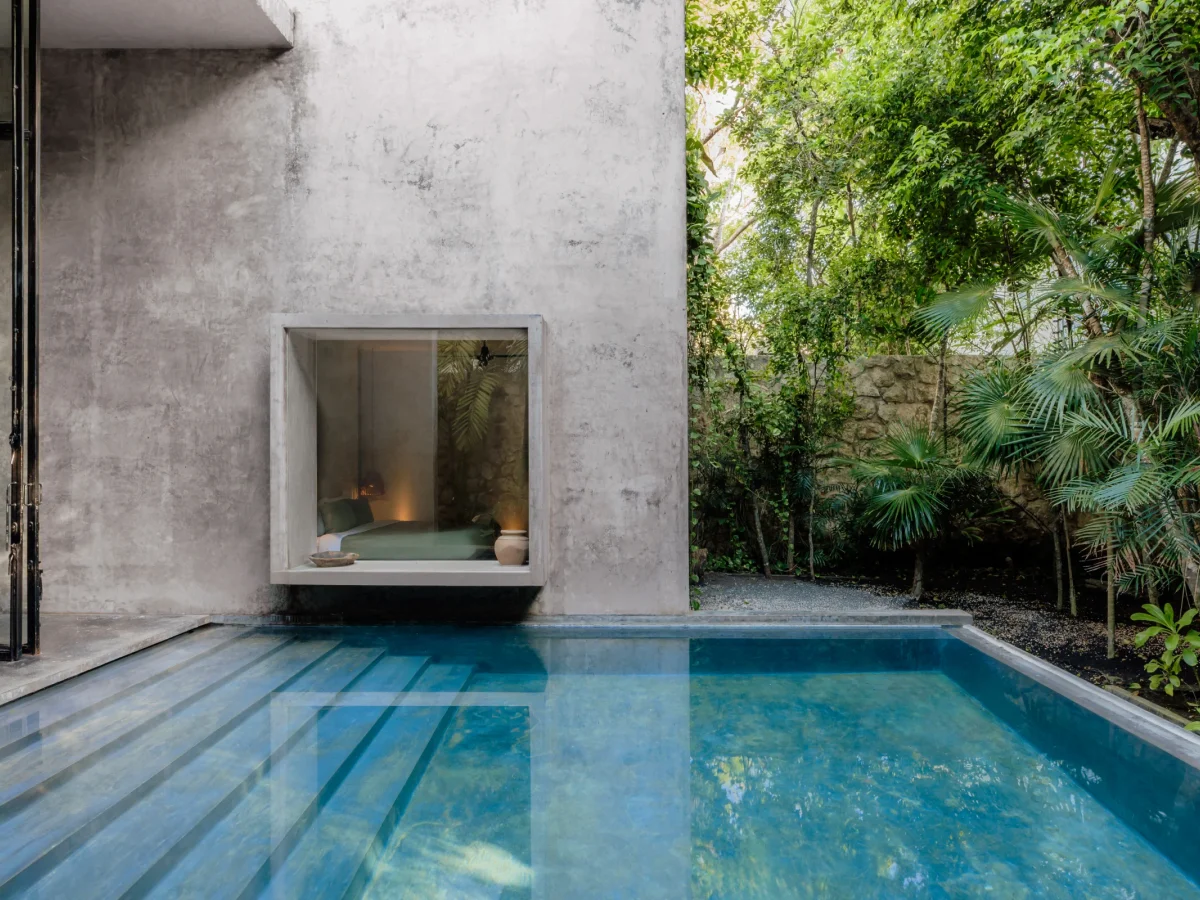
Outdoor dining terrace at a private villa in Tulum
Guides
TULUM

Best Restaurants in Tulum

What Is Worth the Money and What Is Worth Skipping
Cameron Elder
·
September 25, 2026
·
10 min read
An honest guide to eating in Tulum, from the beach-road names to the town kitchens locals actually use, with straight talk about the prices.
Tulum has two eating economies running side by side and almost no guide says so plainly. On the beach road, the strip between the town and the sea, you are paying Miami prices in pesos for rooms with extraordinary design, generators humming behind the palms, and a crowd that flew in for the photograph. In Tulum Pueblo, ten minutes inland, the same country is charging Mexican prices and some of the best food in the region is being cooked by people who have been doing it for twenty years.
Neither is wrong. A week that only eats on the beach road will be beautiful, exhausting and roughly three times more expensive than it needed to be. A week that only eats in town will save a lot of money and miss some genuinely world-class cooking. The trick is knowing which of the expensive rooms are actually excellent and which are charging for the setting, and that is the part a guide can usefully answer.

The beach road, and which of it is real

The honest sorting rule for the beach road is this: the places worth their prices are the ones doing something specific with fire, local produce or Mayan technique, and the places that are not are the ones whose menu could be transplanted to any beach club on earth. Tulum has a genuine open-fire and wood-smoke tradition among its better kitchens, and when it is done seriously it is remarkable. When a room is selling you a candlelit table in the jungle and a tuna tartare, you are paying for the lighting.
What you are buying at the top end is real and worth naming: chefs working with Yucatecan ingredients, cenote-adjacent dining rooms built into the jungle, and a level of design ambition you will not find anywhere else in Mexico. What you are also buying is a generator, imported wine, a hostess with a clipboard and a dress code. Our advice is to pick two of those nights across a week rather than five, and to spend the other evenings somewhere the money goes into the food.
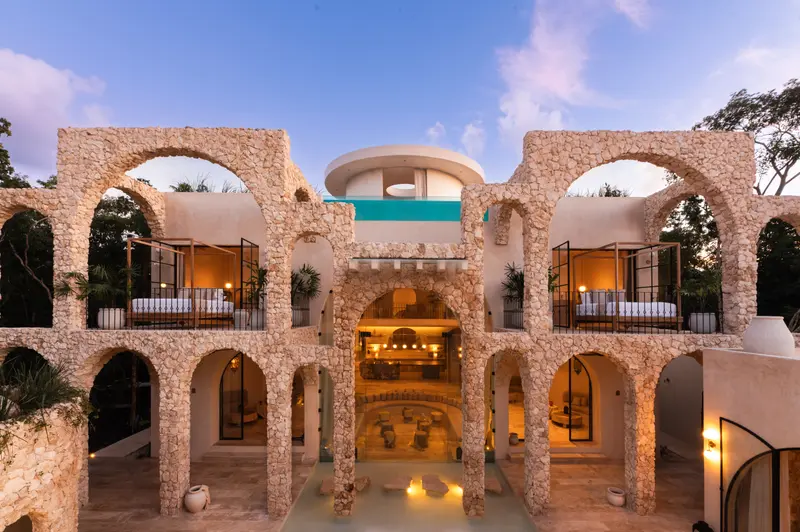
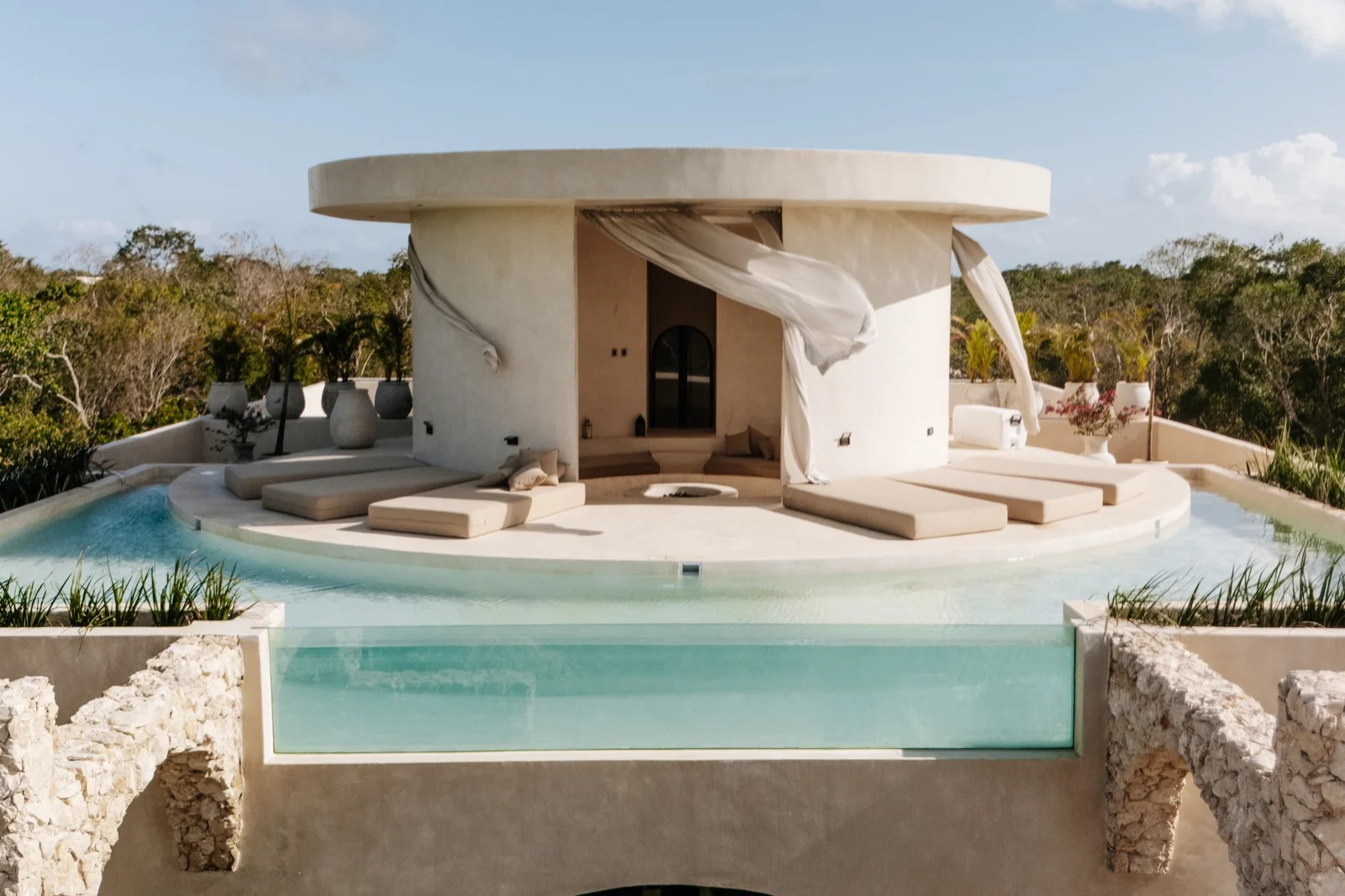
Rooftop and pool at a Tulum jungle villa at dusk
Casa Arka, Tulum

Tulum Pueblo, where the value is

The town is a ten-minute drive from most of the beach road and it is where the region actually eats. This is where you find proper cochinita pibil, the slow-cooked Yucatecan pork that is the dish of this peninsula, sold in the morning from places that will be sold out by two. It is where the taquerias run late and cost a fraction of anything on the beach, and it is where the seafood is priced like seafood in a fishing region rather than like an imported luxury.
Guests are often reluctant to make the drive and then make it every other night once they have. Take a driver, eat in town, and use the beach road for the evenings where the room is the point. That single change is the biggest cost difference available on a Tulum week and it improves the food rather than compromising it.

The practical rules that catch people out

Reserve, and reserve early in high season. Between late December and early January, and again around the spring festival weeks, the good tables on the beach road are committed well in advance and walking in is not a plan. Our concierge books these for guests, which matters more here than in most destinations because the road makes a failed booking expensive in time as well as temper.
Carry cash. A number of the better places in town are cash-only or prefer it, ATMs on the beach road are unreliable and expensive, and card terminals depend on connectivity that is not guaranteed. Expect the power situation to be visible: much of the beach road runs on generators, and occasional outages are a normal part of the evening rather than a crisis.
Factor the traffic. In peak weeks the beach road can take forty minutes to cover two kilometres, and that turns an eight o clock booking into a fight. Build in time, keep a driver on call rather than hunting a taxi at eleven at night, and consider eating earlier than you would at home. The restaurants adjust; the road does not.
Kitchen and dining space at a staffed Tulum villa
Casa Shalva, Tulum

Why the villa chef usually wins for a group

For a group of eight or more, the arithmetic on the beach road gets uncomfortable quickly, and the experience is often worse than the price suggests: a long table in a loud room, a slow kitchen under pressure, and a taxi problem at the end of it. A chef at the house changes all three. You eat what you asked for, at the hour you wanted, by your own pool, and nobody is negotiating transport at midnight.
Several of our Tulum houses carry a chef or room service as standard and the rest can have one arranged. The pattern that works over a week is dinners at home on the nights the group is tired or has been in the sun all day, and two or three planned nights out where the room genuinely justifies the trip. That is also, not incidentally, how most people who live here actually eat.
One last honest note. The best food in this region is not on the beach road and it is not in a restaurant with a waiting list. It is cochinita from a place in town that opens at seven and closes when it runs out, eaten standing up, for the price of a coffee on the beach. Do that once and the rest of the week makes more sense.

What to drink, and the cenote question

Mezcal is the drink of the moment here and the quality range is enormous. The bars worth your time will pour you three things to taste before you commit and will tell you which village a bottle came from; the ones that will not are selling a cocktail with a smoky note. Ask what is from Oaxaca and what is local, and drink it neat rather than mixed if you want to understand why people care about it. Tequila is widely available and generally worse value than the mezcal at the same price.
On water, stick to bottled for drinking and for brushing teeth, which is standard across the region rather than a comment on Tulum. Reputable restaurants and every villa in our collection use purified water for ice and cooking. The cenotes are safe to swim in with proper operators, and a morning cenote followed by a long lunch in town is one of the better shapes a day here can take, largely because it keeps you off the beach road at the hours it is worst.

Outdoor kitchen and long dining table at a large Tulum estate
Casa Don Rey, Tulum
Key Takeaways
Tulum has two eating economies: the beach road at Miami prices and the town at Mexican ones
Several beach-road restaurants are genuinely excellent and several are charging for the setting alone
Tulum Pueblo is where the food value is, and it is a ten-minute drive, not an expedition
Reservations are essential in high season and many places take cash or run on limited power
For groups of eight or more a villa chef usually beats a restaurant on both cost and experience

Frequently Asked Questions

Is Tulum expensive to eat in?
On the beach road, yes, comparably to Miami or New York, and you are partly paying for design, generators and imported wine. In Tulum Pueblo ten minutes inland, no: the same region is charging Mexican prices and the food is often better. Both exist and most visitors only find the first.
Do we need reservations?
On the beach road in high season it is essential, and booked well ahead rather than on the day. Between late December and early January and around the spring festival weeks the good tables are committed in advance. In town it matters much less.
Should we carry cash?
Yes. Several of the better places in town are cash-only or prefer it, ATMs on the beach road are unreliable and expensive, and card terminals depend on connectivity that is not guaranteed. Bring pesos from town rather than relying on the beach.
What should we eat that is specifically Yucatecan?
Cochinita pibil, the slow-cooked pork that is the dish of this peninsula, ideally in the morning from a place that sells out by early afternoon. Also look for anything cooked over open fire or wood smoke, which the better Tulum kitchens do seriously and very well.
Is the beach road worth it at all?
Two nights of it across a week, yes. The design ambition is real and the best kitchens are doing genuine work with Yucatecan ingredients and fire. Five nights of it is how people spend three times what they needed to and come home tired.
How bad is the traffic to dinner?
In peak weeks the beach road can take forty minutes to cover two kilometres. Build in time, keep a driver on call rather than hunting a taxi late at night, and consider eating earlier than you would at home.
Is it better to have a chef at the villa?
For eight or more, usually yes, on both cost and experience. A long table in a loud room with a kitchen under pressure and a taxi problem afterwards is worse than eating what you asked for by your own pool. Several of our Tulum houses carry a chef or room service and the rest can have one arranged.
Is the street food safe?
Broadly yes, with the usual sense: eat where it is busy and turning over, prefer things cooked in front of you, and be more careful with anything that has been sitting. The busiest cochinita place in town at nine in the morning is a far safer bet than a quiet stall at midnight.
Follow the journey @erentalsexclusive + @aurelseyez
Villa tours, destination guides, and behind-the-scenes content from the team on the ground
Cameron Elder
Founder, ERentals Exclusive
mexico
tulum
food
restaurants
travel-tips

See it in motion

From the feed

Real stays, real light. Tap any film to watch it full screen.

Stay in the loop
© 2026 ERentals Exclusive