Best Restaurants in Marrakech

Where to eat in Marrakech, medina to Gueliz, with honest notes on the famous names, which places need booking, where alcohol is served, and what the Djemaa el-Fna stalls are really like.

Marrakech is not one restaurant city, it is three, and most visitors only find one of them. There is the medina, where the good rooms are hidden behind doors with no sign and the cooking is traditional, candlelit and often unlicensed. There is Gueliz, the twentieth-century district across the Koutoubia, where the city eats when it is not performing for anyone, and where the newer kitchens and the wine lists are. And there is the road out of town, the Route du Barrage and the Palmeraie, where lunch happens under olive trees beside a pool and takes four hours. A week here that only eats in the medina misses two thirds of the city. What follows is where we send our own guests, with the honest notes attached. Two caveats before the list, because a restaurant guide that pretends otherwise is not useful. First, Marrakech turns over: rooms close, chefs move, a place that was extraordinary two years ago can be coasting today. We re-check before we book anybody in, and you should treat any list, including this one, as a starting point rather than a guarantee. Second, the single best Moroccan meal most of our guests eat all week is not in a restaurant at all. It is the tagine their own dada cooks at the villa on the second night, and it ruins them slightly for everywhere else. The medina institutions Dar Yacout is the one people mean when they say they want a Marrakech night. It is a riad turned dining house, designed by the American architect Bill Willis, and the point is as much the building and the roof terrace as the food, which is a set menu of Moroccan classics. It is theatrical and it is not cheap and it is worth doing once. Le Foundouk, a few streets away, is the more restrained version of the same idea: a restored caravanserai with a courtyard and a roof, a kitchen that does both Moroccan and French, and a room that works for a group of eight without feeling like a performance. Le Trou au Mur is where we send guests who have had the grand riad night and now want the food without the staging. It is home-style Moroccan, including the dishes that rarely make a tourist menu, and the kitchen will explain what things are if you ask. Nomad, on Rahba Kedima, is the modern-Moroccan rooftop that changed what the medina expected of itself: lighter cooking, a view over the spice square, and a room that fills with people who live here as well as people visiting. Directly below it, Cafe des Epices is the unfussy version, fine for a mint tea and a sandwich when the square has worn you out. Le Jardin is the courtyard garden in the middle of the souks, green and cool and a genuine relief at two in the afternoon when the alleys have become too much. It is not the best food in the city and it does not claim to be; it is the best place to stop moving. For a serious lunch in that part of the medina, Bacha Coffee inside Dar el Bacha is the more interesting stop, as much for the restored palace as for the coffee list. Palais Eliah, Marrakech Gueliz, where the city eats

Marrakech is not one restaurant city, it is three, and most visitors only find one of them. There is the medina, where the good rooms are hidden behind doors with no sign and the cooking is traditional, candlelit and often unlicensed. There is Gueliz, the twentieth-century district across the Koutoubia, where the city eats when it is not performing for anyone, and where the newer kitchens and the wine lists are. And there is the road out of town, the Route du Barrage and the Palmeraie, where lunch happens under olive trees beside a pool and takes four hours. A week here that only eats in the medina misses two thirds of the city.

What follows is where we send our own guests, with the honest notes attached. Two caveats before the list, because a restaurant guide that pretends otherwise is not useful. First, Marrakech turns over: rooms close, chefs move, a place that was extraordinary two years ago can be coasting today. We re-check before we book anybody in, and you should treat any list, including this one, as a starting point rather than a guarantee. Second, the single best Moroccan meal most of our guests eat all week is not in a restaurant at all. It is the tagine their own dada cooks at the villa on the second night, and it ruins them slightly for everywhere else.

The medina institutions

Dar Yacout is the one people mean when they say they want a Marrakech night. It is a riad turned dining house, designed by the American architect Bill Willis, and the point is as much the building and the roof terrace as the food, which is a set menu of Moroccan classics. It is theatrical and it is not cheap and it is worth doing once. Le Foundouk, a few streets away, is the more restrained version of the same idea: a restored caravanserai with a courtyard and a roof, a kitchen that does both Moroccan and French, and a room that works for a group of eight without feeling like a performance.

Le Trou au Mur is where we send guests who have had the grand riad night and now want the food without the staging. It is home-style Moroccan, including the dishes that rarely make a tourist menu, and the kitchen will explain what things are if you ask. Nomad, on Rahba Kedima, is the modern-Moroccan rooftop that changed what the medina expected of itself: lighter cooking, a view over the spice square, and a room that fills with people who live here as well as people visiting. Directly below it, Cafe des Epices is the unfussy version, fine for a mint tea and a sandwich when the square has worn you out.

Le Jardin is the courtyard garden in the middle of the souks, green and cool and a genuine relief at two in the afternoon when the alleys have become too much. It is not the best food in the city and it does not claim to be; it is the best place to stop moving. For a serious lunch in that part of the medina, Bacha Coffee inside Dar el Bacha is the more interesting stop, as much for the restored palace as for the coffee list.

Gueliz, where the city eats

Cross to Gueliz and the register changes completely. Al Fassia is the one to know: a Moroccan restaurant run entirely by women since the late 1980s, and the place we recommend more than any other in the city for a first proper Moroccan meal. The cooking is precise rather than showy, the pastilla is the benchmark other pastillas get measured against, and unlike much of the medina it is licensed, so a bottle of Moroccan red is possible.

Amal Center is the other Gueliz address worth planning around, and it is the one guests write to us about afterwards. It is a non-profit that trains disadvantaged women in professional cooking, and the restaurant is where they work. Lunch is simple, daily-changing Moroccan home food at a fraction of medina prices, the room is full of locals, and the money does something. Go at noon, it stops serving early, and it does not do dinner.

Beyond those two, Gueliz is where the newer kitchens are, the ones doing Moroccan produce with a lighter modern hand, and it is where the wine lists live. It is also where you go when the group has eaten four tagines in a row and somebody quietly asks for a salad and a steak. That moment arrives on about night four of every trip and it is worth planning for rather than resisting.

The Djemaa el-Fna stalls, honestly

Every guide tells you to eat at the night stalls in the main square. Here is the honest version. It is one of the great spectacles in North Africa: the square fills at dusk, the smoke goes up, the numbered stalls appear out of nothing, and it is genuinely worth seeing. The food is mostly fine and occasionally good. It is almost never the best meal of your trip, the touting is relentless, and if anyone in the group has a nervous stomach it is a poor place to find out.

Our advice is to go for the spectacle, eat lightly, and treat it as an evening rather than a dinner. If you want the genuinely great street food in that area, the better move is Mechoui Alley just off the square in the morning, where slow-roast lamb is pulled from underground ovens and sold by weight with cumin and salt and bread. That is a Marrakech meal people remember, and it costs almost nothing, and it is finished by early afternoon.

Lunch out of town, which is the underrated day

The Route du Barrage and the Palmeraie are where Marrakech goes for lunch, and it is the part of the eating map that visitors most often miss. The shape of the day is a slow drive out, a long table under olive trees, a pool nobody is in a hurry to leave, and a return around five. Beldi Country Club is the established version and works well for a group. For guests staying in the Palmeraie it is a short drive rather than an expedition, which is one of the quiet arguments for basing out there.

The other out-of-town meal worth building a day around is in the Agafay, the stone desert forty-five minutes south, where camps serve dinner under the sky with the Atlas behind. It is not the Sahara and anyone telling you
Courtyard dining table set at a Marrakech palais at dusk
Guides
MARRAKECH

Best Restaurants in Marrakech

An Operator Guide to Eating Well in the Red City
Cameron Elder
·
September 25, 2026
·
11 min read
Where to actually eat in Marrakech, from the medina institutions to the Gueliz newcomers, with honest notes on which famous places are worth it and which are a show.
Morocco, on film
A month of eating here, filmed
The medina at street level, the Palmeraie at lunch, and the Atlas road that leads to the long afternoons nobody plans for.
A restaurant list written from two nights in a city is a list of the places with the best marketing. This was filmed across a month, which is long enough to eat badly a few times and learn something from it. On the demand side, which is the half of a food question no guide answers: Marrakech is the strongest destination in our search footprint, interest peaks in April with March just behind, and the tables worth having are booked days ahead in those weeks, not on the night.
Marrakech is not one restaurant city, it is three, and most visitors only find one of them. There is the medina, where the good rooms are hidden behind doors with no sign and the cooking is traditional, candlelit and often unlicensed. There is Gueliz, the twentieth-century district across the Koutoubia, where the city eats when it is not performing for anyone, and where the newer kitchens and the wine lists are. And there is the road out of town, the Route du Barrage and the Palmeraie, where lunch happens under olive trees beside a pool and takes four hours. A week here that only eats in the medina misses two thirds of the city.
What follows is where we send our own guests, with the honest notes attached. Two caveats before the list, because a restaurant guide that pretends otherwise is not useful. First, Marrakech turns over: rooms close, chefs move, a place that was extraordinary two years ago can be coasting today. We re-check before we book anybody in, and you should treat any list, including this one, as a starting point rather than a guarantee. Second, the single best Moroccan meal most of our guests eat all week is not in a restaurant at all. It is the tagine their own dada cooks at the villa on the second night, and it ruins them slightly for everywhere else.

The medina institutions

Dar Yacout is the one people mean when they say they want a Marrakech night. It is a riad turned dining house, designed by the American architect Bill Willis, and the point is as much the building and the roof terrace as the food, which is a set menu of Moroccan classics. It is theatrical and it is not cheap and it is worth doing once. Le Foundouk, a few streets away, is the more restrained version of the same idea: a restored caravanserai with a courtyard and a roof, a kitchen that does both Moroccan and French, and a room that works for a group of eight without feeling like a performance.
Le Trou au Mur is where we send guests who have had the grand riad night and now want the food without the staging. It is home-style Moroccan, including the dishes that rarely make a tourist menu, and the kitchen will explain what things are if you ask. Nomad, on Rahba Kedima, is the modern-Moroccan rooftop that changed what the medina expected of itself: lighter cooking, a view over the spice square, and a room that fills with people who live here as well as people visiting. Directly below it, Cafe des Epices is the unfussy version, fine for a mint tea and a sandwich when the square has worn you out.
Le Jardin is the courtyard garden in the middle of the souks, green and cool and a genuine relief at two in the afternoon when the alleys have become too much. It is not the best food in the city and it does not claim to be; it is the best place to stop moving. For a serious lunch in that part of the medina, Bacha Coffee inside Dar el Bacha is the more interesting stop, as much for the restored palace as for the coffee list.
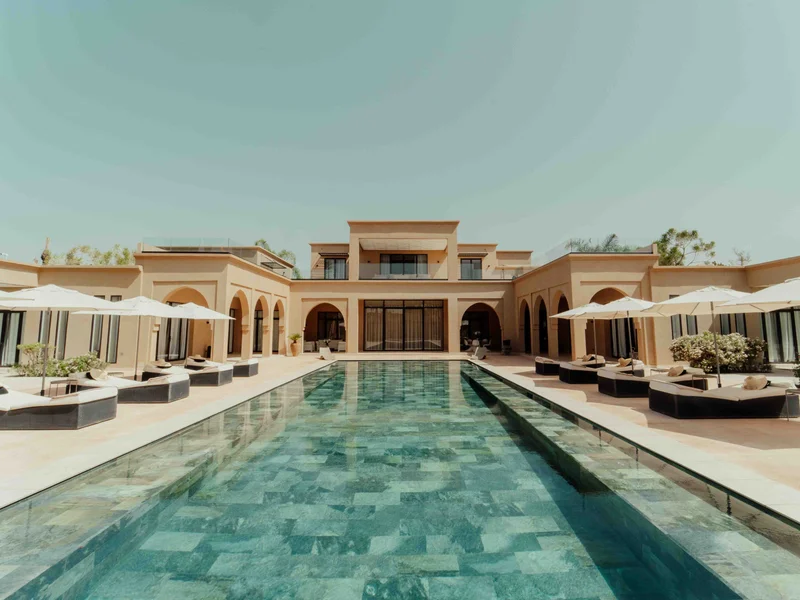
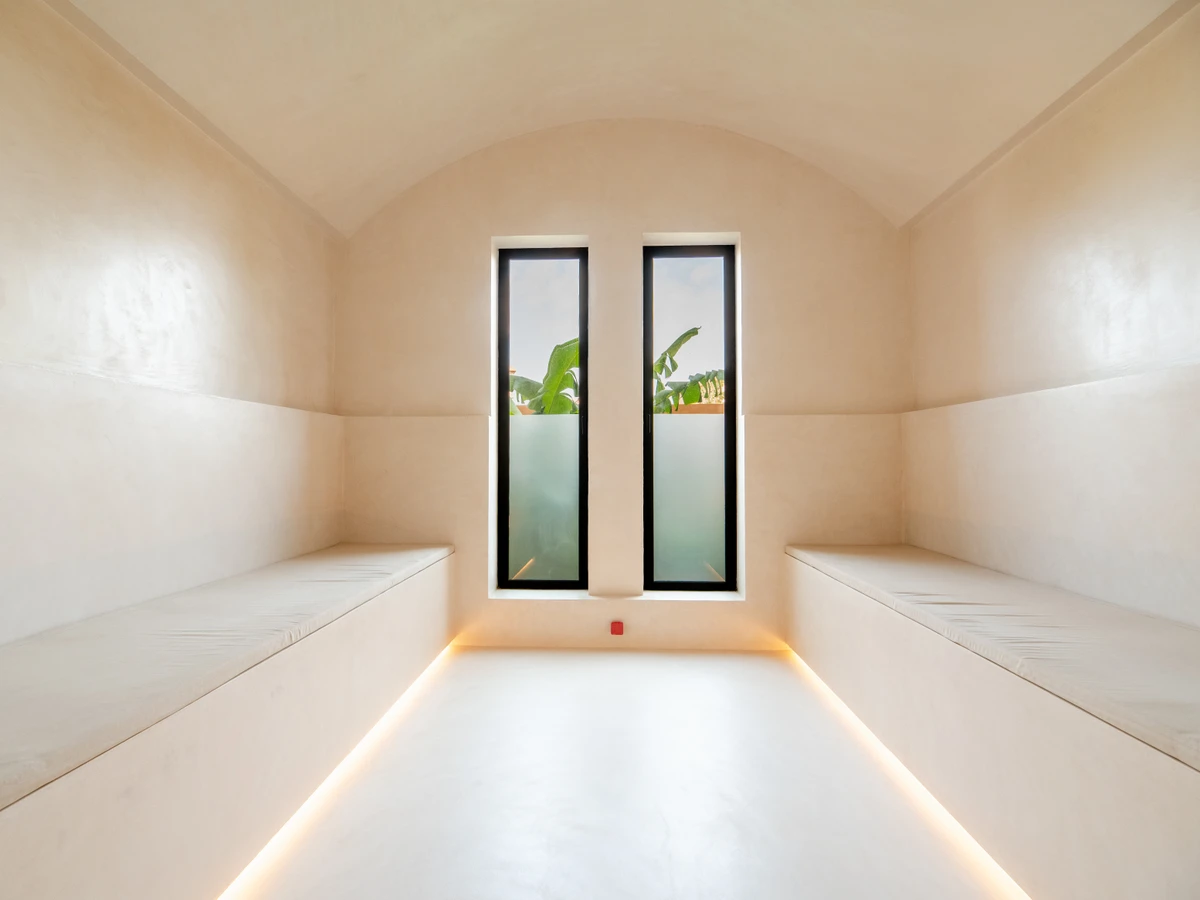
Traditional hammam and courtyard detail at a Marrakech palais
Palais Eliah, Marrakech

Gueliz, where the city eats

Cross to Gueliz and the register changes completely. Al Fassia is the one to know: a Moroccan restaurant run entirely by women since the late 1980s, and the place we recommend more than any other in the city for a first proper Moroccan meal. The cooking is precise rather than showy, the pastilla is the benchmark other pastillas get measured against, and unlike much of the medina it is licensed, so a bottle of Moroccan red is possible.
Amal Center is the other Gueliz address worth planning around, and it is the one guests write to us about afterwards. It is a non-profit that trains disadvantaged women in professional cooking, and the restaurant is where they work. Lunch is simple, daily-changing Moroccan home food at a fraction of medina prices, the room is full of locals, and the money does something. Go at noon, it stops serving early, and it does not do dinner.
Beyond those two, Gueliz is where the newer kitchens are, the ones doing Moroccan produce with a lighter modern hand, and it is where the wine lists live. It is also where you go when the group has eaten four tagines in a row and somebody quietly asks for a salad and a steak. That moment arrives on about night four of every trip and it is worth planning for rather than resisting.

The Djemaa el-Fna stalls, honestly

Every guide tells you to eat at the night stalls in the main square. Here is the honest version. It is one of the great spectacles in North Africa: the square fills at dusk, the smoke goes up, the numbered stalls appear out of nothing, and it is genuinely worth seeing. The food is mostly fine and occasionally good. It is almost never the best meal of your trip, the touting is relentless, and if anyone in the group has a nervous stomach it is a poor place to find out.
Our advice is to go for the spectacle, eat lightly, and treat it as an evening rather than a dinner. If you want the genuinely great street food in that area, the better move is Mechoui Alley just off the square in the morning, where slow-roast lamb is pulled from underground ovens and sold by weight with cumin and salt and bread. That is a Marrakech meal people remember, and it costs almost nothing, and it is finished by early afternoon.
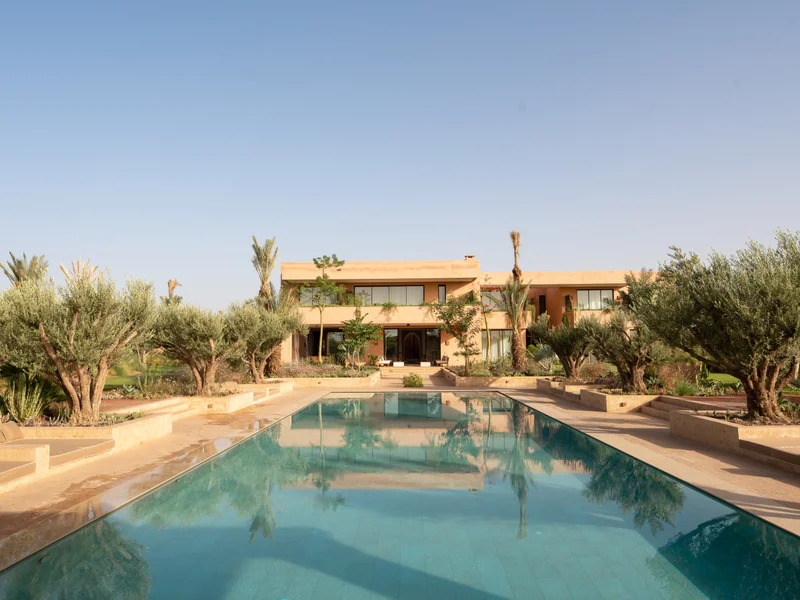
Riad-style courtyard set for dinner in Marrakech
Dar Manou, Marrakech

Lunch out of town, which is the underrated day

The Route du Barrage and the Palmeraie are where Marrakech goes for lunch, and it is the part of the eating map that visitors most often miss. The shape of the day is a slow drive out, a long table under olive trees, a pool nobody is in a hurry to leave, and a return around five. Beldi Country Club is the established version and works well for a group. For guests staying in the Palmeraie it is a short drive rather than an expedition, which is one of the quiet arguments for basing out there.
The other out-of-town meal worth building a day around is in the Agafay, the stone desert forty-five minutes south, where camps serve dinner under the sky with the Atlas behind. It is not the Sahara and anyone telling you it is should be treated carefully, but the light at sunset is extraordinary and the drive is short enough to do after a slow morning at the house.
The practical rules nobody tells you

Book ahead, further ahead than feels necessary, especially in the spring and autumn peaks. The rooms worth having in this city are small and they fill days in advance, not hours. Our concierge does this for guests and it is the single most useful thing we do on a Marrakech week, because a late booking is how people end up eating badly in a city with extraordinary food.
Check the alcohol question before you book if it matters. A significant number of medina restaurants are unlicensed, which is a planning fact rather than a complaint. Check the Ramadan calendar against your dates, because daytime service changes across the city during the month and it is far better to know before you travel. And bring something warm for rooftops: Marrakech is warm in the sun and genuinely cool after dark for much of the year, and every rooftop dinner in spring ends with somebody going back for a jacket.
Finally, use the house. Every villa in our Marrakech collection carries staff, and most have a dada who cooks Moroccan food properly. The pattern that works over a week is roughly half the dinners at home and half out: it saves the group from four consecutive restaurant evenings, it is better for children, and it means the nights you do go out are the ones you actually chose.
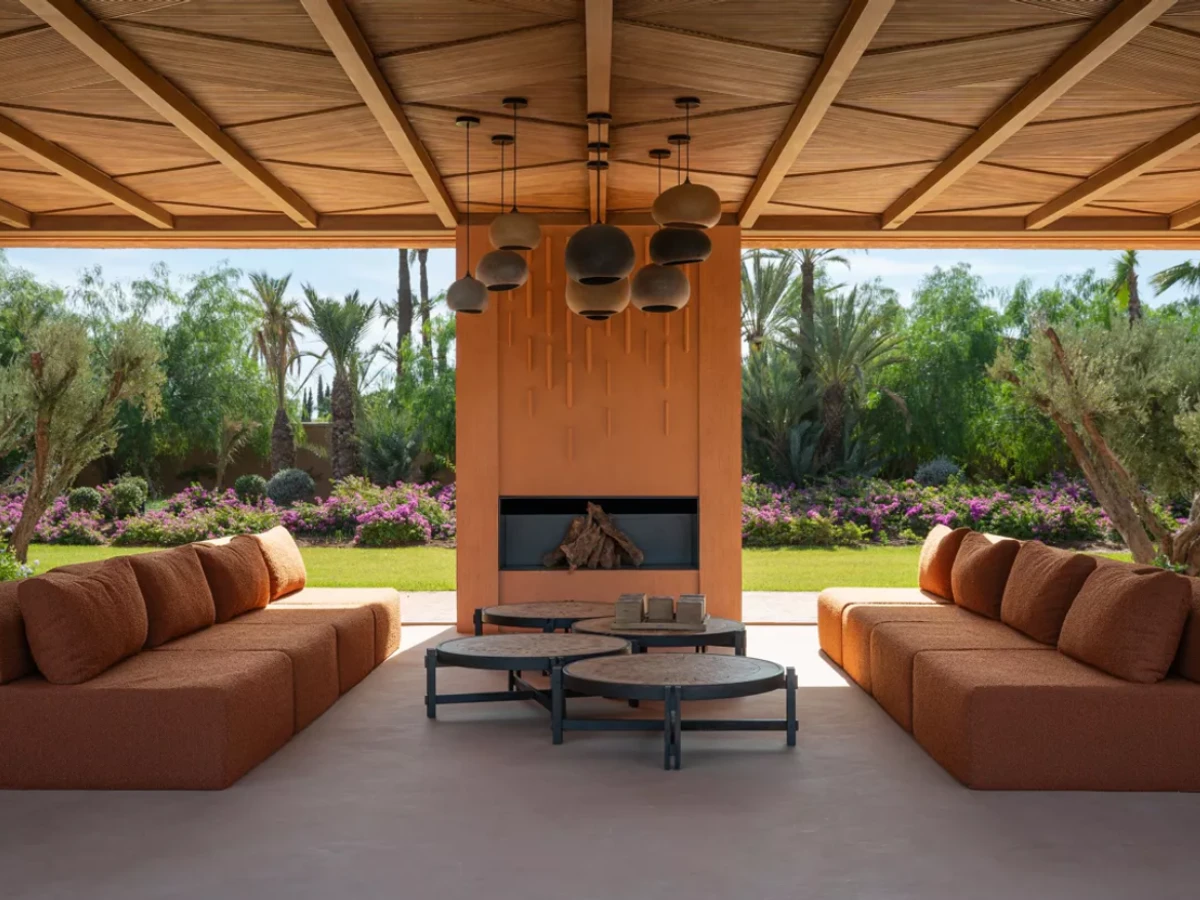
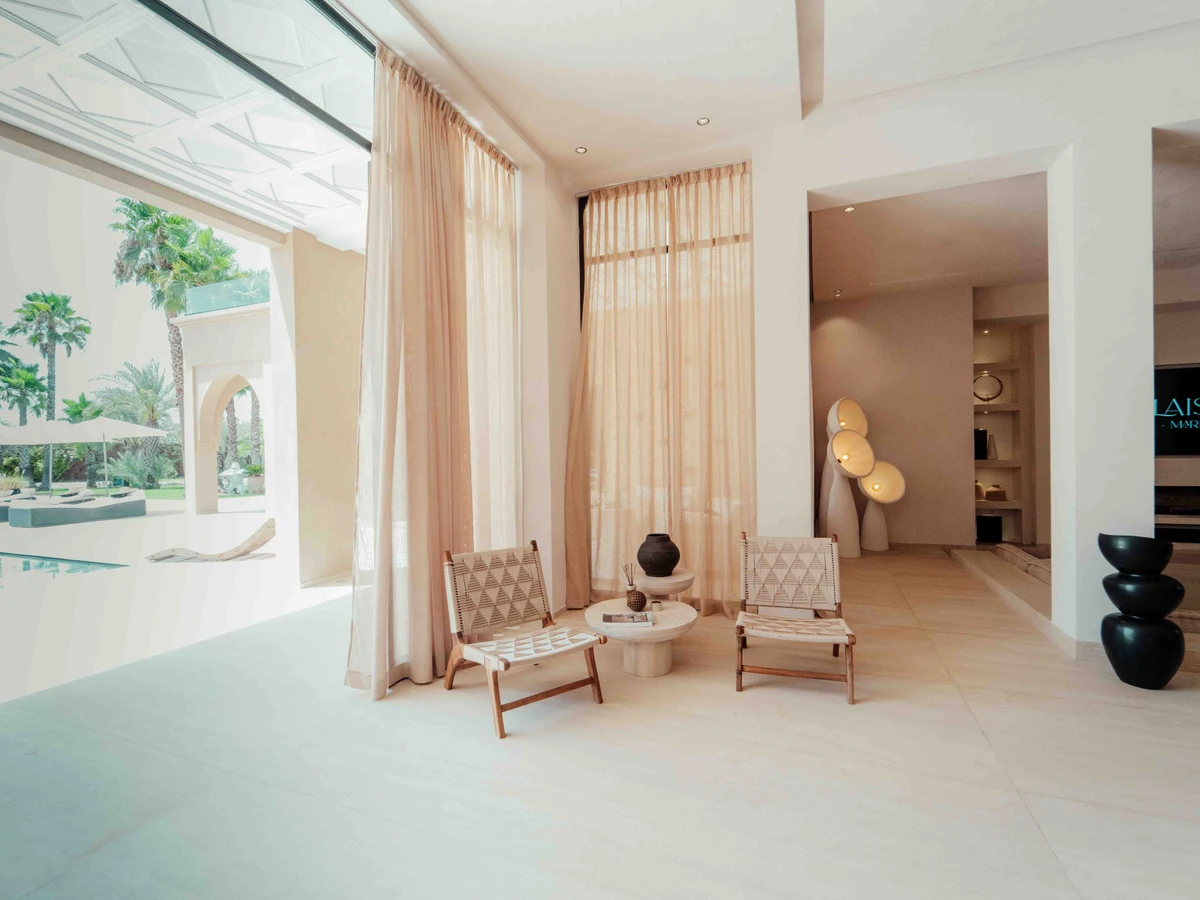
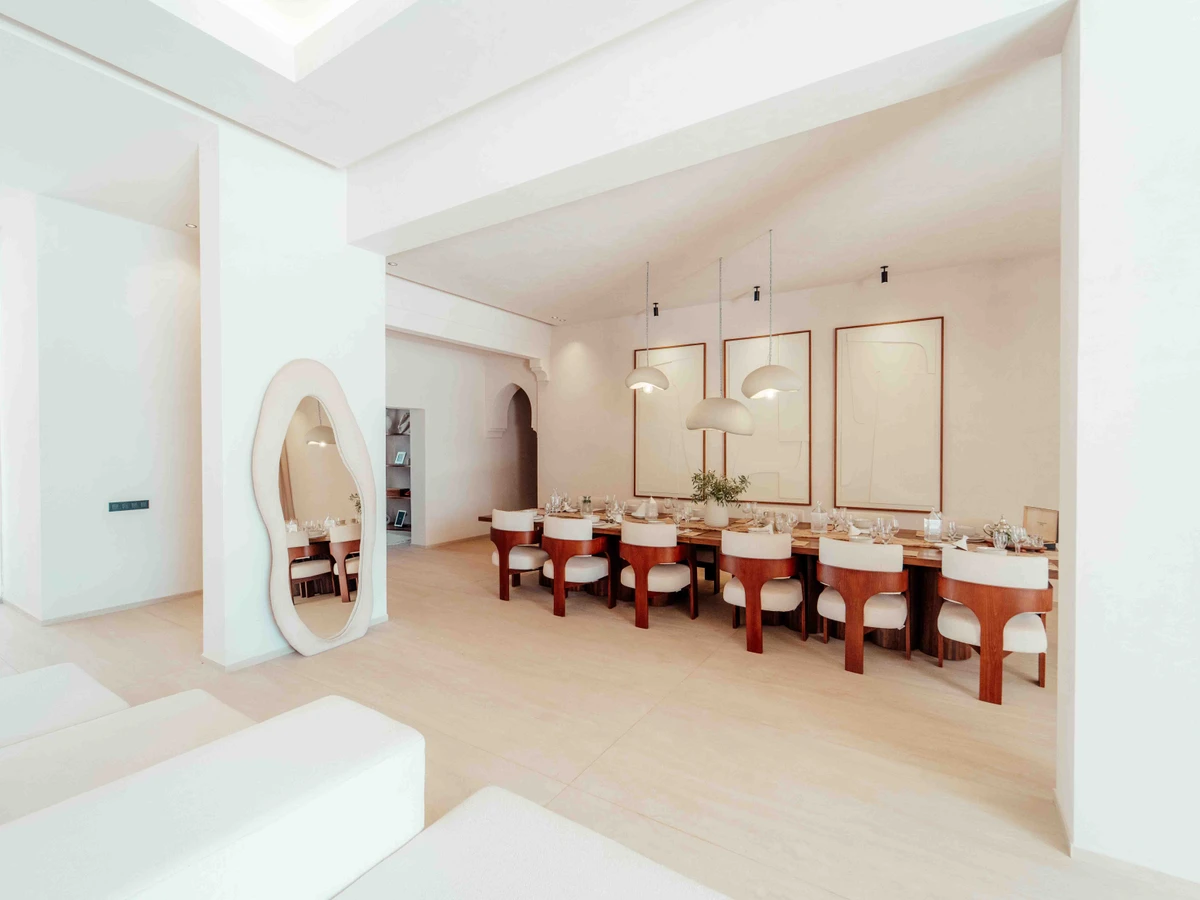
Salon and dining room at a Marrakech palais
Villa Kemgia, Marrakech
Key Takeaways
The medina and Gueliz are two different eating cities; plan at least one night in each
Many medina restaurants are unlicensed, so if wine matters to the evening, check before you book
The Djemaa el-Fna food stalls are a spectacle worth seeing once and rarely the best meal of the trip
The best Moroccan food most guests eat all week is usually cooked at the house by their own dada
Spring and autumn are peak; the tables worth having are booked days ahead, not on the night

Frequently Asked Questions

What is the single best restaurant in Marrakech?
If we had to send someone to one place for a first proper Moroccan meal, it would be Al Fassia in Gueliz. It has been run by women since the late 1980s, the cooking is precise rather than theatrical, and it is licensed, which much of the medina is not. Dar Yacout is the more spectacular night out, but it is as much about the building as the food.
Should we eat at the Djemaa el-Fna food stalls?
Go once, for the spectacle, and eat lightly. The square at dusk is one of the great sights in North Africa. The food is mostly fine and rarely the best meal of the trip, the touting is relentless, and it is a poor place to discover you have a nervous stomach. For genuinely great street food in that area, go to Mechoui Alley in the morning instead.
Can you drink alcohol in Marrakech restaurants?
In many, yes, but a significant number of medina restaurants are unlicensed. It is a planning fact rather than a complaint: if wine matters to the evening, check when booking. Gueliz is where most of the wine lists are, and licensed riads and hotels serve normally.
How far ahead should we book?
Further ahead than feels necessary, especially in the spring and autumn peaks. The good rooms in this city are small and fill days in advance. Booking the tables is the single most useful thing our concierge does on a Marrakech week, because a late booking is how people eat badly in a city with extraordinary food.
Is it safe to eat street food in Marrakech?
Broadly yes, with the usual sense: go where it is busy and turning over, eat things cooked in front of you, and be more careful with salads and anything that has been sitting. Mechoui Alley in the morning is a better bet than a quiet stall late at night. If anyone in the group has a delicate stomach, keep the square to a look rather than a meal.
What should we eat that is not tagine?
Pastilla, the sweet and savoury pigeon or chicken pie, is the dish most people underrate and remember. Mechoui, slow-roast lamb, is the other. Harira soup, particularly around Ramadan. And ask your villa dada what she actually cooks at home, which is usually better than anything on a tourist menu.
Does Ramadan affect restaurants?
Yes. Daytime service changes across the city during the month, many places adjust hours, and the rhythm of the evening shifts entirely. It is not a reason to avoid travelling then, and the nights after sunset are memorable, but it should be a decision you made rather than a surprise. We check the calendar against guest dates before confirming.
Is it better to eat in the villa or go out?
Both, and about half and half over a week. Every villa in our Marrakech collection carries staff and most have a dada who cooks Moroccan food properly, and it is very often the best Moroccan food guests eat all trip. Eating in also saves a group from four consecutive restaurant nights and is far easier with children.
Follow the journey @erentalsexclusive + @aurelseyez
Villa tours, destination guides, and behind-the-scenes content from the team on the ground
Cameron Elder
Founder, ERentals Exclusive
morocco
marrakech
food
restaurants
travel-tips

See it in motion

From the feed

Real stays, real light. Tap any film to watch it full screen.

Stay in the loop
© 2026 ERentals Exclusive