Villa D is the first Moroccan project from Studio KO, the Paris-based practice that designed the Musée Yves Saint Laurent in Marrakech. A pisé rammed-earth silhouette rising from a six-hectare park of olive trees, junipers, and desert garden, with the snow-capped Atlas Mountains filling the southern horizon. Designed as a humble family home that scales. Sleeps twenty.
There is a moment, when you arrive at Villa D Marrakech, where the building does not look like a building. The road from Marrakech runs out for fifteen kilometers along the route to Ouarzazate, past the suburban edge, past the olive farms, into a landscape that begins to look more like the high desert than the medina you left an hour ago. The driveway turns. And what you see, instead of a villa, is a long earth-colored silhouette pressed against the Atlas foothills, low and horizontal, the same color as the soil it grew out of, with no clear line where the architecture begins.
That is the point. Villa D is the first Moroccan project from Studio KO, the Paris-based practice founded by Karl Fournier and Olivier Marty, the same office that designed the Musée Yves Saint Laurent in Marrakech. The brief was a private home that could be opened to twenty guests. The answer was pisé rammed-earth construction, a building that disappears into the land at every angle except the one you are walking toward.
What Pisé Actually Is
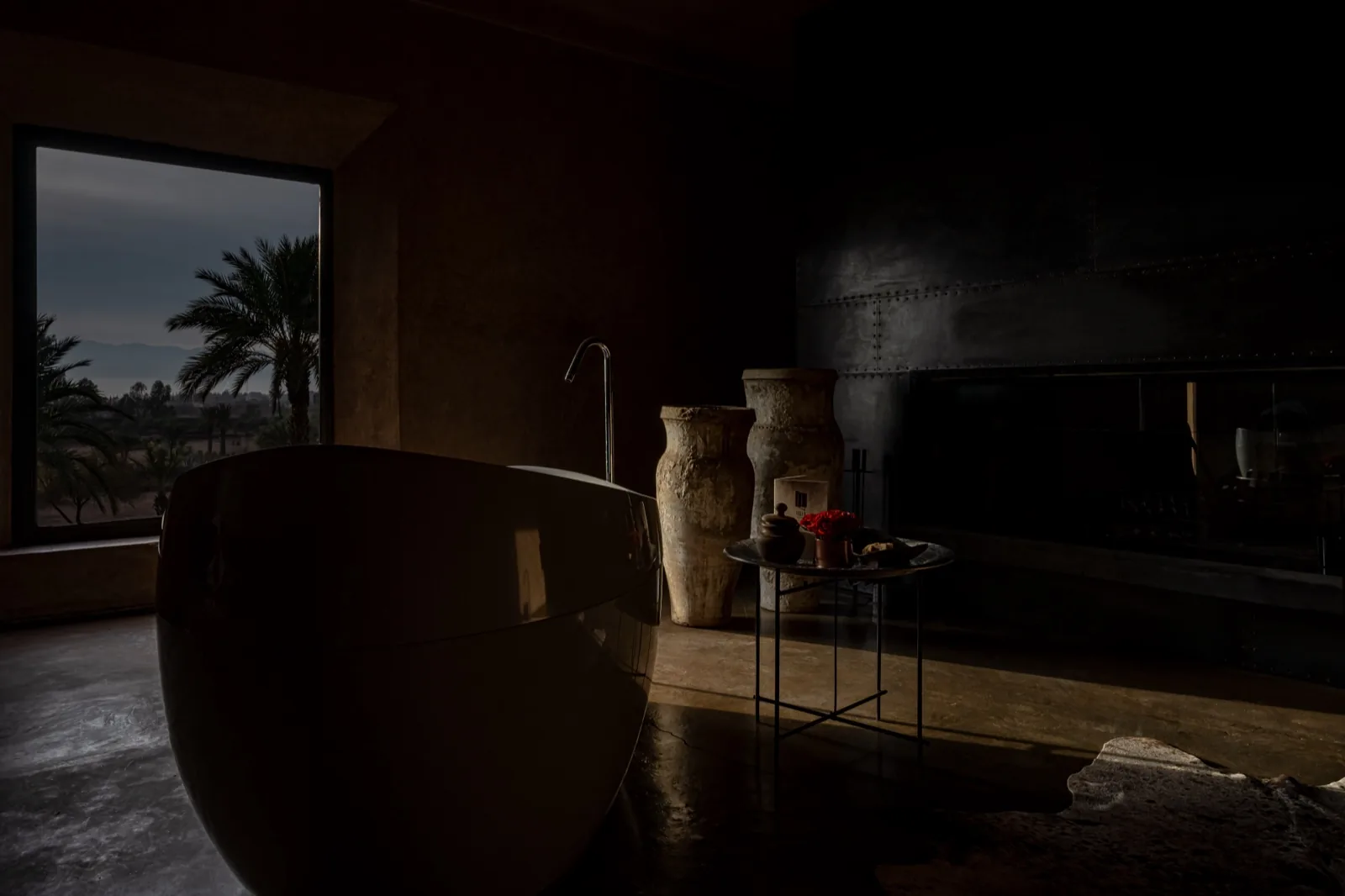
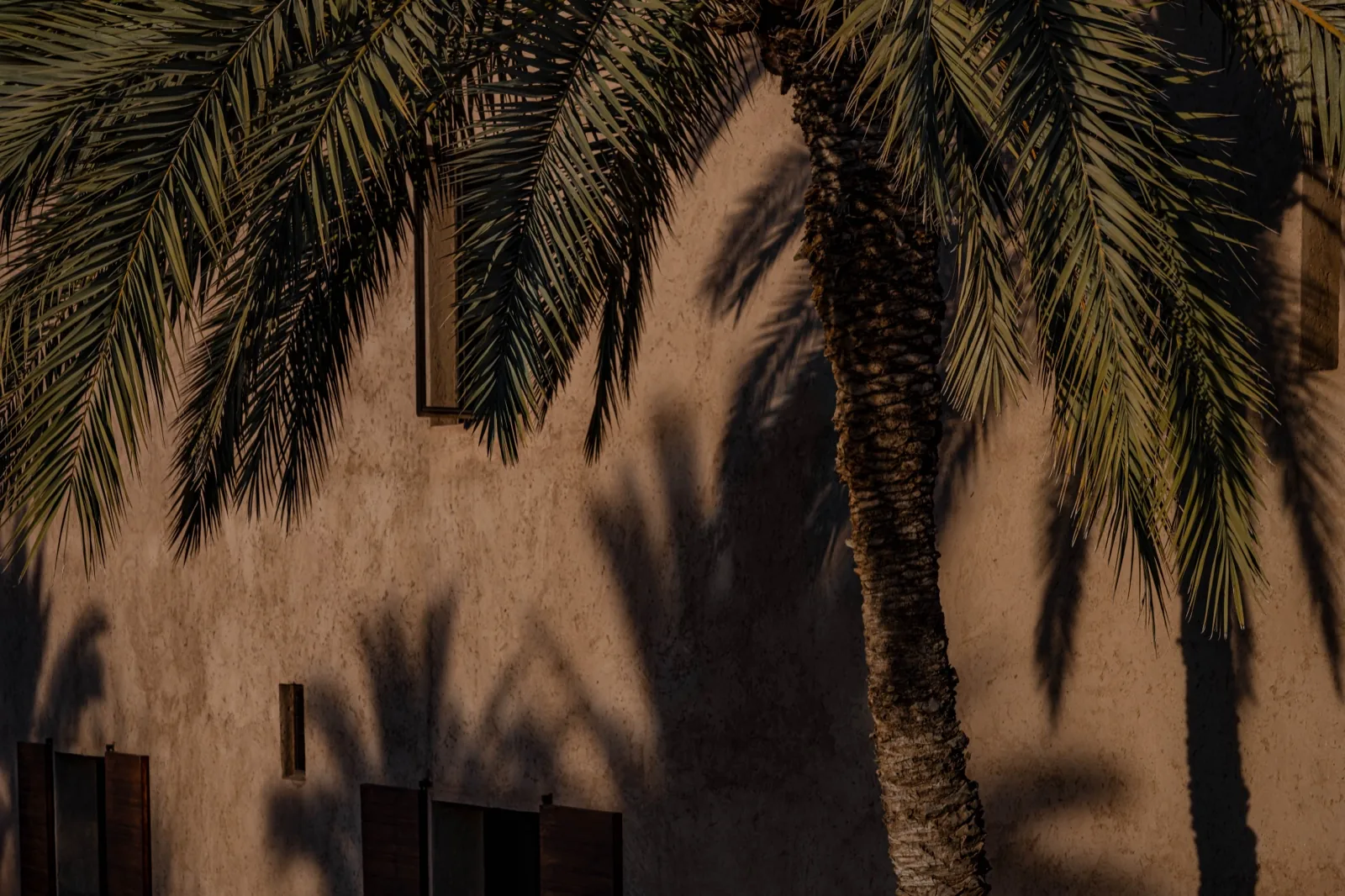
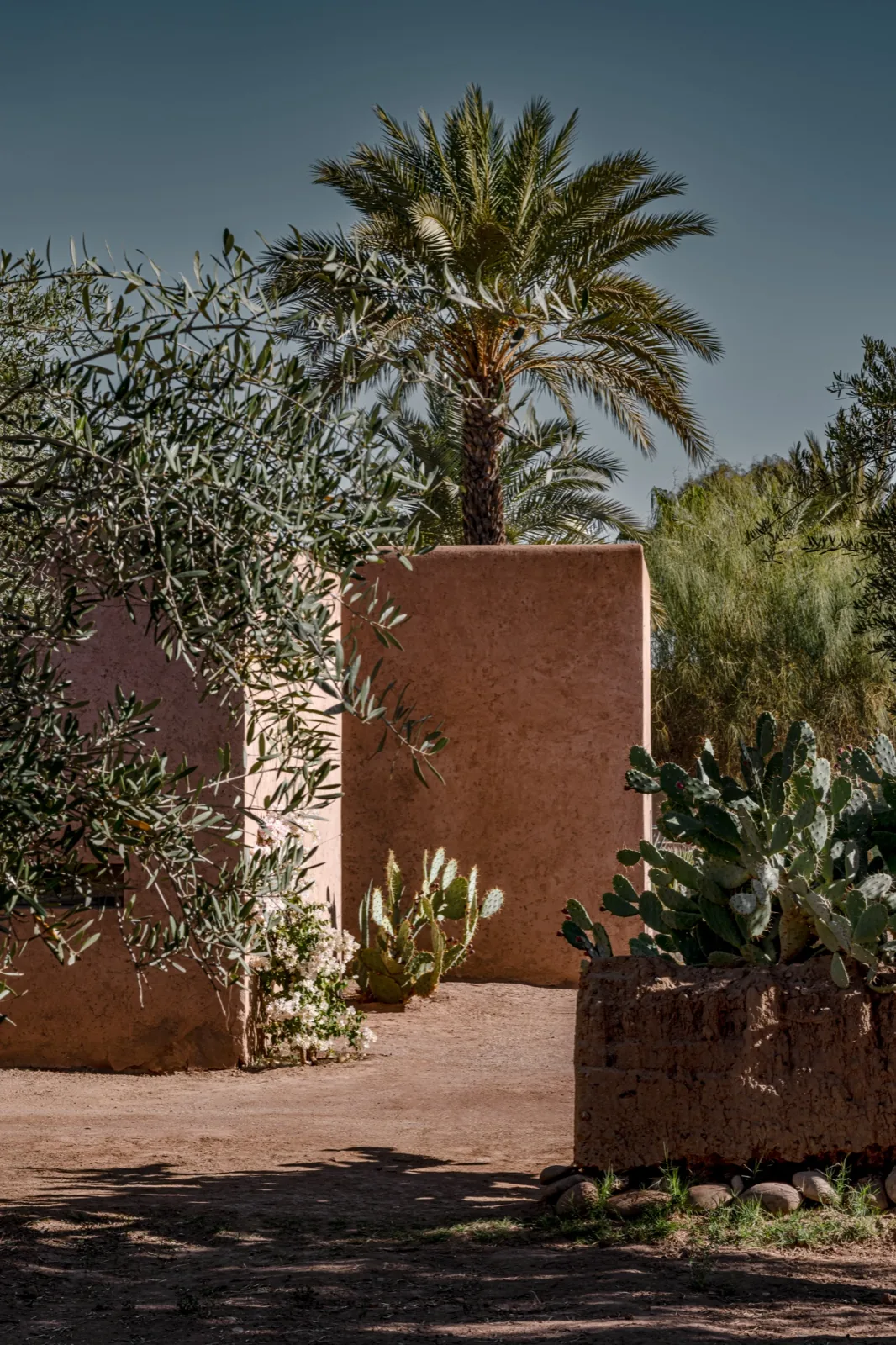
Pisé (the French word for rammed earth) is one of the oldest construction techniques in the Maghreb. The walls are built by packing damp earth, mixed with a small amount of lime or cement, into wooden formwork in layers, ramming each layer hard, then removing the formwork once the wall has set. The result is a wall that looks like geological strata, layered, slightly variable in color, warm to the touch in winter and cool in summer. The Atlas villages have built with this technique for a thousand years. Studio KO's decision to build Villa D from pisé was not a gesture toward sustainability marketing. It was a decision about climate, light, sound, and what the house would feel like to live in over a long week.
You can feel the wall thickness when you walk through the doorways. They are sized for the construction method, slightly deeper than a poured concrete wall, with shadow gradients across the openings as the sun moves. The interior temperature regulates without aggressive air conditioning. The acoustics absorb voices the way a stone library does. None of these are luxury features in the marketing sense. They are consequences of the material, and they are the reason the house feels different to be inside than any other Marrakech rental.
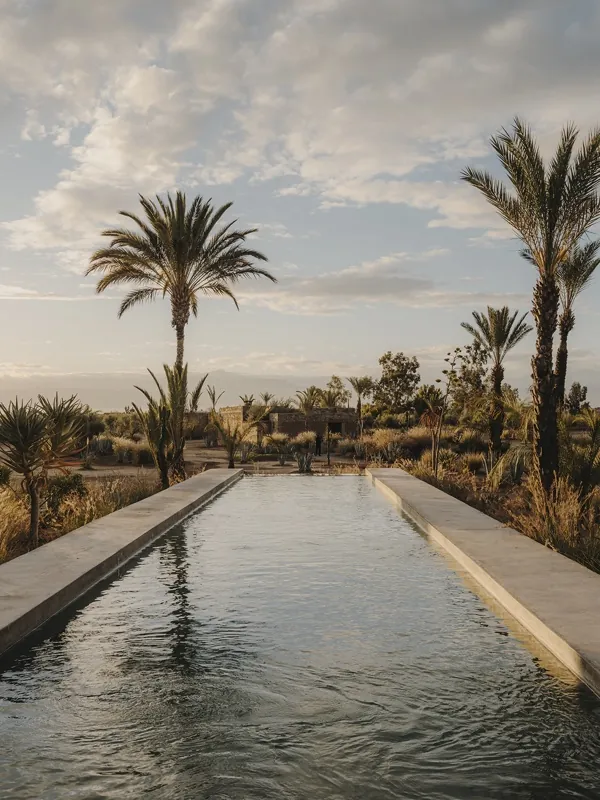
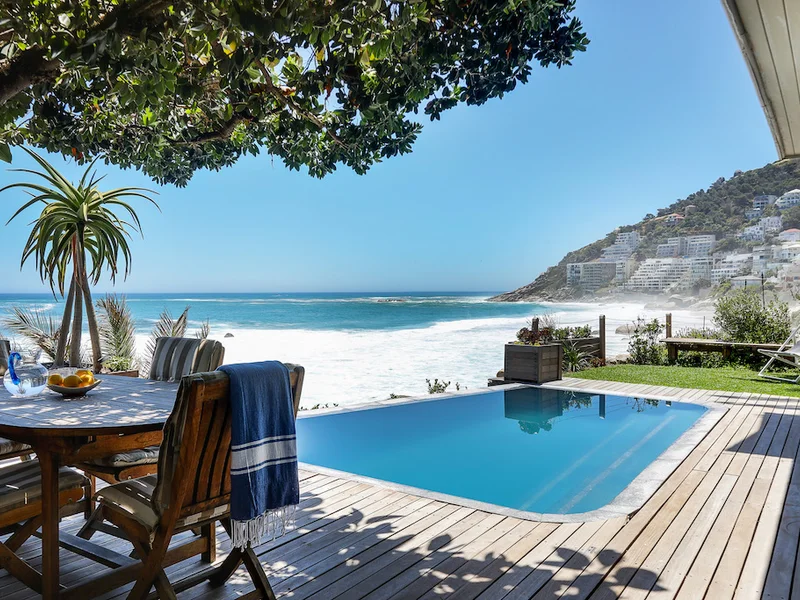
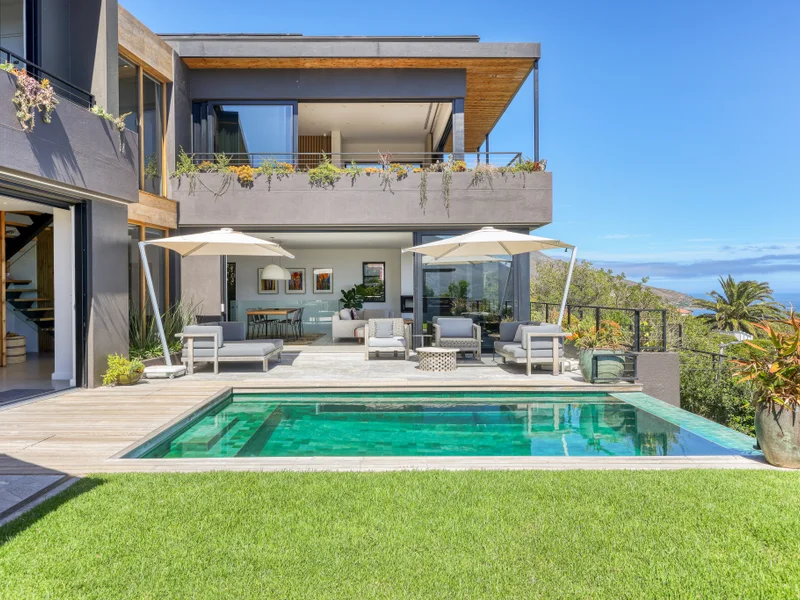
The 25-meter infinity pool. Atlas snow on the southern horizon for half the year.
The Plan: A Village, Not a House
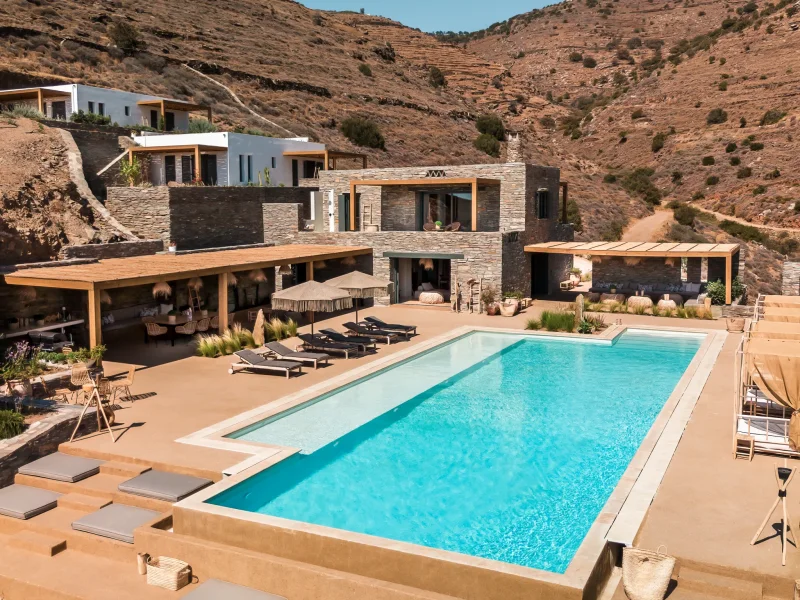
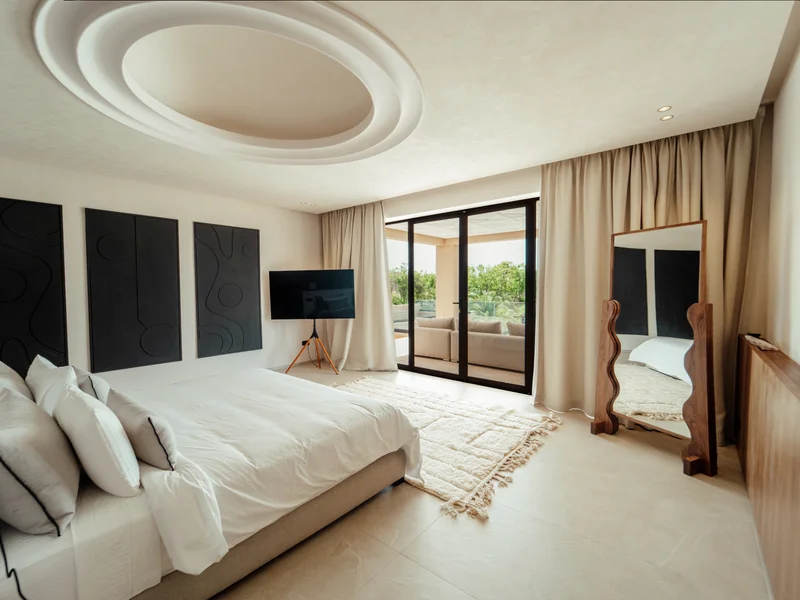
Villa D sleeps twenty across two buildings: the main villa and an independent farmhouse pavilion. The main villa contains the master suite on the upper floor (a single large bedroom panelled in patinated metal, with its own bathroom), a four-bedroom corridor downstairs (twin or double rooms sharing a generous communal bathroom with two showers and two toilets), and a two-bedroom suite in a separate pavilion (each room en-suite). The farmhouse adds three bedrooms and two bathrooms, sized for friends or extended family who want adjacency without being inside the main building.
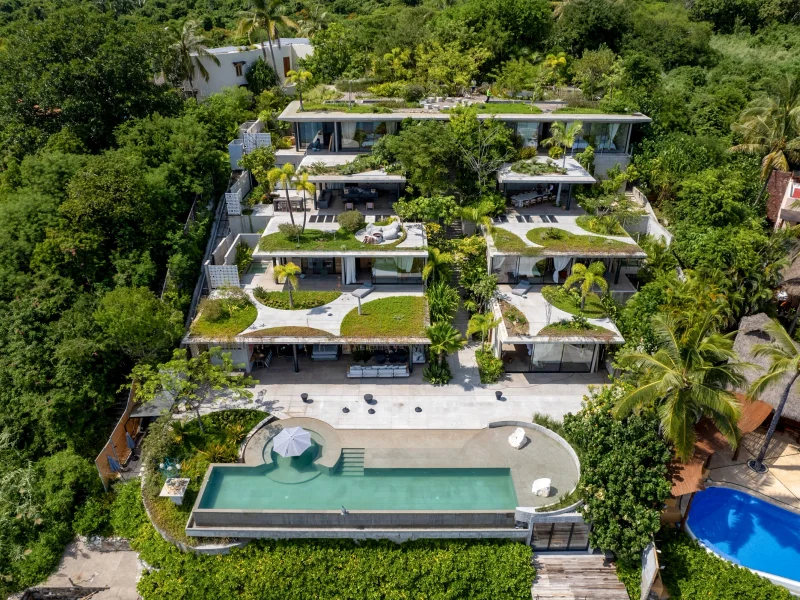
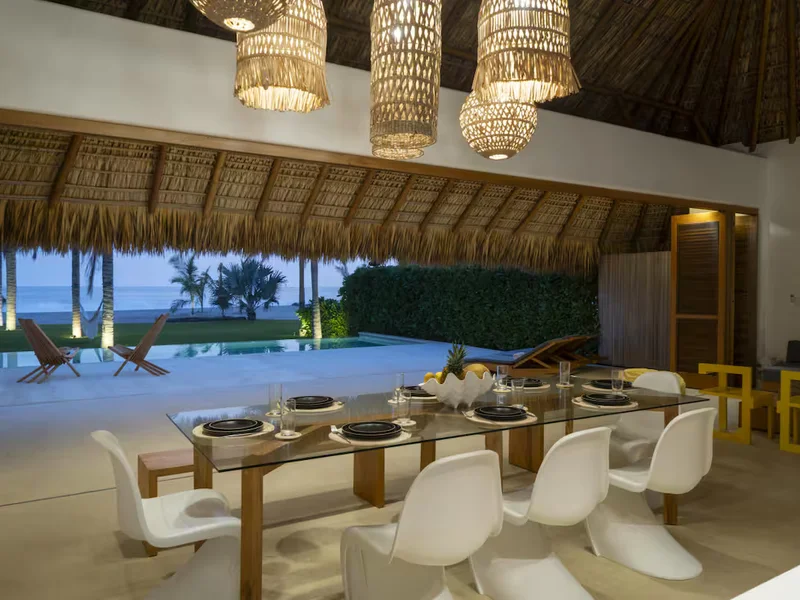
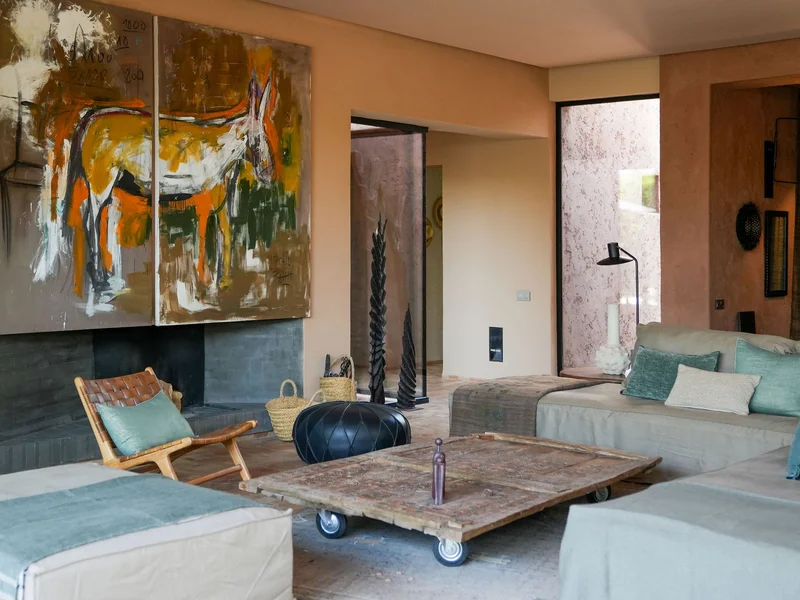
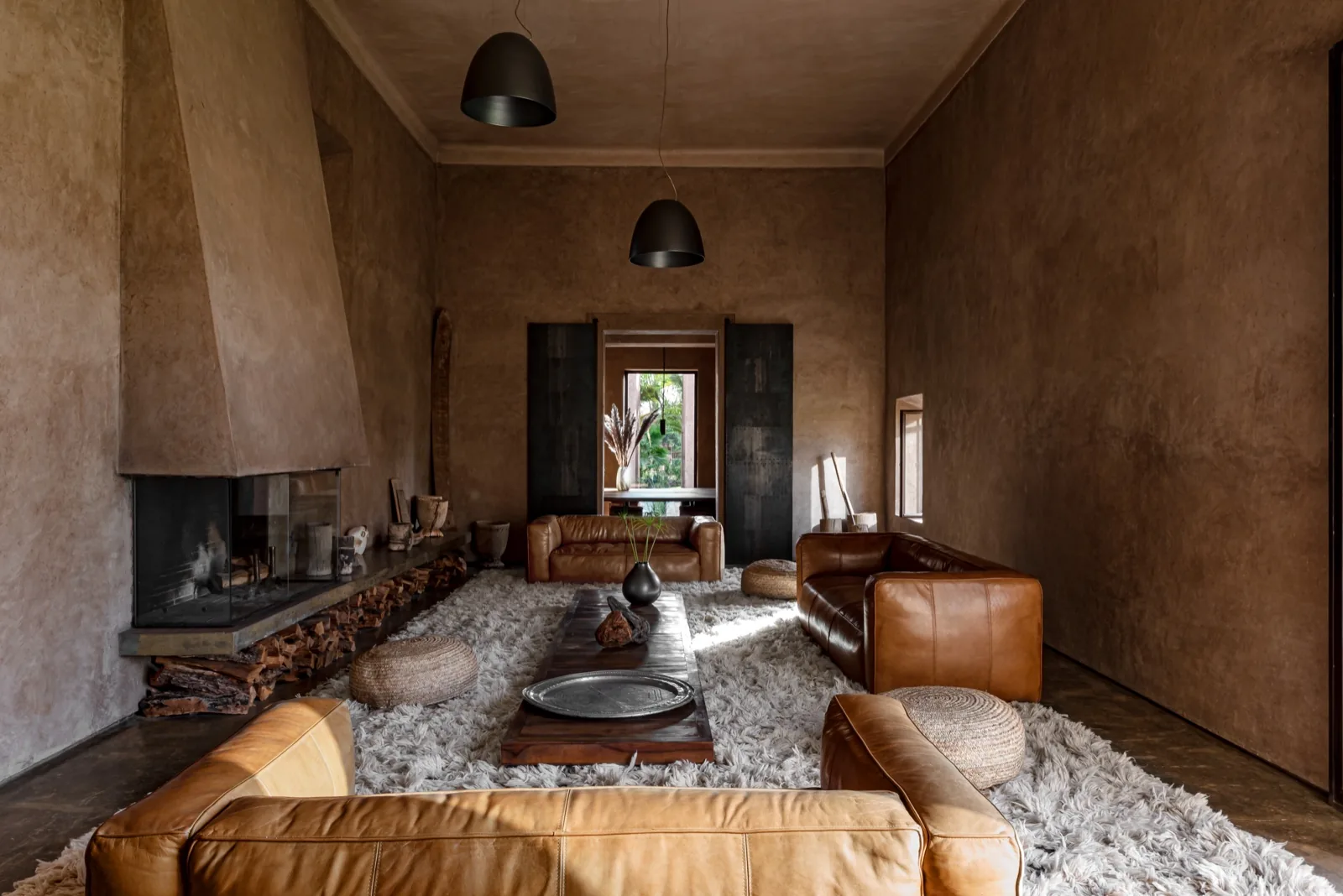
The geometry is the point. A traditional Marrakech villa is one building with twenty rooms inside it. Villa D is, effectively, a hamlet: a master house, a guest pavilion, an independent farmhouse, all connected by garden pathways through the six hectares of grounds. You can be in residence with twenty people and not see anyone for half a day if you do not want to. Or you can pull everyone together in the cathedral-ceiling living room with the wood-burning fireplace and tan leather sofas, anchored by the infinity pool just outside the glass.
Cathedral ceilings, wood-burning fireplace, tan leather. Studio KO's grammar applied at scale.
The master suite, panelled in patinated metal. Mountain view from the bed.
The Six-Hectare Park
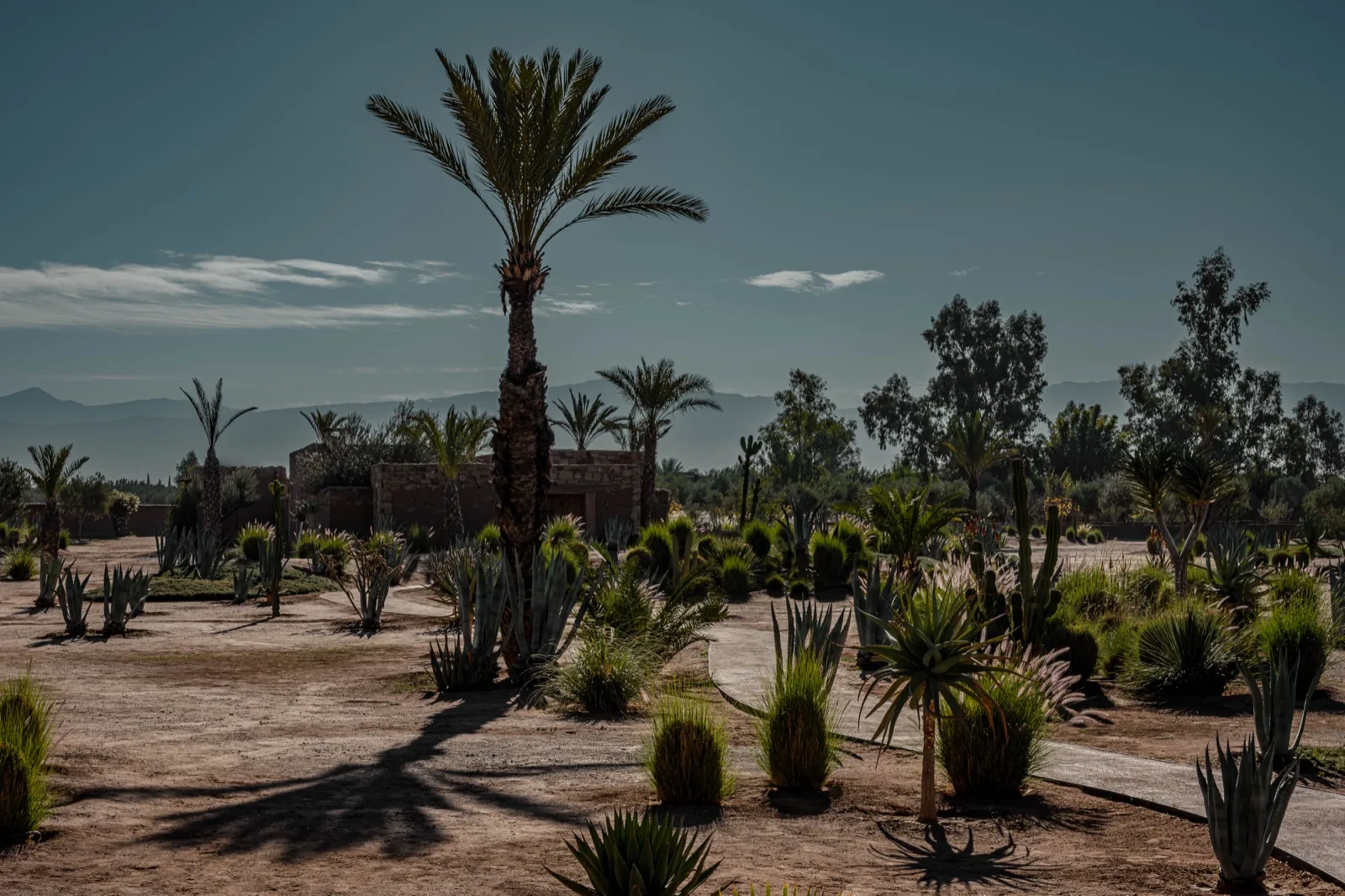
Six hectares is fifteen acres. To put that in scale: it is significantly larger than the median private villa estate in Marrakech, and most of it is not lawn or hardscape. It is olive grove (mature trees, productive), juniper, and desert garden landscaped to read as native to the foothills rather than as a transplanted European garden. The 25-meter infinity pool runs down the spine of the property facing south, which means the pool deck looks at the Atlas Mountains for the entire length of the swim. In winter (December through March) the peaks carry snow; the visual is jarring the first time you see it from a sun-warmed pool.
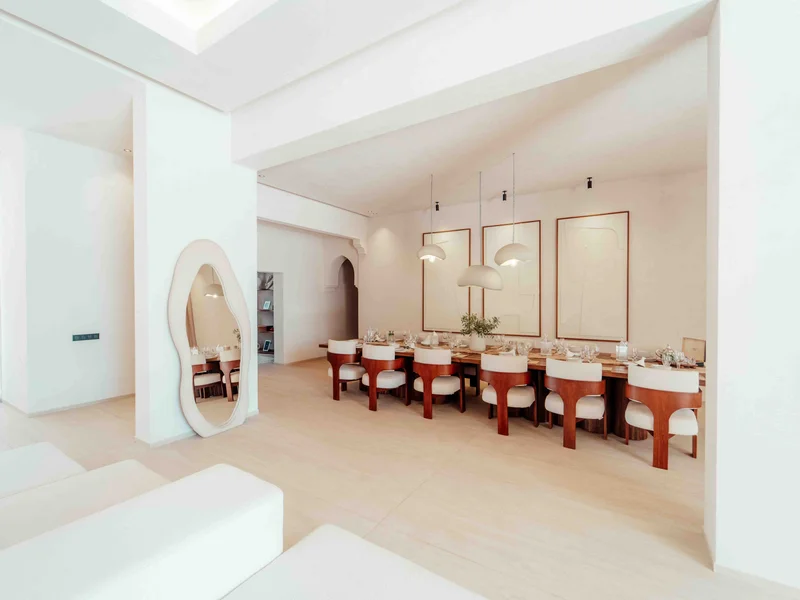
The grounds are also where most of the dining happens. There are at least four distinct outdoor dining setups: the desert garden (long table under the open sky), the mountain-view terrace (covered, oriented south), the pergola (vine-shaded, sized for casual lunches), and the indoor dining room (formal, holding the full party of twenty when the wind picks up). The chef, Mrs. Houriya, who runs the kitchen with a small team, will set whichever location matches the meal and the weather without being asked twice.
Six hectares. Olive grove, juniper, desert garden, all landscaped to read as native to the foothills.
Mrs. Houriya, and What She Cooks
All meals at Villa D are prepared by the resident chef Mrs. Houriya and her team, working out of the villa's kitchen. The cooking is Moroccan and international, made with fresh organic ingredients, most sourced same-day from the markets in Marrakech. Breakfast is included in the residence rate. Lunch and dinner are à la carte, billed at €50 per person; brunch from €85; barbecue €95; canapés €20. The pricing model is honest: you do not pay for a kitchen that sits empty if you eat out, and you do not get hit with a hidden food and beverage minimum.
What you actually want to do is eat in. Mrs. Houriya is the reason guests reduce their planned restaurant nights once they arrive. Her tagines, her pastilla, her brunch spreads (the kind with seven dishes laid out, no theatre, just generous abundance), are what a long week at Villa D ends up being structured around. The kitchen also handles dietary requests without flinching: vegetarian, halal, gluten-free, kid-friendly menus.
Events, and the Tiered Pricing
Villa D is built to host events. Receptions, weddings, brand activations, photo and editorial shoots all happen here regularly. The pricing model separates the residential side (twenty in-house guests, sleeping at the property) from the event side (additional attendees, meals, setup), which keeps the math transparent. The tiers run: up to 60 guests (20 residents + 40 reception attendees) for €7,000 above the nightly rate; 61 to 80 guests for €10,000; 81 to 150 guests for €15,000. The fee covers the use of the outdoor spaces for the event, plus the additional staffing needed to handle the larger headcount. Catering, decor, music, and any external production sit on top.
For weddings or large events, plan the booking 6 to 9 months ahead. The villa runs a small number of events per year and the desirable spring and fall dates close out early.
Stay At
A single anchor villa with no comparable peer in our Marrakech collection. Studio KO architecture, six-hectare park, twenty guests, resident chef.
Who Villa D Is Right For
Architecture-led travelers and design press, Villa D is a destination in itself for anyone who has visited the Musée Yves Saint Laurent
Multi-generational family stays of 12 to 20 who need the geographic separation between the main villa, the guest pavilion, and the farmhouse
Wedding parties willing to layer the event tier on top of the residence rate, the grounds and dining setups are built for it
Brand and editorial shoots, the architecture, the pool, the Atlas backdrop, and the six hectares of grounds give endless variety
Wellness retreats hosting 12 to 20 with a full team in residence, the pool, the kitchen, and the silence of the foothills do the heavy lifting
Practical Booking Notes
Three-night minimum across the year. Holiday window (December 16 to January 7) carries a €500 per night surcharge with a six-night minimum. Forty percent deposit at booking, balance due 45 days before check-in. Cancellation accepted up to 45 days before check-in, deposit non-refundable. Event tiers paid in advance separately. The owner Majid Chetouani is the direct counterparty (Villa D is not in the Marrakech Experience portfolio); the relationship runs through ERentals. Children welcome, baby crib and high chair on request, no pets.
ERentals Picks
Properties mentioned in this article
Key Takeaways
First Moroccan project by Studio KO, the architects of the Musée Yves Saint Laurent in Marrakech
Pisé rammed-earth construction, 6 hectares of olive grove and desert garden, 25-meter infinity pool
Sleeps 20 across a main villa plus an independent farmhouse pavilion, all meals prepared by resident chef Mrs. Houriya
Event tiers stack on top of the residence rate: 60 guests €7,000, 80 guests €10,000, 150 guests €15,000
Frequently Asked Questions
How does Villa D differ from the other Marrakech villas in the collection?
Villa D is the only architecturally-significant project in the collection (Studio KO designed it from the ground up), the only one with pisé rammed-earth construction, and the only one with six hectares of grounds and a 25-meter infinity pool. The other Marrakech villas are interior-design-led; Villa D is architecture-led. It is also the only Moroccan property where Cameron and the team have a direct relationship with the owner rather than a portfolio operator.
Is Villa D walkable to anything?
No. Villa D is 15 kilometers southeast of central Marrakech on the road to Ouarzazate, in a rural setting bordered by olive groves. There are no walkable restaurants, shops, or nightlife. This is the design intention. Marrakech Medina is 25 minutes by car, the airport 30 minutes, and a private driver is bookable through the villa for any off-property excursion.
Can I see snow on the Atlas Mountains from the property?
Yes, from approximately late November through March, depending on the year. The southern-facing pool deck and several of the main villa rooms look directly at the snow-capped peaks. The contrast (a sun-warm pool foreground with snow-capped peaks behind) is the visual most guests photograph.
How does the chef pricing work for a full week?
Breakfast is included in the residence rate. For a typical week of 20 guests with the chef cooking lunch and dinner daily, expect roughly €18,000 to €20,000 in chef-prepared meals on top of the residence and grocery costs. Most groups choose to dine in 5 nights and out 2; the kitchen team scales accordingly.
Villa tours, destination guides, and behind-the-scenes content from the team on the ground
ERentals Editorial
Travel Curator