Yacht Charter Costa Rica

Chartering the Costa Rica Pacific coast: Papagayo Bay marinas, Osa Peninsula routes, dry-season windows, and the Sunseeker 82 that anchors our fleet.

The Guanacaste coast has a dry season that behaves like clockwork. From roughly December through April it barely rains on this side of Costa Rica, the hills go gold, and the Pacific in front of Playa del Coco settles into the pattern that brings people back every year. It is the most reliable weather window in the country and it is when the boats are worth booking. Two very different days sit inside that window. One is offshore: Costa Rica is one of the better billfish fisheries in the world and the dry months are when the fleet works hardest, running out past the shelf for sailfish and marlin. The other is inshore and much gentler: island hopping around the gulf, snorkelling the rocky points, anchoring somewhere with a paddleboard and lunch and not moving for four hours. The same boat can do either, but they are not the same day, and the group should decide which one it wants before we match a hull to it. The Sunseeker 82 at anchor in the Gulf of Papagayo The Dry Season, and the Wind Nobody Mentions The Guanacaste dry season runs roughly December to April and is the reason this coast fills in the northern winter. Rain is rare, the days are long and bright, and the sea is generally workable. January through April is the settled heart of it. May starts the transition and by June the green season has arrived, which is beautiful on land and much less predictable on the water. Here is the part that gets left out of most charter pages. The Papagayo winds are named for this gulf. They are offshore northeasterlies that funnel down across the isthmus, and they blow hardest in precisely the months people book for the dry season, with December through February the strongest stretch. On a windy morning the gulf can be genuinely choppy, and the smaller, lighter boats will have a harder day than the bigger, heavier ones. This does not ruin the season and most days are fine, but it is why we ask about seasickness before we match a boat, and why we will sometimes tell a family to take the larger hull even though the smaller one fits the headcount. The practical consequence is simple. Keep the day flexible inside the week. A group with one fixed charter date is at the mercy of that morning. A group with a week and two candidate days gets to pick the calm one, and on this coast in winter that is an easy call to make locally rather than months ahead from another continent. Billfish, and What We Will and Will Not Promise Costa Rica has a serious offshore reputation and the Pacific side is where it is earned. Sailfish are the headline species and marlin are the prize, with the dry months the period when the fleet is out most consistently. Dorado and tuna fill in around them and are the more likely thing to actually come over the rail on a given day. We will not promise a fish. Anyone who does is selling. What a private charter genuinely buys you over a shared trip is time and choice: a full day rather than a half, the ability to run further out when the reports just

The Guanacaste coast has a dry season that behaves like clockwork. From roughly December through April it barely rains on this side of Costa Rica, the hills go gold, and the Pacific in front of Playa del Coco settles into the pattern that brings people back every year. It is the most reliable weather window in the country and it is when the boats are worth booking.

Two very different days sit inside that window. One is offshore: Costa Rica is one of the better billfish fisheries in the world and the dry months are when the fleet works hardest, running out past the shelf for sailfish and marlin. The other is inshore and much gentler: island hopping around the gulf, snorkelling the rocky points, anchoring somewhere with a paddleboard and lunch and not moving for four hours. The same boat can do either, but they are not the same day, and the group should decide which one it wants before we match a hull to it.

The Dry Season, and the Wind Nobody Mentions

The Guanacaste dry season runs roughly December to April and is the reason this coast fills in the northern winter. Rain is rare, the days are long and bright, and the sea is generally workable. January through April is the settled heart of it. May starts the transition and by June the green season has arrived, which is beautiful on land and much less predictable on the water.

Here is the part that gets left out of most charter pages. The Papagayo winds are named for this gulf. They are offshore northeasterlies that funnel down across the isthmus, and they blow hardest in precisely the months people book for the dry season, with December through February the strongest stretch. On a windy morning the gulf can be genuinely choppy, and the smaller, lighter boats will have a harder day than the bigger, heavier ones. This does not ruin the season and most days are fine, but it is why we ask about seasickness before we match a boat, and why we will sometimes tell a family to take the larger hull even though the smaller one fits the headcount.

The practical consequence is simple. Keep the day flexible inside the week. A group with one fixed charter date is at the mercy of that morning. A group with a week and two candidate days gets to pick the calm one, and on this coast in winter that is an easy call to make locally rather than months ahead from another continent.

Billfish, and What We Will and Will Not Promise

Costa Rica has a serious offshore reputation and the Pacific side is where it is earned. Sailfish are the headline species and marlin are the prize, with the dry months the period when the fleet is out most consistently. Dorado and tuna fill in around them and are the more likely thing to actually come over the rail on a given day.

We will not promise a fish. Anyone who does is selling. What a private charter genuinely buys you over a shared trip is time and choice: a full day rather than a half, the ability to run further out when the reports justify it, and a captain making the call for your group rather than for a boat of strangers with a fixed return time. For a serious fishing group we suggest a full day and a boat with real range and shade.

Most of our guests are not chasing a record. They want a few hours of rods in the water and then somewhere quiet to swim, and that mixed day is the one this gulf does best. Say which you want and we will brief the captain accordingly, because a boat rigged and planned for a full offshore run is a different day from one planned around two anchorages and lunch.

The Inshore Day, Which Is What Most Groups Actually Want

The Gulf of Papagayo is a working cruising ground of rocky headlands, small bays and islands within easy reach of Playa del Coco. A typical good day runs out to a snorkelling spot in the morning while the water is clearest, moves to a sheltered bay for lunch and swimming when the sun is high, and comes back along the coast in the late afternoon light. Nobody needs an itinerary beyond that.

The gear is what makes it work, and it is listed per boat rather than promised across the fleet. Pajot 45 and Mia 50 both carry paddleboards, snorkelling gear, a floating mat, refreshments and lunch on a full day. Azimut 80 carries a tender, a jet ski and water toys, which changes what a group of teenagers does with the afternoon. Sunseeker 82 carries a jacuzzi and a full interior saloon, which matters more than it sounds on a bright day when somebody needs to be out of the sun.

Wildlife is a regular bonus rather than a scheduled item. Dolphins are common in the gulf, turtles are seen, and humpbacks pass through Costa Rican Pacific waters in season. We do not build a day around any of it and we will not sell you a sighting, but the odds of seeing something are good enough that binoculars are worth bringing.

Matching the Boat to the Day

For a large group on a day charter, Pajot 45 takes forty-two, which is the biggest headcount on this roster, with a spacious deck, paddleboards, snorkelling gear, a floating mat, refreshments and lunch on a full day. It is the boat for a wedding party or a multi-family group where the point is that everybody is on the same deck.

For twenty, Mia 50 carries the same kit in a more manageable package and is the sensible default for a family group that wants a full day without the scale of the forty-two-guest option.

For a smaller group that wants comfort over headcount, two boats stand apart. Azimut 80 takes sixteen with wi-fi, entertainment systems, stabilizers, a flybridge, a tender, a jet ski and water toys. The stabilizers are the detail worth noting on a windy gulf: they are exactly the feature that turns a choppy Papagayo morning from an endurance test into a pleasant one. Sunseeker 82 takes twelve with air conditioning, a jacuzzi, a kitchen, an interior saloon and a sound system, and is the most comfortable long day on the roster for a group that expects to spend real time aboard rather than in the water.

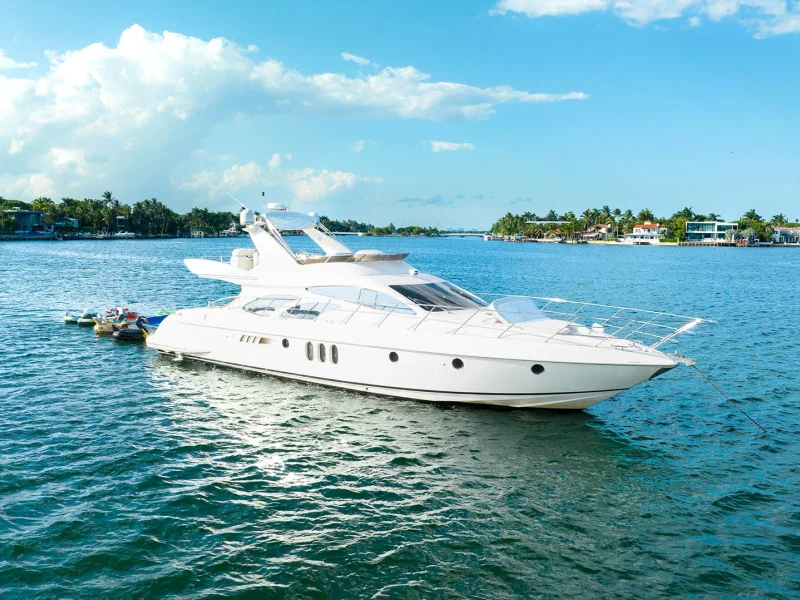
Sunseeker 82 yacht cruising Costa Rica Pacific coast
Yachts
COSTA-RICA

Yacht Charter Costa Rica

The Pacific Coast Less Traveled
Cameron Elder
·
February 7, 2026
·
10 min read
From the pristine waters of the Gulf of Papagayo to the untouched Golfo Dulce, Costa Rica offers yacht experiences that combine adventure, wildlife, and genuine pura vida.
The Guanacaste coast has a dry season that behaves like clockwork. From roughly December through April it barely rains on this side of Costa Rica, the hills go gold, and the Pacific in front of Playa del Coco settles into the pattern that brings people back every year. It is the most reliable weather window in the country and it is when the boats are worth booking.
Two very different days sit inside that window. One is offshore: Costa Rica is one of the better billfish fisheries in the world and the dry months are when the fleet works hardest, running out past the shelf for sailfish and marlin. The other is inshore and much gentler: island hopping around the gulf, snorkelling the rocky points, anchoring somewhere with a paddleboard and lunch and not moving for four hours. The same boat can do either, but they are not the same day, and the group should decide which one it wants before we match a hull to it.
Aerial view of Sunseeker 82 yacht in Costa Rica waters
The Sunseeker 82 at anchor in the Gulf of Papagayo

The Dry Season, and the Wind Nobody Mentions

The Guanacaste dry season runs roughly December to April and is the reason this coast fills in the northern winter. Rain is rare, the days are long and bright, and the sea is generally workable. January through April is the settled heart of it. May starts the transition and by June the green season has arrived, which is beautiful on land and much less predictable on the water.
Here is the part that gets left out of most charter pages. The Papagayo winds are named for this gulf. They are offshore northeasterlies that funnel down across the isthmus, and they blow hardest in precisely the months people book for the dry season, with December through February the strongest stretch. On a windy morning the gulf can be genuinely choppy, and the smaller, lighter boats will have a harder day than the bigger, heavier ones. This does not ruin the season and most days are fine, but it is why we ask about seasickness before we match a boat, and why we will sometimes tell a family to take the larger hull even though the smaller one fits the headcount.
The practical consequence is simple. Keep the day flexible inside the week. A group with one fixed charter date is at the mercy of that morning. A group with a week and two candidate days gets to pick the calm one, and on this coast in winter that is an easy call to make locally rather than months ahead from another continent.

Billfish, and What We Will and Will Not Promise

Costa Rica has a serious offshore reputation and the Pacific side is where it is earned. Sailfish are the headline species and marlin are the prize, with the dry months the period when the fleet is out most consistently. Dorado and tuna fill in around them and are the more likely thing to actually come over the rail on a given day.
We will not promise a fish. Anyone who does is selling. What a private charter genuinely buys you over a shared trip is time and choice: a full day rather than a half, the ability to run further out when the reports justify it, and a captain making the call for your group rather than for a boat of strangers with a fixed return time. For a serious fishing group we suggest a full day and a boat with real range and shade.
Most of our guests are not chasing a record. They want a few hours of rods in the water and then somewhere quiet to swim, and that mixed day is the one this gulf does best. Say which you want and we will brief the captain accordingly, because a boat rigged and planned for a full offshore run is a different day from one planned around two anchorages and lunch.
Woman on yacht deck gazing at jungle-covered Costa Rican coastline
Taking in the untouched Guanacaste coastline from the aft deck

The Inshore Day, Which Is What Most Groups Actually Want

The Gulf of Papagayo is a working cruising ground of rocky headlands, small bays and islands within easy reach of Playa del Coco. A typical good day runs out to a snorkelling spot in the morning while the water is clearest, moves to a sheltered bay for lunch and swimming when the sun is high, and comes back along the coast in the late afternoon light. Nobody needs an itinerary beyond that.
The gear is what makes it work, and it is listed per boat rather than promised across the fleet. Pajot 45 and Mia 50 both carry paddleboards, snorkelling gear, a floating mat, refreshments and lunch on a full day. Azimut 80 carries a tender, a jet ski and water toys, which changes what a group of teenagers does with the afternoon. Sunseeker 82 carries a jacuzzi and a full interior saloon, which matters more than it sounds on a bright day when somebody needs to be out of the sun.
Wildlife is a regular bonus rather than a scheduled item. Dolphins are common in the gulf, turtles are seen, and humpbacks pass through Costa Rican Pacific waters in season. We do not build a day around any of it and we will not sell you a sighting, but the odds of seeing something are good enough that binoculars are worth bringing.

Matching the Boat to the Day

For a large group on a day charter, Pajot 45 takes forty-two, which is the biggest headcount on this roster, with a spacious deck, paddleboards, snorkelling gear, a floating mat, refreshments and lunch on a full day. It is the boat for a wedding party or a multi-family group where the point is that everybody is on the same deck.
For twenty, Mia 50 carries the same kit in a more manageable package and is the sensible default for a family group that wants a full day without the scale of the forty-two-guest option.
For a smaller group that wants comfort over headcount, two boats stand apart. Azimut 80 takes sixteen with wi-fi, entertainment systems, stabilizers, a flybridge, a tender, a jet ski and water toys. The stabilizers are the detail worth noting on a windy gulf: they are exactly the feature that turns a choppy Papagayo morning from an endurance test into a pleasant one. Sunseeker 82 takes twelve with air conditioning, a jacuzzi, a kitchen, an interior saloon and a sound system, and is the most comfortable long day on the roster for a group that expects to spend real time aboard rather than in the water.
Our standing advice is to take more boat than the headcount strictly requires. Shade, and somewhere to sit away from the rest of the group, matter far more at hour six than they do at hour one, and that is the thing groups consistently underestimate when they book on capacity alone.
Sunseeker 82 luxury yacht interior salon
The main salon offers refined comfort for the voyage

Getting There, and How a Charter Day Fits the Week

Almost everyone arrives through Liberia, which is the closer of the two international airports and about forty minutes from Playa del Coco. San Jose works but adds a long transfer across the country, and on a short trip that drive costs a day at each end. If the charter is the centrepiece of the week, fly into Liberia.
Put the charter in the middle of the stay rather than on the first or last day. Arrival day is for adjusting and the final morning belongs to packing and the airport, and a boat on either of those is the one that gets cancelled or rushed. A charter on day three or four also leaves room to move it by a day if the wind makes that the better call, which on this coast in winter is a decision worth keeping open.

What a Full Day Actually Looks Like

A full day out of Playa del Coco is usually eight hours and it is worth understanding how those hours distribute, because the shape surprises people. The first hour is loading, briefing and getting clear of the bay. The best water is early, so the snorkelling stop comes before lunch rather than after. The middle of the day is the long anchored stretch, which is the part nobody plans and everybody remembers: swimming, eating, the paddleboards, and a couple of hours where the boat does not move at all.
The run home is the hour that catches groups out. The wind typically builds through the afternoon on this coast, so the return leg is often bouncier than the outbound one, and a group that has been in the sun since nine feels it. That is the argument for leaving earlier rather than squeezing the last hour, and it is the argument for the heavier hull if anybody aboard is prone to seasickness.
A half day exists and it works for a group with small children or a tight schedule, but it changes the trip. Four hours is one stop rather than two, and the anchored middle is what gets cut. If the charter is the centrepiece of the week, take the full day.

What to Bring, and What Is Already Aboard

Reef-safe sunscreen, a hat that survives wind, a long-sleeved layer for the return leg, and motion-sickness tablets taken before boarding rather than after symptoms start, which is the mistake almost everyone makes once. Binoculars if wildlife matters to you. A dry bag for phones, because the tender transfer and the paddleboards both end the same way eventually.
Snorkelling gear, paddleboards and a floating mat are aboard on Pajot 45 and Mia 50 and are listed per boat rather than assumed across the fleet. Towels are provided. Where food and drink are included it is stated per charter, and where something is an add-on we price it before you commit rather than raising it on the morning. Ask about the specific boat rather than the fleet, because the honest answer differs between these four.

See it in motion

Watch the collection

Real stays, real light. Tap any film to watch it full screen.

Key Takeaways
The Guanacaste dry season runs December to April, and January to April is its settled heart.
The Papagayo winds blow hardest in exactly those months, so keep two candidate charter days inside the week rather than fixing one.
Offshore billfish and an inshore island day are different days on the same boat, and the group should choose before a hull is matched.
Azimut 80 carries stabilizers, which is the feature that matters most on a choppy Papagayo morning.
Take more boat than the headcount requires: shade and space matter far more at hour six than at hour one.

Frequently Asked Questions

When is the best time to charter in Guanacaste?
The dry season, roughly December through April, with January to April the settled heart of it. Rain is rare, the days are bright, and the sea is generally workable. May is the transition and by June the green season has arrived, which is lovely on land and far less predictable on the water.
What are the Papagayo winds and will they affect our day?
They are offshore northeasterlies named for this gulf, and they blow hardest in exactly the months people book for the dry season, with December through February the strongest stretch. On a windy morning the gulf can be genuinely choppy and lighter boats have a harder day than heavier ones. Most days are fine. It is why we ask about seasickness before matching a boat, and why we will sometimes suggest the larger hull even when the smaller one fits your headcount.
How do we plan around the wind?
Keep the charter date flexible inside your week. A group locked to one fixed day is at the mercy of that morning; a group with two candidate days picks the calm one. On this coast in winter that call is much easier to make locally, a day or two ahead, than months out from another continent.
Will we catch a sailfish or a marlin?
We will not promise a fish, and anyone who does is selling. Costa Rica has a serious offshore reputation and the dry months are when the fleet works hardest, but the day is weather and luck. Dorado and tuna are the more likely catch on an average day. What a private charter genuinely buys is time and choice: a full day, the range to run further out when reports justify it, and a captain making the call for your group.
Can we fish and swim on the same day?
Yes, and it is what most of our groups actually want. A few hours with rods in the water and then a sheltered bay to swim in is the day this gulf does best. Tell us the mix you want, because a boat rigged and planned for a full offshore run is a different day from one planned around two anchorages and lunch.
Which boat handles rough water best?
Azimut 80. It carries stabilizers, which is the single most relevant feature on a windy Papagayo morning, alongside a flybridge, a tender and a jet ski. For a group that includes anyone prone to seasickness in the December to February window, it is the one we suggest first.
Is food and drink included?
It varies by boat and is listed per charter rather than promised across the fleet. Pajot 45 and Mia 50 both list refreshments and lunch on a full day. Where something is an add-on we price it before you commit rather than leaving it to the morning.
Will we see whales or dolphins?
Dolphins are common in the gulf and turtles are seen regularly. Humpbacks pass through Costa Rican Pacific waters in season. We do not build a day around any of it and we will not sell you a sighting, but the odds are good enough that binoculars are worth packing.
How big a group can you take?
Up to forty-two on Pajot 45, which is the largest here and suits a wedding party or several families together. Mia 50 takes twenty, Azimut 80 sixteen and Sunseeker 82 twelve. Our usual advice is to take more boat than the headcount strictly requires, because shade and somewhere to sit away from the group matter far more at hour six than at hour one.
Follow the journey @erentalsexclusive + @aurelseyez
Villa tours, destination guides, and behind-the-scenes content from the team on the ground
Cameron Elder
Founder, ERentals Exclusive
yacht
costa-rica
pacific
adventure
wildlife
Stay in the loop
© 2026 ERentals Exclusive