Kilimanjaro for Leadership Teams: A Private Summit, Then a Villa for the Debrief

A private Kilimanjaro ascent for leadership and founder teams with White Mountain Camp, then a debrief villa in Marrakech or Positano. Departures, preparation and how to apply.

Plenty of offsites are forgotten by the next quarter. People fly in, sit in a good room, agree on a slide, and fly home to the same habits. A climb is different because nobody can fake it. On Kilimanjaro the finance director and the newest partner are breathing the same thin air at the same pace at midnight on the same slope, and the team that comes down is not quite the team that went up. That is the idea behind taking a leadership group to White Mountain Camp, and it is why we pair the climb with a quiet house afterwards, where the story gets turned into decisions. What a Private Ascent Is White Mountain Camp was conceived by Swiss mountaineer Janosch Amstutz as a luxury way up Kilimanjaro: seven days on the Lemosho Route to Uhuru Peak, 5,895m, with a private camp, elevated beds with Swiss down duvets, a camp chef, hot showers and a mountain doctor on hand 24/7 with a check every day. The camp also designs private expeditions around a single group, which it describes as a corporate team building expedition for executives and high-performing teams. The standards are the same as the scheduled climbs: the same camp, private guiding, and the same medical and safety setup. The difference is that everyone in camp is yours. For a team that matters for two reasons. The first is discretion. Senior people talk more freely when nobody outside the group is listening, and a private camp is one of the few places left where a chief executive can say what she actually thinks about next year without it reaching the wrong ears. The second is pace. A private ascent is built around your people, so the plan can reflect the group you actually have rather than the average of strangers on a scheduled departure. Which Departure Suits a Team The scheduled departures as the host publishes them 5 to 11 February 2027: open. About four months to prepare from October 2026. 22 to 28 July 2027: open. About ten months to prepare from October 2026. 23 to 29 October 2026: full, waitlist only. A private date for your own group: by enquiry, built around the team. A small founding team who already hike, or a partner group who have done a multi-day trek together, can make February work. Four months is enough to sharpen a base that already exists. It is not much time to build one from nothing. If the group is larger or the fitness is uneven, July is the kinder choice: ten months lets the least experienced person in the room arrive ready, and that person decides how the week feels for everyone else. A private date sits outside both and is the route most leadership groups take, because it can be set around a board calendar and a year-end rather than the other way round. Preparing People Who Train at Different Speeds The honest part first. This is a real climb. The host describes six to eight hours on foot a day, roughly 8 to 15 kilometres, a hands-on scramble up the Barranco Wall and a summit push that starts near midnight from Barafu Camp at 4,640m. The camp makes the evenings comforta

Plenty of offsites are forgotten by the next quarter. People fly in, sit in a good room, agree on a slide, and fly home to the same habits. A climb is different because nobody can fake it. On Kilimanjaro the finance director and the newest partner are breathing the same thin air at the same pace at midnight on the same slope, and the team that comes down is not quite the team that went up. That is the idea behind taking a leadership group to White Mountain Camp, and it is why we pair the climb with a quiet house afterwards, where the story gets turned into decisions.

What a Private Ascent Is

White Mountain Camp was conceived by Swiss mountaineer Janosch Amstutz as a luxury way up Kilimanjaro: seven days on the Lemosho Route to Uhuru Peak, 5,895m, with a private camp, elevated beds with Swiss down duvets, a camp chef, hot showers and a mountain doctor on hand 24/7 with a check every day. The camp also designs private expeditions around a single group, which it describes as a corporate team building expedition for executives and high-performing teams. The standards are the same as the scheduled climbs: the same camp, private guiding, and the same medical and safety setup. The difference is that everyone in camp is yours.

For a team that matters for two reasons. The first is discretion. Senior people talk more freely when nobody outside the group is listening, and a private camp is one of the few places left where a chief executive can say what she actually thinks about next year without it reaching the wrong ears. The second is pace. A private ascent is built around your people, so the plan can reflect the group you actually have rather than the average of strangers on a scheduled departure.

Which Departure Suits a Team

5 to 11 February 2027: open. About four months to prepare from October 2026.. 22 to 28 July 2027: open. About ten months to prepare from October 2026.. 23 to 29 October 2026: full, waitlist only.. A private date for your own group: by enquiry, built around the team.

A small founding team who already hike, or a partner group who have done a multi-day trek together, can make February work. Four months is enough to sharpen a base that already exists. It is not much time to build one from nothing. If the group is larger or the fitness is uneven, July is the kinder choice: ten months lets the least experienced person in the room arrive ready, and that person decides how the week feels for everyone else. A private date sits outside both and is the route most leadership groups take, because it can be set around a board calendar and a year-end rather than the other way round.

Preparing People Who Train at Different Speeds

The honest part first. This is a real climb. The host describes six to eight hours on foot a day, roughly 8 to 15 kilometres, a hands-on scramble up the Barranco Wall and a summit push that starts near midnight from Barafu Camp at 4,640m. The camp makes the evenings comfortable; it does not make the mountain shorter. A team climb works when every member has trained for that, and fails quietly when two people did and six hoped.

What we suggest to a team lead is simple. Name one person to own preparation, the way someone owns the budget. Ask everyone early and privately about their recent hiking and altitude experience, and write the answers down. Put long weekend walks with a loaded pack in the calendar, together where people live close enough, because a Saturday on a hill with colleagues is the first rehearsal of the week itself. And treat health as the doctor's question, never the manager's. The camp has a mountain doctor for exactly that reason, and anyone with a medical condition should expect to be cleared by the host's doctor rather than by us or by their boss.

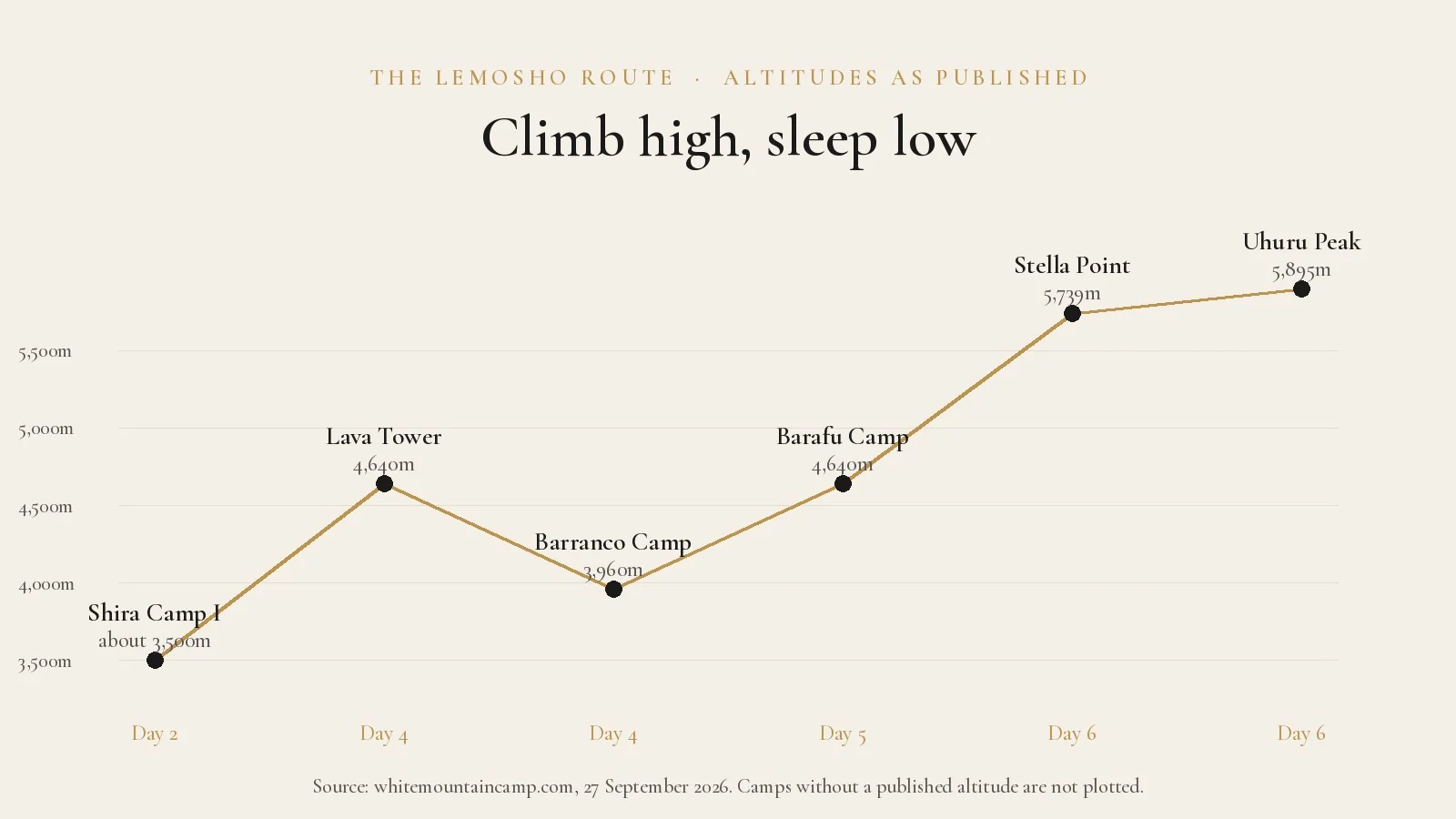
The route helps. Lemosho is widely considered one of the most beautiful approaches on the mountain, with a strong acclimatisation profile: the group walks up through rainforest, across the Shira Plateau and over to Lava Tower at 4,640m before sleeping lower at Barranco, 3,960m. Climbing high and sleeping low is what gives the body time to adjust. Our first White Mountain Camp guide walks through the route day by day, from Lemosho Gate to Mweka Gate.

What the Week Does to a Team

The route builds its own moments. The slow walk out of the forest on day two, when conversation stops being about work. The Barranco Wall, where someone who never asks for help takes a hand. The midnight start on summit day, with hot tea and headlamps and nobody talking much, and the dawn at Stella Point, 5,739m, before the last push to Uhuru Peak. None of that is designed as an exercise. It works because it is real, and because everyone saw everyone else at their least polished.

There is also a reason beyond the team. White Mountain Camp points out that Kilimanjaro trekking is one of the most significant sources of income in northern Tanzania, that a single expedition can employ dozens of Tanzanians, and that ethical operators pay above minimum standards and equip their crews properly. It says it is proud to lift up the local guides, porters and entrepreneurs it works with. For a company that talks about values in its annual report, a climb where the crew is treated well is a small, concrete way of meaning it.

The Debrief Villa: Why It Belongs in the Plan

The climb ends at Mweka Gate and a night back at the five-star lodge, which is part of the host's package. What most groups get wrong is flying straight home from there. The insight a team gains on a mountain fades fast in an inbox. Three or four days in a private house afterwards, with good food, a pool, somewhere to sleep properly and one long table, is where the conversations from the mountain turn into decisions. It is the half of the offsite that actually produces the plan, and it is the half we arrange.

The house matters more than usual here, because the people arriving are tired. Stairs, long transfers and shared
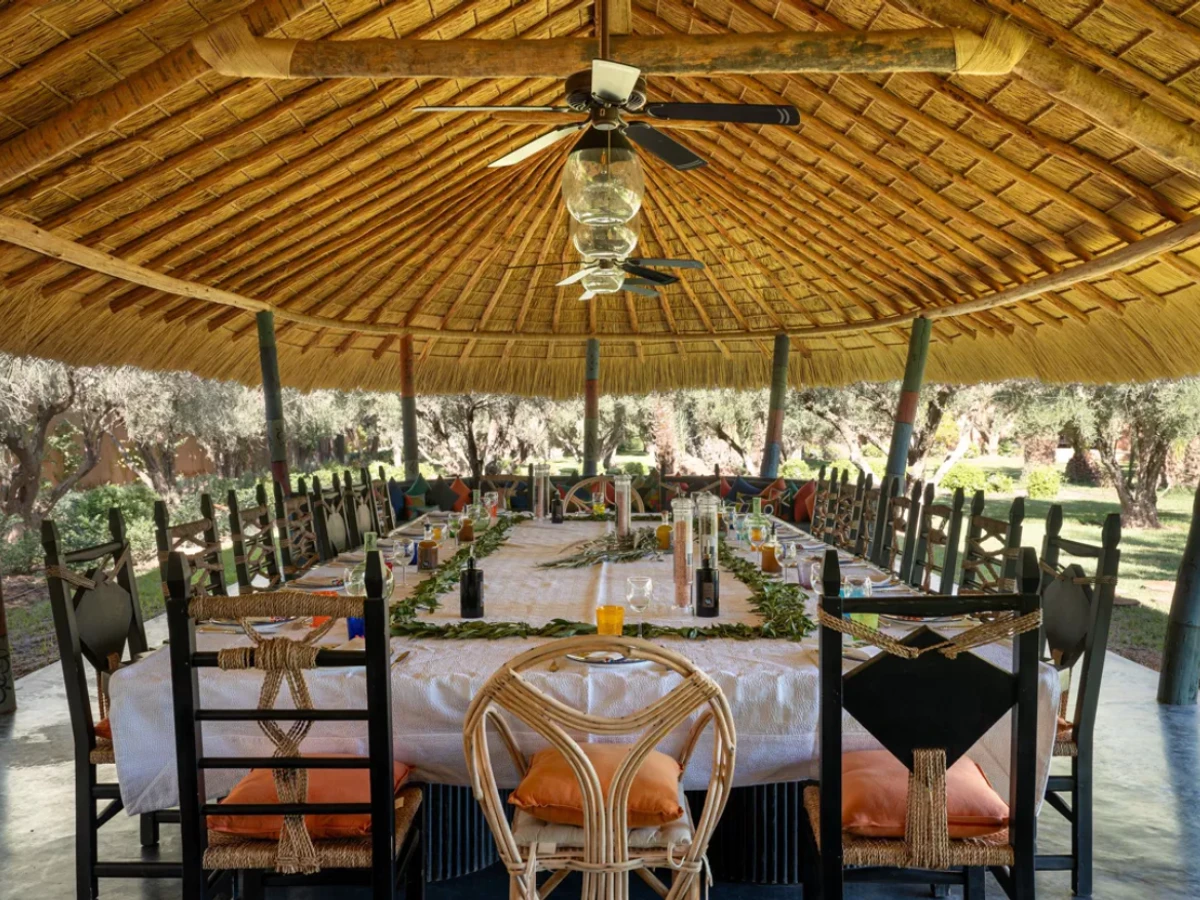
A long dining table set for a group under a thatched pavilion among olive trees at Villa Kemgia near Marrakech
Guides

Kilimanjaro for Leadership Teams: A Private Summit, Then a Villa for the Debrief

How a founder group or senior team climbs White Mountain Camp together, and where to take the story afterwards
Cameron Elder
·
September 28, 2026
·
10 min read
A week on Kilimanjaro does something to a team that a conference room never will. How White Mountain Camp runs private ascents for leadership groups, which departure suits a team, how to prepare people who train at different speeds, and the villas in Marrakech and Positano we would book for the days after the summit.
Plenty of offsites are forgotten by the next quarter. People fly in, sit in a good room, agree on a slide, and fly home to the same habits. A climb is different because nobody can fake it. On Kilimanjaro the finance director and the newest partner are breathing the same thin air at the same pace at midnight on the same slope, and the team that comes down is not quite the team that went up. That is the idea behind taking a leadership group to White Mountain Camp, and it is why we pair the climb with a quiet house afterwards, where the story gets turned into decisions.

What a Private Ascent Is

White Mountain Camp was conceived by Swiss mountaineer Janosch Amstutz as a luxury way up Kilimanjaro: seven days on the Lemosho Route to Uhuru Peak, 5,895m, with a private camp, elevated beds with Swiss down duvets, a camp chef, hot showers and a mountain doctor on hand 24/7 with a check every day. The camp also designs private expeditions around a single group, which it describes as a corporate team building expedition for executives and high-performing teams. The standards are the same as the scheduled climbs: the same camp, private guiding, and the same medical and safety setup. The difference is that everyone in camp is yours.
For a team that matters for two reasons. The first is discretion. Senior people talk more freely when nobody outside the group is listening, and a private camp is one of the few places left where a chief executive can say what she actually thinks about next year without it reaching the wrong ears. The second is pace. A private ascent is built around your people, so the plan can reflect the group you actually have rather than the average of strangers on a scheduled departure.

Which Departure Suits a Team

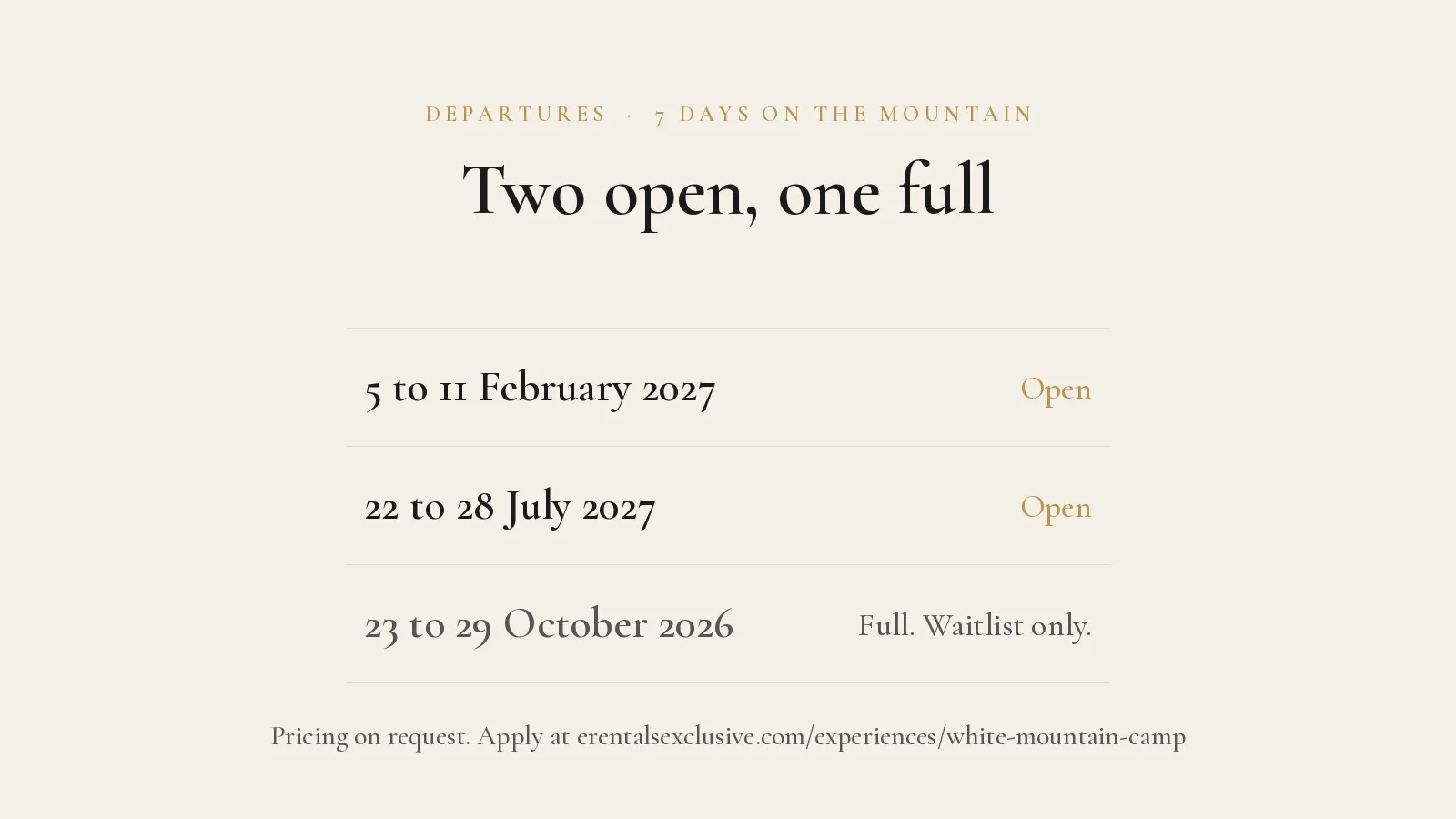
White Mountain Camp departures: 5 to 11 February 2027 and 22 to 28 July 2027 open, 23 to 29 October 2026 full
The scheduled departures as the host publishes them
5 to 11 February 2027: open. About four months to prepare from October 2026.
22 to 28 July 2027: open. About ten months to prepare from October 2026.
23 to 29 October 2026: full, waitlist only.
A private date for your own group: by enquiry, built around the team.
A small founding team who already hike, or a partner group who have done a multi-day trek together, can make February work. Four months is enough to sharpen a base that already exists. It is not much time to build one from nothing. If the group is larger or the fitness is uneven, July is the kinder choice: ten months lets the least experienced person in the room arrive ready, and that person decides how the week feels for everyone else. A private date sits outside both and is the route most leadership groups take, because it can be set around a board calendar and a year-end rather than the other way round.

Preparing People Who Train at Different Speeds

The honest part first. This is a real climb. The host describes six to eight hours on foot a day, roughly 8 to 15 kilometres, a hands-on scramble up the Barranco Wall and a summit push that starts near midnight from Barafu Camp at 4,640m. The camp makes the evenings comfortable; it does not make the mountain shorter. A team climb works when every member has trained for that, and fails quietly when two people did and six hoped.
Altitude profile of the Lemosho Route from Shira Camp I at about 3,500m to Uhuru Peak at 5,895m
Climb high, sleep low: the altitudes White Mountain Camp publishes for the route
What we suggest to a team lead is simple. Name one person to own preparation, the way someone owns the budget. Ask everyone early and privately about their recent hiking and altitude experience, and write the answers down. Put long weekend walks with a loaded pack in the calendar, together where people live close enough, because a Saturday on a hill with colleagues is the first rehearsal of the week itself. And treat health as the doctor's question, never the manager's. The camp has a mountain doctor for exactly that reason, and anyone with a medical condition should expect to be cleared by the host's doctor rather than by us or by their boss.
The route helps. Lemosho is widely considered one of the most beautiful approaches on the mountain, with a strong acclimatisation profile: the group walks up through rainforest, across the Shira Plateau and over to Lava Tower at 4,640m before sleeping lower at Barranco, 3,960m. Climbing high and sleeping low is what gives the body time to adjust. Our first White Mountain Camp guide walks through the route day by day, from Lemosho Gate to Mweka Gate.

What the Week Does to a Team

The route builds its own moments. The slow walk out of the forest on day two, when conversation stops being about work. The Barranco Wall, where someone who never asks for help takes a hand. The midnight start on summit day, with hot tea and headlamps and nobody talking much, and the dawn at Stella Point, 5,739m, before the last push to Uhuru Peak. None of that is designed as an exercise. It works because it is real, and because everyone saw everyone else at their least polished.
There is also a reason beyond the team. White Mountain Camp points out that Kilimanjaro trekking is one of the most significant sources of income in northern Tanzania, that a single expedition can employ dozens of Tanzanians, and that ethical operators pay above minimum standards and equip their crews properly. It says it is proud to lift up the local guides, porters and entrepreneurs it works with. For a company that talks about values in its annual report, a climb where the crew is treated well is a small, concrete way of meaning it.

The Debrief Villa: Why It Belongs in the Plan

The climb ends at Mweka Gate and a night back at the five-star lodge, which is part of the host's package. What most groups get wrong is flying straight home from there. The insight a team gains on a mountain fades fast in an inbox. Three or four days in a private house afterwards, with good food, a pool, somewhere to sleep properly and one long table, is where the conversations from the mountain turn into decisions. It is the half of the offsite that actually produces the plan, and it is the half we arrange.
The house matters more than usual here, because the people arriving are tired. Stairs, long transfers and shared bathrooms all cost more after seven days on foot. So we look for three things: a bathroom per bedroom, a real place to recover such as a hammam, sauna or massage room, and a dining room that seats the whole group at once. The five houses below meet that brief.
After a February Climb: Marrakech

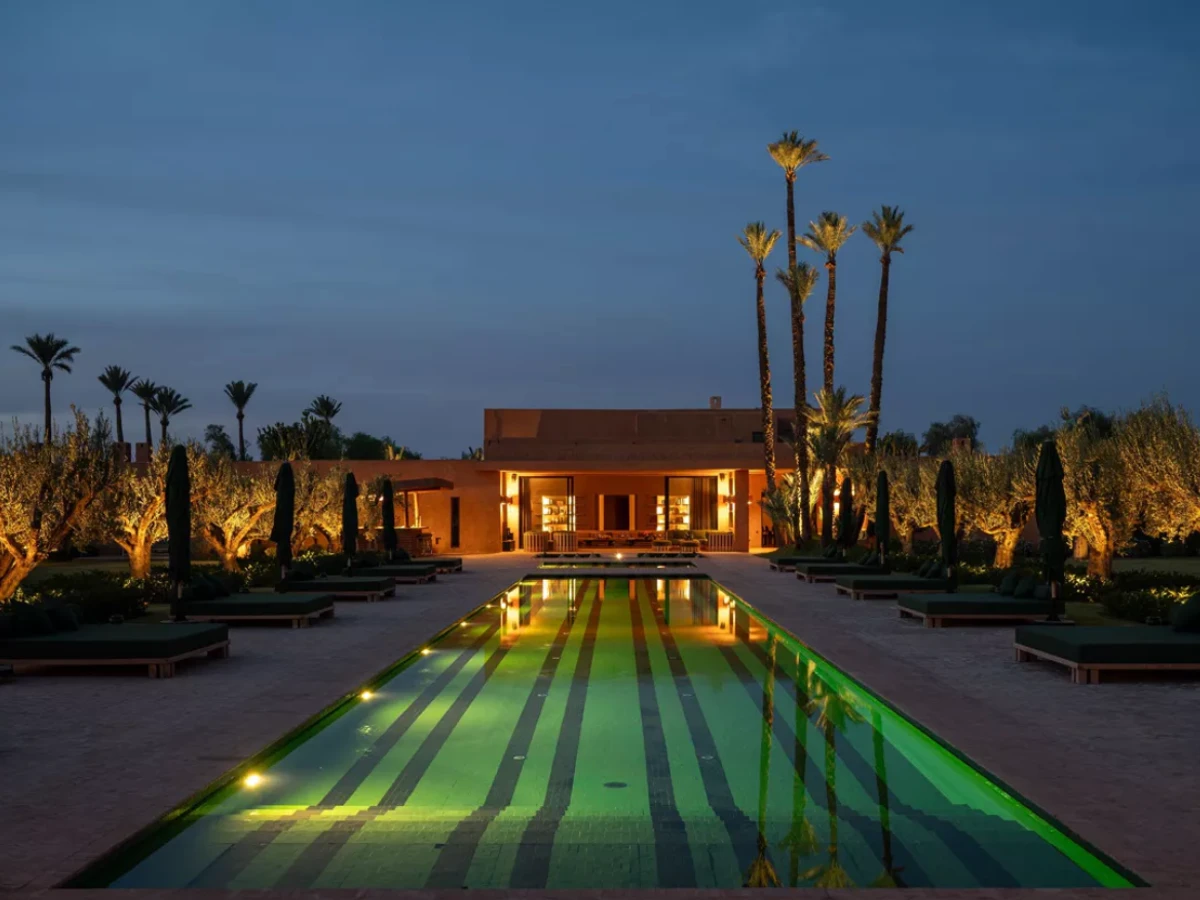
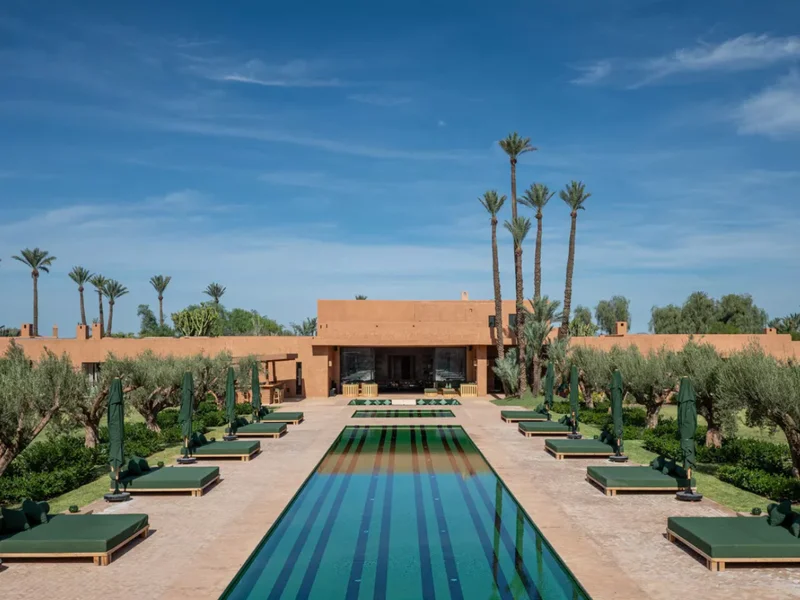
Villa Kemgia near Marrakech at dusk: a long lit pool between loungers, lined with palms, leading to the main house
Villa Kemgia, twenty minutes from the Marrakech Medina
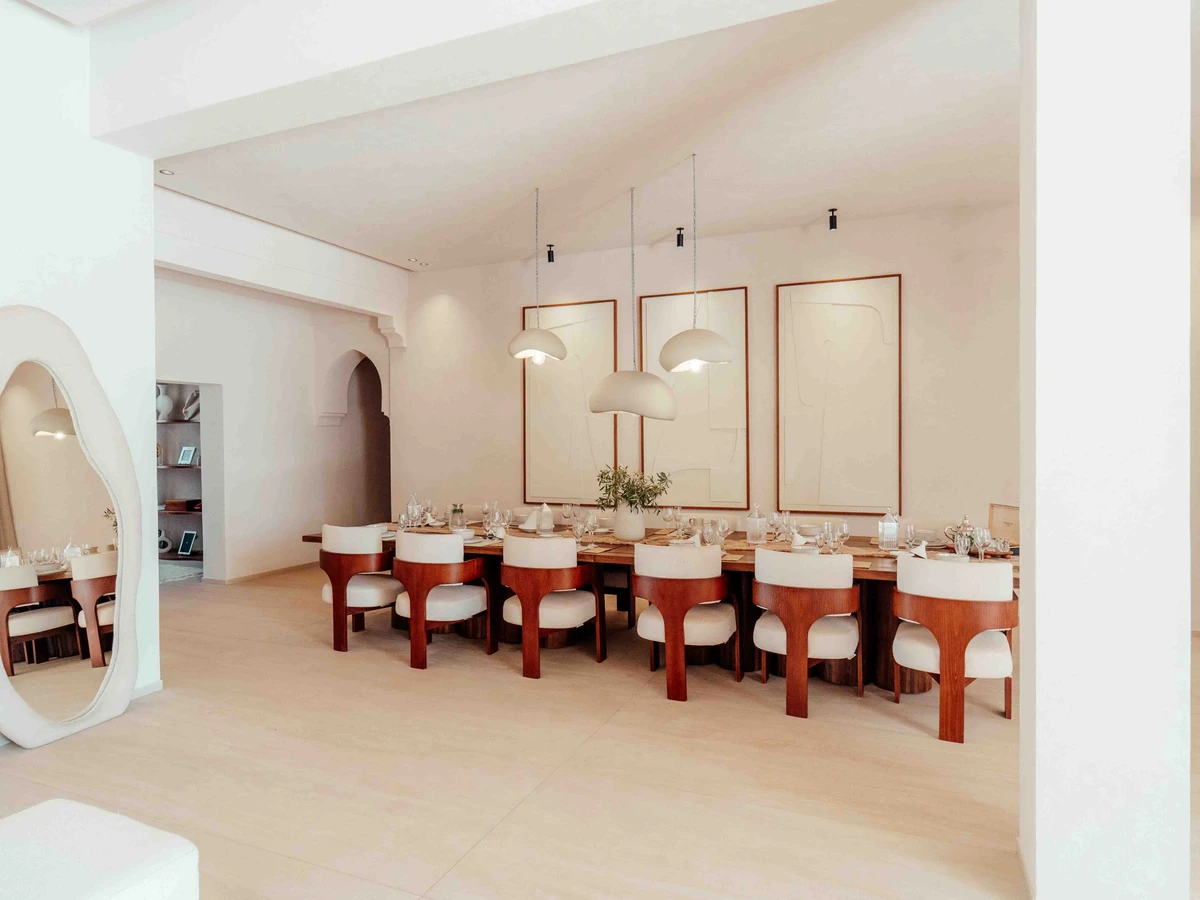
Marrakech in February is cool and quiet: mild, walkable days, cold evenings, and often snow on the High Atlas behind the city. It is one of the calmest months of the year there, which suits a group that wants to talk rather than queue. Palais Eliah is the house for a larger leadership group: twelve bedrooms, each with its own bathroom, sleeping twenty-four, and a formal dining hall that seats all twenty-four at one table. The recovery case is strong, with a full hammam block holding a sauna, a massage room and a plunge pool, and padel and tennis for the day the legs come back. It sits on ten thousand square metres off the Fes Road, about thirty-five minutes from the Medina, so it is a compound to settle into rather than a base for sightseeing.
The dining hall at Palais Eliah near Marrakech, one long table with its chairs under a row of framed panels
The dining hall at Palais Eliah seats the whole house at one table
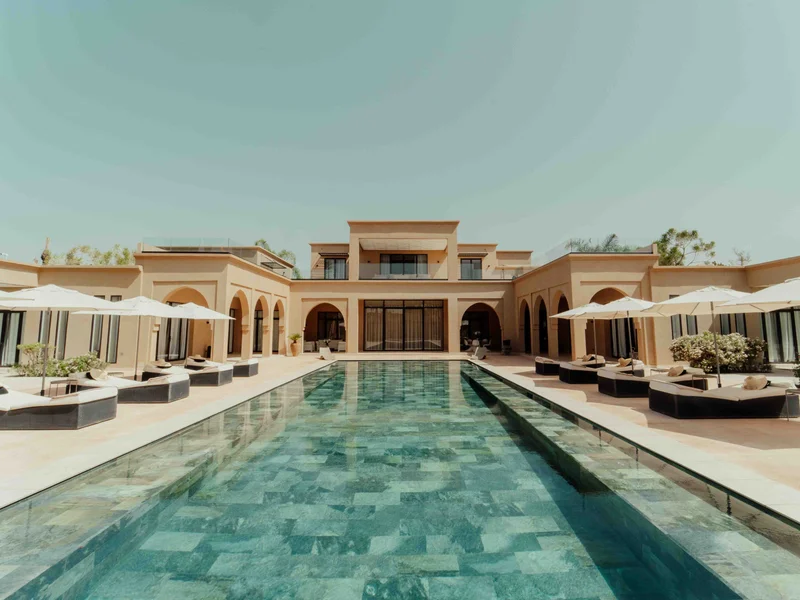
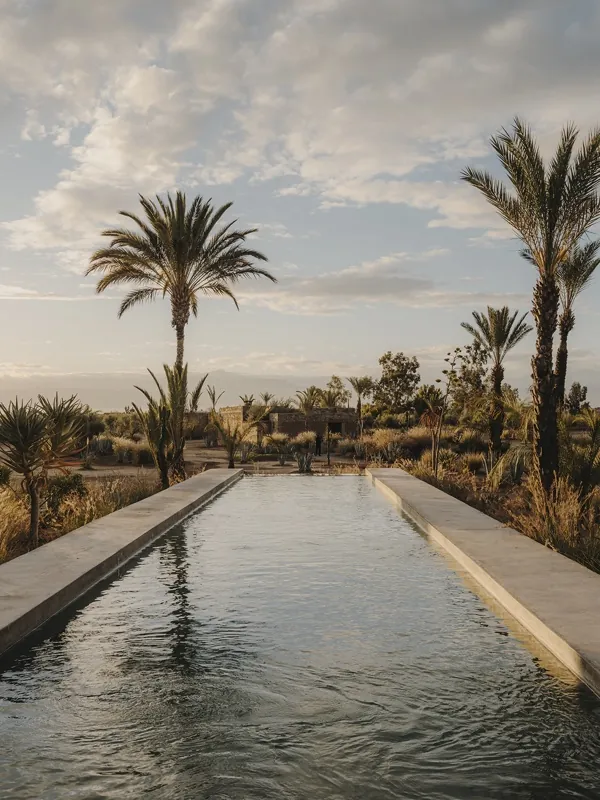
Villa Kemgia suits a group of up to twenty who want more privacy between people: a seven-bedroom main house and a separate guest pavilion with two more bedrooms and its own pool, nine rooms in all, each with its own bathroom. There is a hammam, a massage room and a fitness room, a cinema, a billiard room that doubles as a library, and a tennis court, twenty minutes from the Medina. Dar Tafza is the choice for a founder group who want the setting to do some of the talking: a rammed-earth house by Studio KO on six hectares of olive grove south-east of the city, a 25-metre infinity pool aimed at the High Atlas, full resident staff including a chef and a butler, and breakfast included, and wood-burning fireplaces for the February evenings, for up to twenty across the main villa and a farmhouse pavilion.

After a July Climb: Positano

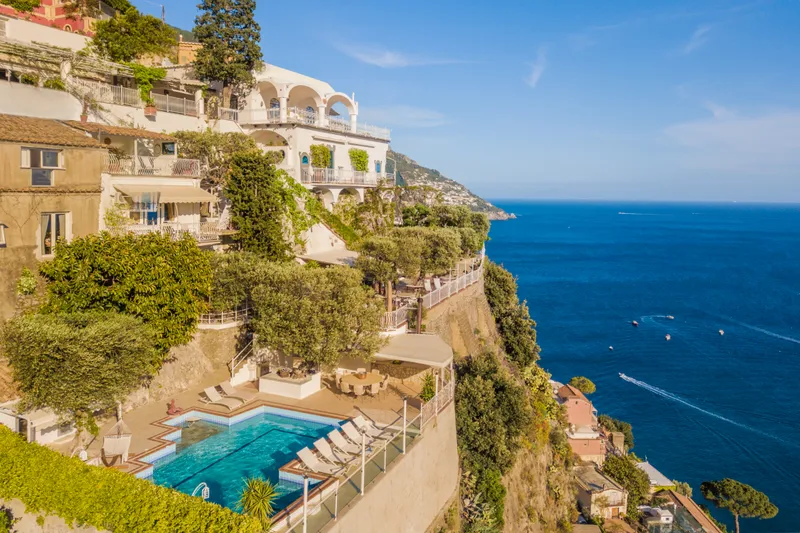
A July climb lands a team in the Amalfi Coast's peak season: warm evenings, every restaurant open, and the busiest weeks of the year, so the house and the tables are worth booking well ahead. It is also a coast of staircases, which matters after a week on the mountain. Villa Oliviero answers that directly: a coastal road elevator lands about fifty metres from the main gate, so a group of up to twelve reaches the house without the village climb. Six bedrooms sit above layered terraces that drop to an infinity pool lined up with the Li Galli islands, with a Turkish bath and a steam room for recovery, a four-person staff, daily housekeeping, continental breakfast and a local chef on request. The owners, Alice and Nello Oliviero, greet arrivals themselves.
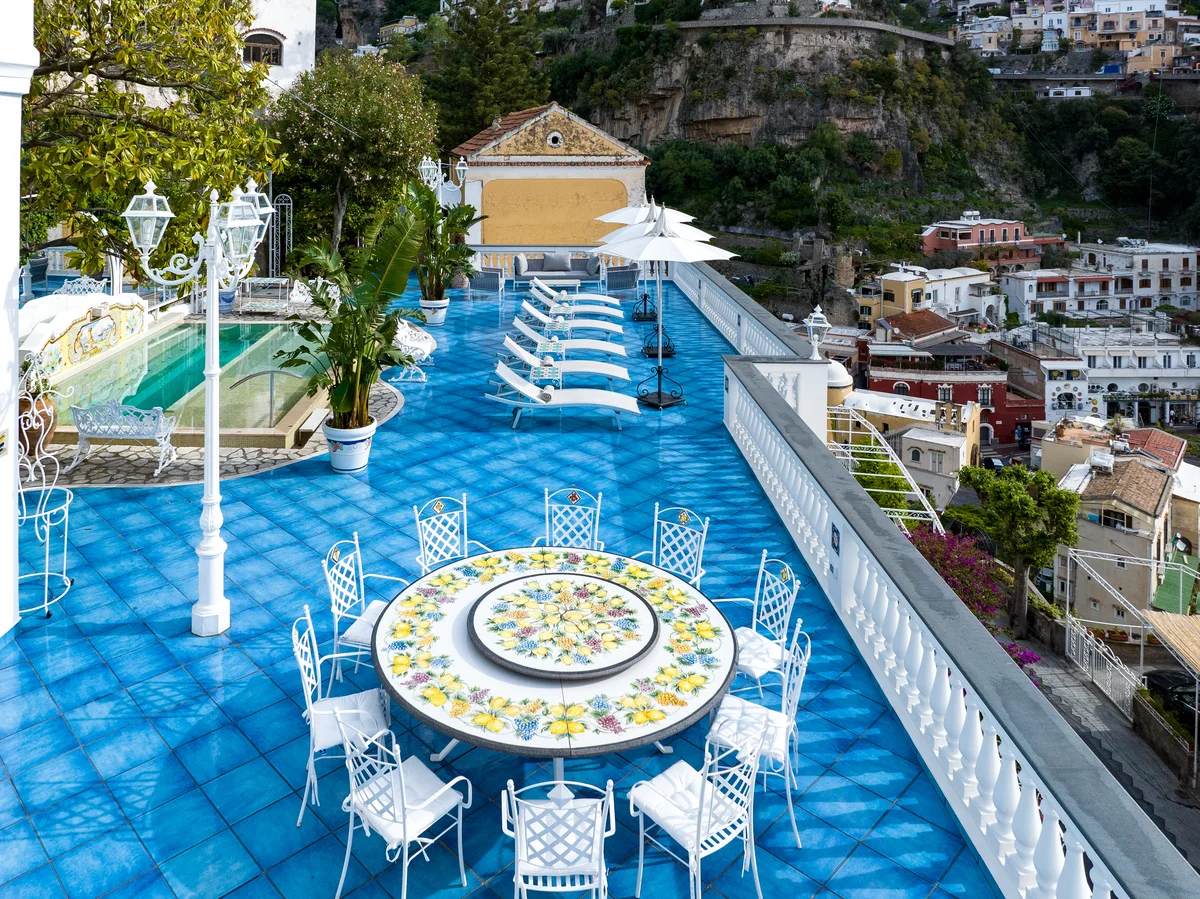
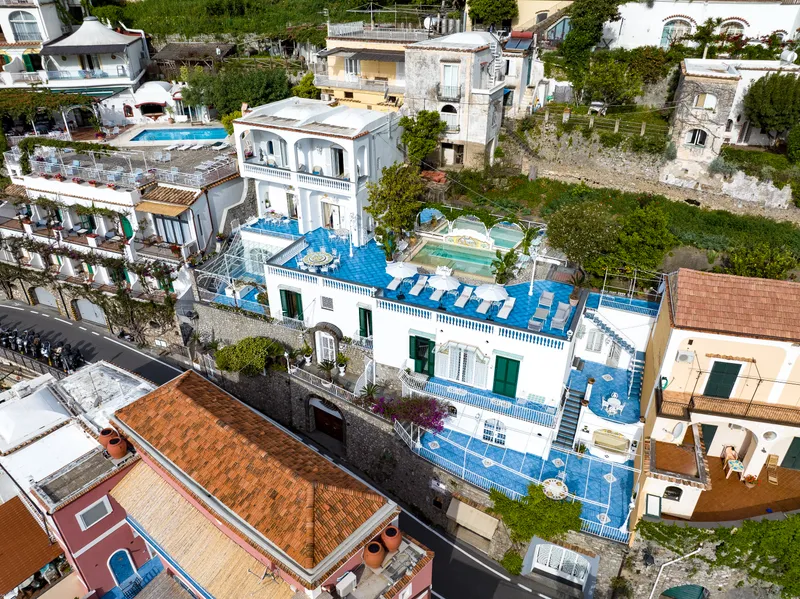
The blue-tiled roof terrace at Villa Mon Repos in Positano, with a round ceramic table, loungers and the pool above the village
The terrace at Villa Mon Repos, central Positano
Villa Mon Repos, in central Positano, is a 1906 family villa for up to twelve across three apartments on three levels, which suits a team that wants to split into smaller groups by day and meet at one table at night. It has an internal elevator between the first two floors, a new salt-water pool facing the stacked village, a resident chef for breakfast, a massage from a professional physiotherapist, and an owner who produces wine on a working farm under Vesuvius. For more on choosing between the towns, our Positano, Amalfi and Praiano comparison is the place to start.

How to Apply as a Group

Places are limited, the climb is demanding and the people on these departures value their privacy, so we work by application. One person applies for the whole group on our White Mountain Camp page: the departure or private window you have in mind, how many people, their hiking and altitude experience, and the budget band. We read every application ourselves. When it fits, we introduce the group to the White Mountain Camp team, who confirm availability and hold places, and we plan the villa for the days afterwards. Pricing for the climb is on request, and we send the host's full terms with our reply. We never share who else is on a departure.
Disclosure: ERentals Exclusive refers travellers to White Mountain Camp and may receive a commission on bookings. It does not change the price you pay.
Key Takeaways
White Mountain Camp runs private Kilimanjaro ascents built around one group, with the same camp, private guiding and medical standards as its scheduled climbs
Scheduled departures are open for 5 to 11 February 2027 and 22 to 28 July 2027; the October 2026 climb is full
February leaves about four months to prepare a team; July leaves about ten, which suits a group with mixed fitness
A debrief villa after the climb turns a shared ordeal into shared decisions: Marrakech suits February, Positano suits July
Pricing is on request; we take one application for the whole group and introduce it to the White Mountain Camp team

Frequently Asked Questions

Can a company book a private Kilimanjaro climb with White Mountain Camp?
Yes. White Mountain Camp designs private ascents around a single group, with the same camp, private guiding and medical and safety standards as its scheduled climbs. Apply through our White Mountain Camp page and we introduce the group.
Which departure is better for a leadership team, February or July 2027?
February suits a small group that already hikes, with about four months to sharpen. July gives about ten months, which suits a larger team or one with mixed fitness. A private date can be set around your own calendar.
How fit does everyone need to be?
Fit enough for six to eight hours on foot a day for six days, a scramble on the Barranco Wall and a midnight summit start from 4,640m. Anyone with a medical condition should expect to be cleared by the host's mountain doctor.
What does a team climb cost?
Pricing is on request. Flights, visas, travel insurance and gratuities are extra. We send the host's full terms with our reply to the group's application, and quote the debrief villa separately.
Where should a team stay after the climb?
After a February climb, Marrakech: Palais Eliah for up to twenty-four, Villa Kemgia or Dar Tafza for up to twenty. After a July climb, Positano: Villa Oliviero or Villa Mon Repos for up to twelve.
Follow the journey @erentalsexclusive + @aurelseyez
Villa tours, destination guides, and behind-the-scenes content from the team on the ground
Cameron Elder
Founder, ERentals Exclusive
kilimanjaro
tanzania
corporate-offsite
leadership
team-building
white-mountain-camp
marrakech
positano
experiences

See it in motion

From the feed

Real stays, real light. Tap any film to watch it full screen.

Stay in the loop
© 2026 ERentals Exclusive