Is Cabo San Lucas Safe in 2026?
The honest Los Cabos safety answer for 2026. Baja California Sur homicide reality, timeshare scam patterns, hurricane season, Pedregal versus Marina versus San Jose del Cabo, and the villa advantage.
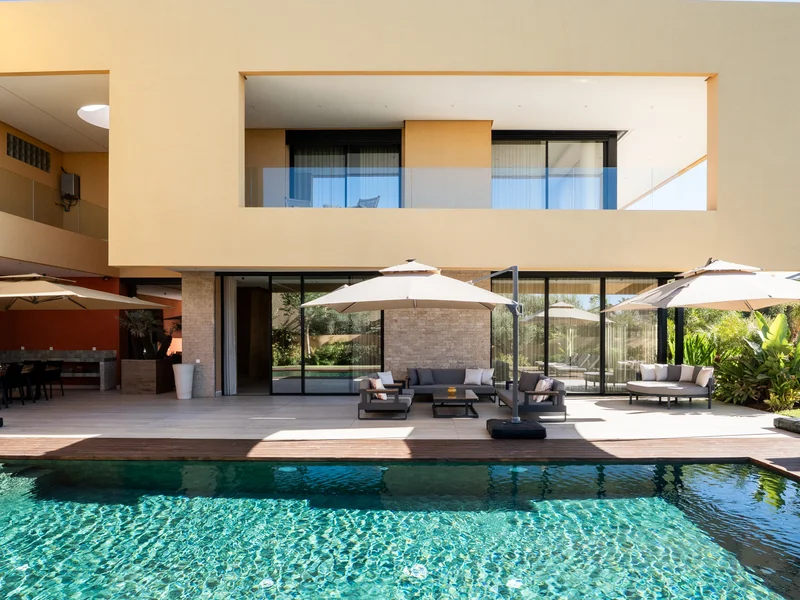
The short answer, from an operator who runs villas here: yes, Los Cabos is safe for a luxury traveler in 2026. Baja California Sur is one of Mexico's lower-homicide states, the tourism corridor from Cabo San Lucas to San Jose del Cabo is patrolled and secured, and a staffed villa in Pedregal, Puerto Los Cabos, Palmilla, or Cabo Real removes almost every practical safety question. The honest answer takes another two thousand words, because "Mexico" in a headline and "Los Cabos" on the ground are different problems. This guide separates them, walks each neighborhood, names the real risks (timeshare hard-sell scams, the September hurricane window, dehydration, ATV accidents in the desert dunes), and explains what the gated-community villa base actually does for you. Casa Acantilado, Pedregal The Baja California Sur Reality Mexico is not one country for safety purposes. It is thirty-two states with wildly divergent risk profiles. Baja California Sur, the southern half of the Baja peninsula containing Los Cabos and La Paz, consistently sits toward the bottom of Mexico's state-level homicide rates, below the national average, and orders of magnitude below the hot-spot states (Colima, Guanajuato, Zacatecas, Michoacán). The US State Department places BCS at Level 2 "Exercise Increased Caution," the same level as Italy, Germany, and France, and specifically lower than four other Mexican states designated Level 3 or Level 4. The Canadian, UK, and Australian foreign offices carry similar language. Los Cabos itself, as the economic engine of BCS through tourism, gets particular attention from federal and state security forces. What that means in practice: violent crime against tourists in the resort corridor is rare, and the last time an incident involving foreign tourists made international news it was quickly followed by additional federal deployment. The tourism economy of Los Cabos is roughly a third of the state's GDP and the political will to protect it is high. The cartel picture in BCS is worth being honest about. It is not zero. There have been cartel-linked incidents in La Paz and along the highways connecting BCS to the mainland ferry, and the international press occasionally amplifies these. What has been consistent for a decade is that they are geographically distinct from the Los Cabos tourism corridor, non-tourist-facing (typically settling disputes between rival groups), and rare relative to mainland Mexican cartel geographies. The DEA and BCS state security have described BCS as a "spillover zone" rather than a base of operations. For a luxury traveler renting a staffed villa in Pedregal or Puerto Los Cabos, this is context, not a live risk. Neighborhood by Neighborhood Los Cabos is really three places joined by the twenty-mile Corridor. Pedregal, the gated hillside community on the Pacific-facing cliffs above Cabo San Lucas, is where several of our villas sit. It is behind a manned gate, roads are private, homes are staffed, and once you ar
The short answer, from an operator who runs villas here: yes, Los Cabos is safe for a luxury traveler in 2026. Baja California Sur is one of Mexico's lower-homicide states, the tourism corridor from Cabo San Lucas to San Jose del Cabo is patrolled and secured, and a staffed villa in Pedregal, Puerto Los Cabos, Palmilla, or Cabo Real removes almost every practical safety question. The honest answer takes another two thousand words, because "Mexico" in a headline and "Los Cabos" on the ground are different problems. This guide separates them, walks each neighborhood, names the real risks (timeshare hard-sell scams, the September hurricane window, dehydration, ATV accidents in the desert dunes), and explains what the gated-community villa base actually does for you.
The Baja California Sur Reality
Mexico is not one country for safety purposes. It is thirty-two states with wildly divergent risk profiles. Baja California Sur, the southern half of the Baja peninsula containing Los Cabos and La Paz, consistently sits toward the bottom of Mexico's state-level homicide rates, below the national average, and orders of magnitude below the hot-spot states (Colima, Guanajuato, Zacatecas, Michoacán). The US State Department places BCS at Level 2 "Exercise Increased Caution," the same level as Italy, Germany, and France, and specifically lower than four other Mexican states designated Level 3 or Level 4. The Canadian, UK, and Australian foreign offices carry similar language. Los Cabos itself, as the economic engine of BCS through tourism, gets particular attention from federal and state security forces. What that means in practice: violent crime against tourists in the resort corridor is rare, and the last time an incident involving foreign tourists made international news it was quickly followed by additional federal deployment. The tourism economy of Los Cabos is roughly a third of the state's GDP and the political will to protect it is high.
The cartel picture in BCS is worth being honest about. It is not zero. There have been cartel-linked incidents in La Paz and along the highways connecting BCS to the mainland ferry, and the international press occasionally amplifies these. What has been consistent for a decade is that they are geographically distinct from the Los Cabos tourism corridor, non-tourist-facing (typically settling disputes between rival groups), and rare relative to mainland Mexican cartel geographies. The DEA and BCS state security have described BCS as a "spillover zone" rather than a base of operations. For a luxury traveler renting a staffed villa in Pedregal or Puerto Los Cabos, this is context, not a live risk.
Neighborhood by Neighborhood
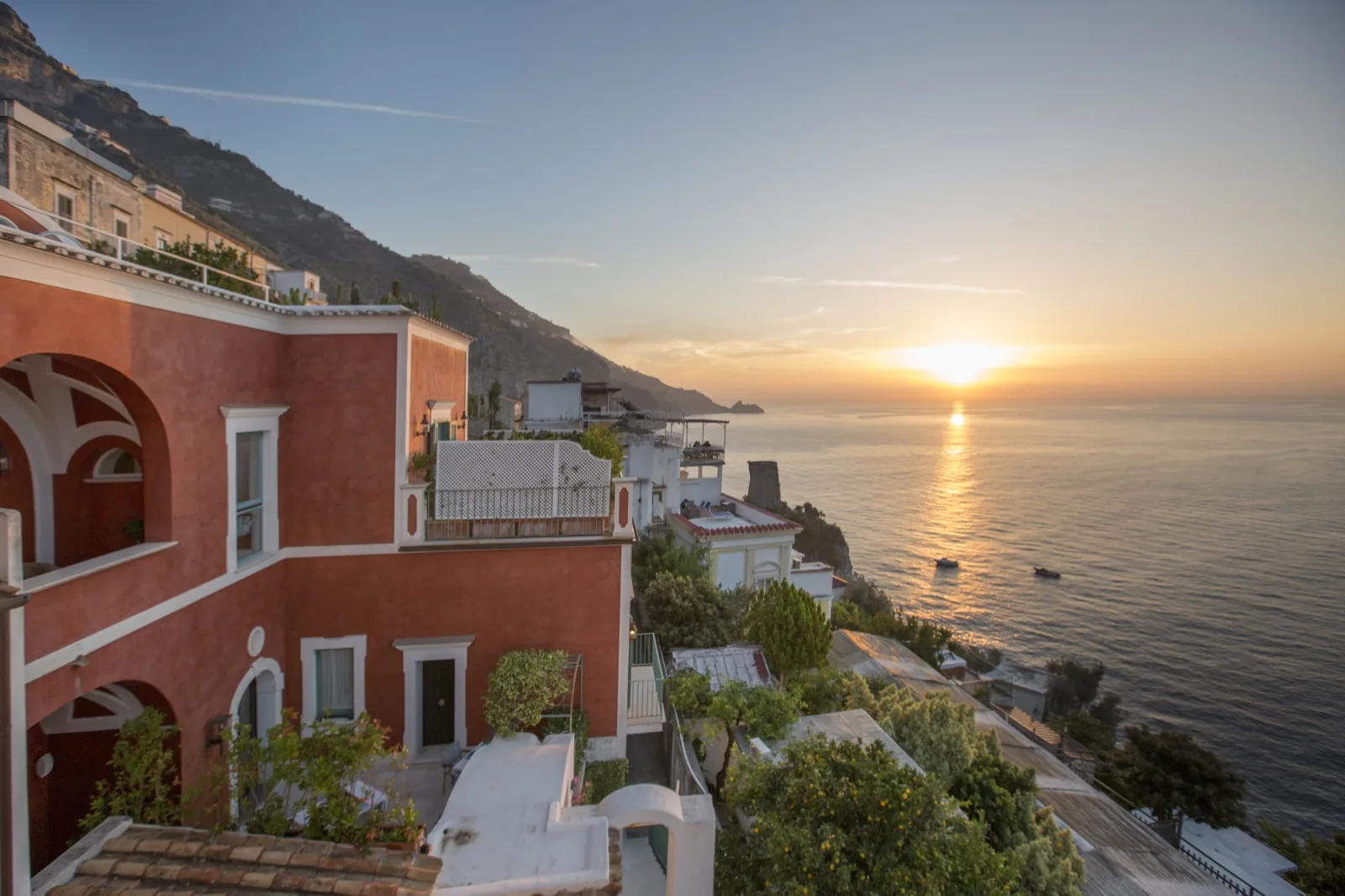
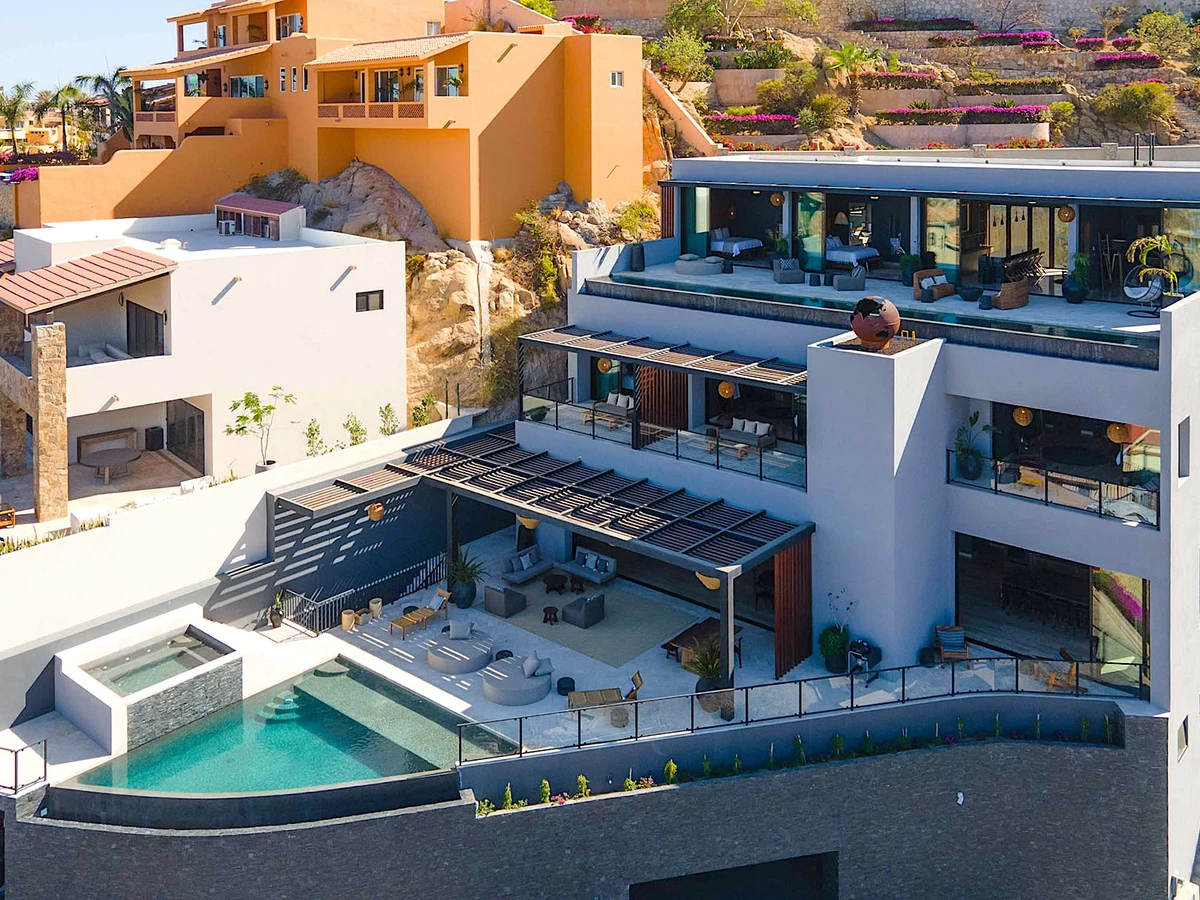
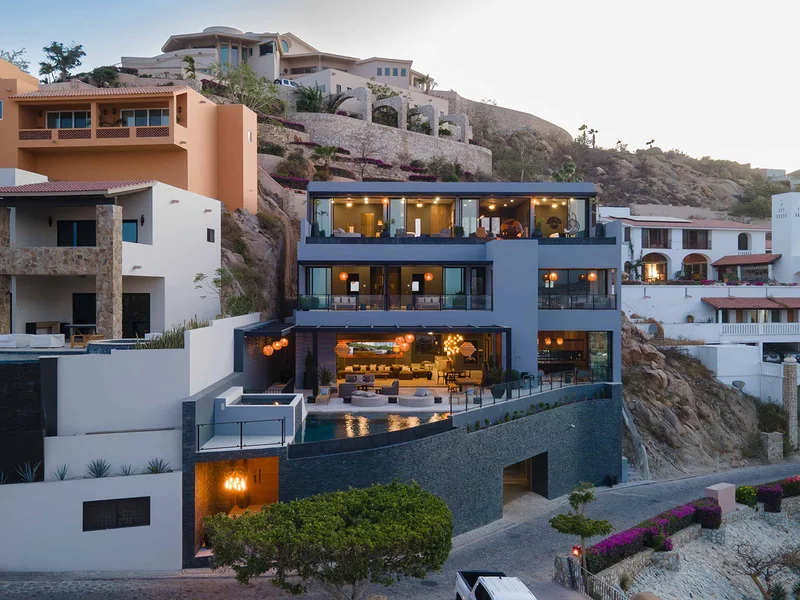
Los Cabos is really three places joined by the twenty-mile Corridor. Pedregal, the gated hillside community on the Pacific-facing cliffs above Cabo San Lucas, is where several of our villas sit. It is behind a manned gate, roads are private, homes are staffed, and once you are inside it functions like an American gated community with a view. Casa Acantilado sits on the Pacific side facing the sunset; Lucia Noir sits higher up facing the marina side and the Sea of Cortez. Both are ten to twenty minutes from downtown Cabo when you want to be there and a world away when you do not.
The Cabo San Lucas Marina strip (Cabo Wabo, Squid Roe, the sportfishing marina) is safe by day, when the whole area is families off cruise ships and charter clients loading boats, and less controlled after 11pm when the bar scene runs. Nothing about it is dangerous in the crime-report sense; it is loud, crowded, and where taxi-overcharge and drink-inflation stories mostly originate. Downtown Cabo San Lucas outside the marina strip is quieter and mostly residential. Medano Beach, immediately east of the marina, is the main tourist beach and where Hacienda Beach Club and other beachfront residences (Casa Marisol, Hacienda 5203) sit; it is well-patrolled and family-safe by day, and Hacienda residents access it via their own private stretch.
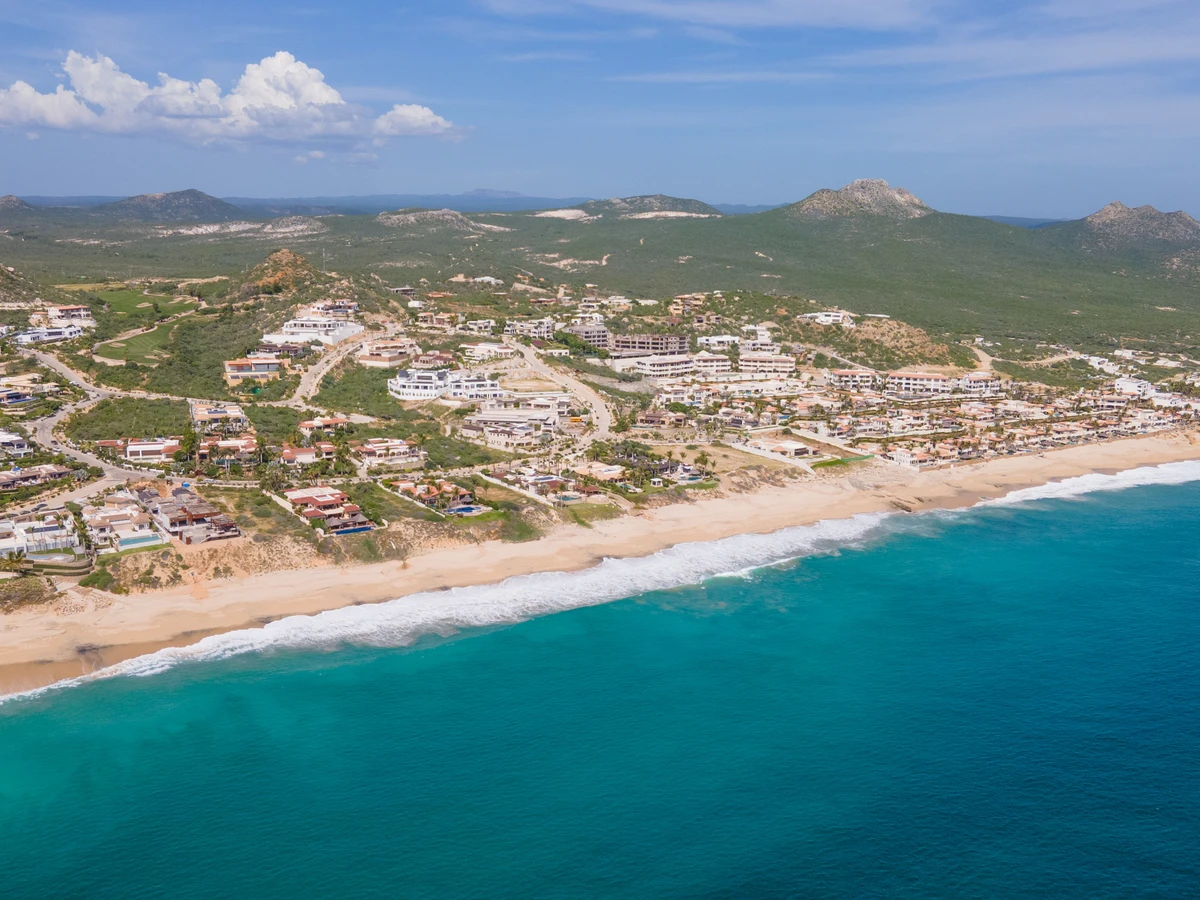
The Corridor, the twenty-mile stretch of Highway 1 between Cabo San Lucas and San Jose del Cabo, is where the resort clusters live: Palmilla, Cabo Real, Cabo del Sol, Chileno Bay, all gated resort-community developments with security, private beaches, and golf. Villa Serena in the Blue Sea community sits inside this stretch. It is functionally as safe as any resort in the United States, and the road itself is well-lit, well-patrolled, and used by everyone. San Jose del Cabo is the older, quieter half of Los Cabos: colonial center around Plaza Mijares, Thursday art walk, quieter restaurants, and a slower pace than Cabo San Lucas. Puerto Los Cabos, the marina and residential community on the east side of San Jose, holds Paradiso Perduto and other beachfront estates behind gated entrances. Every villa neighborhood we operate in on this trip is gated. That is the practical safety story.
Month by Month
The Los Cabos safety calendar is dominated by weather, not crime. November through May is the peak: dry, sunny, warm, clear water, whale watching from December to April, and everything running normally. This is when families with school-age kids, honeymoon couples, and multigenerational groups go, and the villa neighborhoods are at their busiest. Spring break in March adds a college-age crowd to the Marina strip; villa neighborhoods do not notice it. June is the transition month: still mostly dry, warmer, water warming up, quieter crowds.
July through October is hurricane season, and September in particular is the peak. Historically, September delivers the biggest hurricanes to Cabo, and 2014's Hurricane Odile was the reference-case event that damaged much of the tourism infrastructure. Everything has been rebuilt since, and Los Cabos now has one of the more rehearsed evacuation and shelter systems in Mexico. What that means for a traveler: through July, August, and October the hurricane risk is real but