Best Mezcal Experiences in Tulum

Mezcal in Tulum explained: agave varieties, the roasting pit, how to drink it neat, sustainability, and why town beats the beach road.

Tulum sells a great deal of mezcal and understands relatively little of it. That is not a slight on the town, it is a function of demand: a spirit with a story attached became the drink people wanted to order, and the supply responded faster than the knowledge did. The result is that you can have one of the best mezcal experiences of your life in Tulum, and you can also pay a lot for a smoky cocktail served in a copper mug by someone who cannot tell you what is in it. This guide is about telling those apart. For where to eat, we have a separate piece on the restaurants, and this one deliberately stays off that ground. The short version, if you read nothing else: go into town rather than staying on the beach road, sit at a bar rather than a table, ask what they are excited about, and drink it neat. That sequence will get you further than any list of venue names, because the venues change and the method does not. What Mezcal Actually Is Every tequila is a mezcal in the old sense of the word, but not every mezcal is a tequila. Both are distilled from agave. Tequila is made from a single species, blue weber agave, within a defined region centred on Jalisco, and it is industrially mature with large producers and consistent processes. Mezcal is the broader category, produced across several Mexican states with Oaxaca dominating, from a long list of maguey varieties, much of it at small scale by families who have been doing it for generations. That variety is the entire point. Espadin is the workhorse, cultivated, reliable, and the base of most of what you will be poured. Tobala is small, grows in shade at altitude, and takes many years to mature, which is why it costs what it costs and why it tastes floral and concentrated. Tepeztate can take well over a decade and produces something herbaceous and strange. Arroqueno, madrecuixe, barril, cuishe, each one different. Drinking mezcal is drinking a specific plant from a specific hillside made by a specific person, and that is a genuinely different proposition from drinking a brand. The person matters as much as the plant. The maker is called a maestro mezcalero or maestra mezcalera, and on a good bottle their name is on the label along with the village and often the batch. If a bar can tell you the maker, the village, the maguey and the distillation, you are in the right place. If the label says nothing beyond a brand name and a marketing adjective, you are drinking something blended for export and there is nothing wrong with that, but it is not the thing you came for. Casa Arka, Tulum Where the Smoke Comes From The smoke is not a flavouring and it is not added. Agave hearts, called pinas, are roasted before fermentation, and in traditional production that roasting happens in a conical pit dug into the ground, lined with hot volcanic stones, packed with agave, covered with fibre and earth, and left to cook for several days. The spirit picks up smoke from that pit. Tequila producers generally steam their aga

Tulum sells a great deal of mezcal and understands relatively little of it. That is not a slight on the town, it is a function of demand: a spirit with a story attached became the drink people wanted to order, and the supply responded faster than the knowledge did. The result is that you can have one of the best mezcal experiences of your life in Tulum, and you can also pay a lot for a smoky cocktail served in a copper mug by someone who cannot tell you what is in it. This guide is about telling those apart. For where to eat, we have a separate piece on the restaurants, and this one deliberately stays off that ground.

The short version, if you read nothing else: go into town rather than staying on the beach road, sit at a bar rather than a table, ask what they are excited about, and drink it neat. That sequence will get you further than any list of venue names, because the venues change and the method does not.

What Mezcal Actually Is

Every tequila is a mezcal in the old sense of the word, but not every mezcal is a tequila. Both are distilled from agave. Tequila is made from a single species, blue weber agave, within a defined region centred on Jalisco, and it is industrially mature with large producers and consistent processes. Mezcal is the broader category, produced across several Mexican states with Oaxaca dominating, from a long list of maguey varieties, much of it at small scale by families who have been doing it for generations.

That variety is the entire point. Espadin is the workhorse, cultivated, reliable, and the base of most of what you will be poured. Tobala is small, grows in shade at altitude, and takes many years to mature, which is why it costs what it costs and why it tastes floral and concentrated. Tepeztate can take well over a decade and produces something herbaceous and strange. Arroqueno, madrecuixe, barril, cuishe, each one different. Drinking mezcal is drinking a specific plant from a specific hillside made by a specific person, and that is a genuinely different proposition from drinking a brand.

The person matters as much as the plant. The maker is called a maestro mezcalero or maestra mezcalera, and on a good bottle their name is on the label along with the village and often the batch. If a bar can tell you the maker, the village, the maguey and the distillation, you are in the right place. If the label says nothing beyond a brand name and a marketing adjective, you are drinking something blended for export and there is nothing wrong with that, but it is not the thing you came for.

Where the Smoke Comes From

The smoke is not a flavouring and it is not added. Agave hearts, called pinas, are roasted before fermentation, and in traditional production that roasting happens in a conical pit dug into the ground, lined with hot volcanic stones, packed with agave, covered with fibre and earth, and left to cook for several days. The spirit picks up smoke from that pit. Tequila producers generally steam their agave in ovens or autoclaves instead, which is why tequila tastes cleaner and mezcal does not.

What follows from this is the most useful piece of tasting knowledge for a visitor. The intensity of the smoke tells you about the production method, the wood used, and the length of the roast. It does not tell you the mezcal is good. A great deal of what gets sold to tourists is heavily smoky because smoky is what tourists identify as authentic, and it is easy to push smoke forward in a way that covers a multitude of flaws. The best mezcals we have been poured in Mexico were restrained, with the smoke sitting behind fruit, mineral and green notes rather than in front of them. If your glass tastes like a bonfire and nothing else, that is a choice someone made for your benefit.

How to Tell a Serious Bar From a Selling One

There are reliable tells. A serious bar will offer you tastes before you commit to a pour, without being asked, because they would rather you liked the third one than paid for the first. They will ask what you normally drink and steer accordingly. They will name the village, the maguey and the maker without hesitation. They will have bottles you have not seen advertised anywhere. And they will pour into a small clay copita or a straight glass rather than a shot glass with a lime wedge on it.

The opposite signals are just as clear. A menu that lists mezcal only as an ingredient in cocktails. A back bar with three bottles, all of them heavily marketed brands. Staff who answer what is this one with the brand name and nothing else. Salt, lime and a shot ritual presented as tradition. And the strongest tell of all, a place that describes mezcal as a ceremony or an experience in its marketing while being unable to tell you where the bottle came from. Ceremony is what gets sold when knowledge is not available.

You are allowed to ask questions and you should. Which of these would you drink tonight. What is the difference between these two espadins. Where is this one from. Good bartenders in this field are enthusiasts and will light up at the question. The ones who resent it are telling you something useful about the bar.

How to Drink It

Neat, at room temperature, in small sips. Do not shoot it, do not chill it, and do not add ice, because cold suppresses exactly the aromatics you are paying for. A small clay copita is traditional and a straight sided glass works fine. Sip a little, hold it in your mouth for a moment, breathe out through your nose afterwards, and wait before the next one. Mezcal opens up over several minutes in the glass the way a good wine does, and the pour you dislike at the first sip is frequently the one you like most ten minutes later.

Keep water beside it and drink plenty. These are strong spirits, frequently bottled at higher strength than commercial tequila, and the traditional serve is slow for a reason. Orange slices with sal de gusano, a salt made with toasted agave worm and chilli, are
Evening terrace with bar seating at a Tulum property
Guides

Best Mezcal Experiences in Tulum

How to Drink It and Who to Trust
Cameron Elder
·
September 25, 2026
·
11 min read
What separates mezcal from tequila, how to spot a bar that actually takes it seriously, and why the beach road version is usually the worst one.
Tulum sells a great deal of mezcal and understands relatively little of it. That is not a slight on the town, it is a function of demand: a spirit with a story attached became the drink people wanted to order, and the supply responded faster than the knowledge did. The result is that you can have one of the best mezcal experiences of your life in Tulum, and you can also pay a lot for a smoky cocktail served in a copper mug by someone who cannot tell you what is in it. This guide is about telling those apart. For where to eat, we have a separate piece on the restaurants, and this one deliberately stays off that ground.
The short version, if you read nothing else: go into town rather than staying on the beach road, sit at a bar rather than a table, ask what they are excited about, and drink it neat. That sequence will get you further than any list of venue names, because the venues change and the method does not.

What Mezcal Actually Is

Every tequila is a mezcal in the old sense of the word, but not every mezcal is a tequila. Both are distilled from agave. Tequila is made from a single species, blue weber agave, within a defined region centred on Jalisco, and it is industrially mature with large producers and consistent processes. Mezcal is the broader category, produced across several Mexican states with Oaxaca dominating, from a long list of maguey varieties, much of it at small scale by families who have been doing it for generations.
That variety is the entire point. Espadin is the workhorse, cultivated, reliable, and the base of most of what you will be poured. Tobala is small, grows in shade at altitude, and takes many years to mature, which is why it costs what it costs and why it tastes floral and concentrated. Tepeztate can take well over a decade and produces something herbaceous and strange. Arroqueno, madrecuixe, barril, cuishe, each one different. Drinking mezcal is drinking a specific plant from a specific hillside made by a specific person, and that is a genuinely different proposition from drinking a brand.
The person matters as much as the plant. The maker is called a maestro mezcalero or maestra mezcalera, and on a good bottle their name is on the label along with the village and often the batch. If a bar can tell you the maker, the village, the maguey and the distillation, you are in the right place. If the label says nothing beyond a brand name and a marketing adjective, you are drinking something blended for export and there is nothing wrong with that, but it is not the thing you came for.
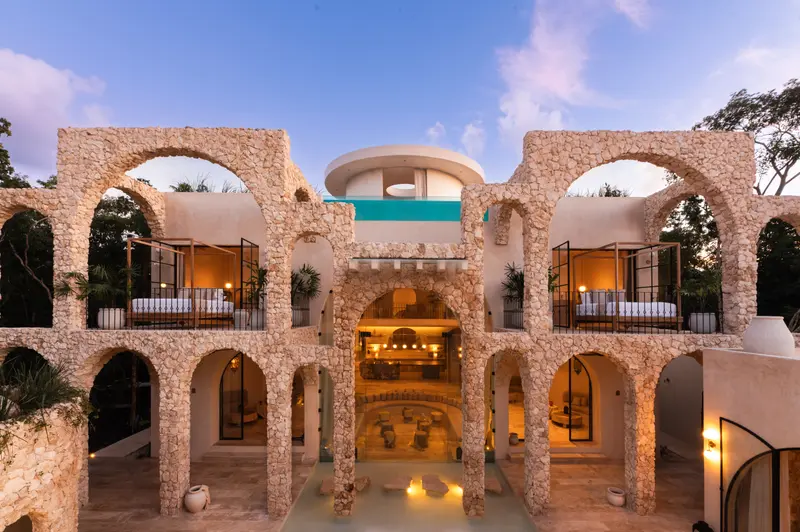
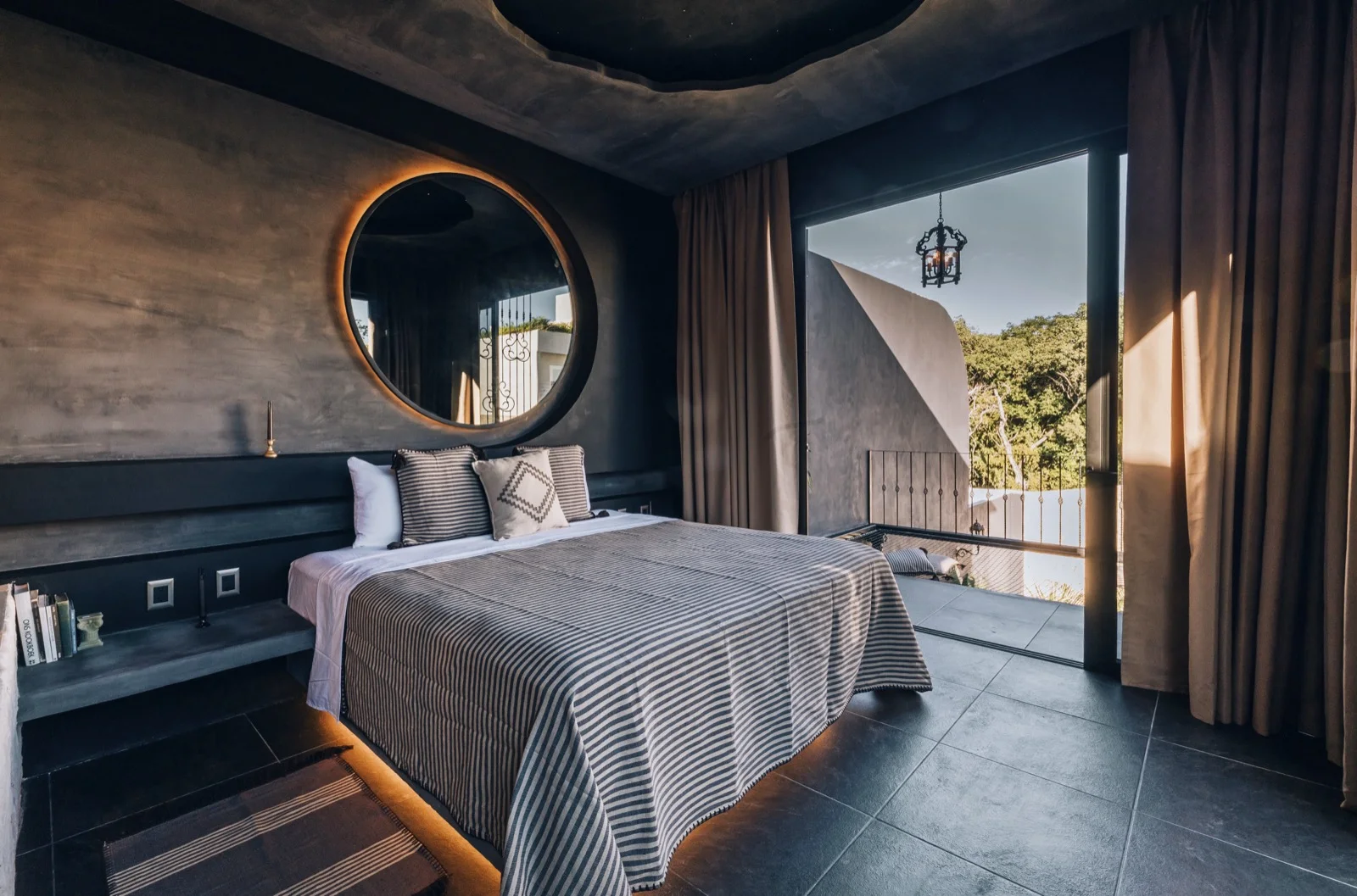
Shaded outdoor bar and lounge area at a Tulum jungle villa
Casa Arka, Tulum

Where the Smoke Comes From

The smoke is not a flavouring and it is not added. Agave hearts, called pinas, are roasted before fermentation, and in traditional production that roasting happens in a conical pit dug into the ground, lined with hot volcanic stones, packed with agave, covered with fibre and earth, and left to cook for several days. The spirit picks up smoke from that pit. Tequila producers generally steam their agave in ovens or autoclaves instead, which is why tequila tastes cleaner and mezcal does not.
What follows from this is the most useful piece of tasting knowledge for a visitor. The intensity of the smoke tells you about the production method, the wood used, and the length of the roast. It does not tell you the mezcal is good. A great deal of what gets sold to tourists is heavily smoky because smoky is what tourists identify as authentic, and it is easy to push smoke forward in a way that covers a multitude of flaws. The best mezcals we have been poured in Mexico were restrained, with the smoke sitting behind fruit, mineral and green notes rather than in front of them. If your glass tastes like a bonfire and nothing else, that is a choice someone made for your benefit.

How to Tell a Serious Bar From a Selling One

There are reliable tells. A serious bar will offer you tastes before you commit to a pour, without being asked, because they would rather you liked the third one than paid for the first. They will ask what you normally drink and steer accordingly. They will name the village, the maguey and the maker without hesitation. They will have bottles you have not seen advertised anywhere. And they will pour into a small clay copita or a straight glass rather than a shot glass with a lime wedge on it.
The opposite signals are just as clear. A menu that lists mezcal only as an ingredient in cocktails. A back bar with three bottles, all of them heavily marketed brands. Staff who answer what is this one with the brand name and nothing else. Salt, lime and a shot ritual presented as tradition. And the strongest tell of all, a place that describes mezcal as a ceremony or an experience in its marketing while being unable to tell you where the bottle came from. Ceremony is what gets sold when knowledge is not available.
You are allowed to ask questions and you should. Which of these would you drink tonight. What is the difference between these two espadins. Where is this one from. Good bartenders in this field are enthusiasts and will light up at the question. The ones who resent it are telling you something useful about the bar.

How to Drink It

Neat, at room temperature, in small sips. Do not shoot it, do not chill it, and do not add ice, because cold suppresses exactly the aromatics you are paying for. A small clay copita is traditional and a straight sided glass works fine. Sip a little, hold it in your mouth for a moment, breathe out through your nose afterwards, and wait before the next one. Mezcal opens up over several minutes in the glass the way a good wine does, and the pour you dislike at the first sip is frequently the one you like most ten minutes later.
Keep water beside it and drink plenty. These are strong spirits, frequently bottled at higher strength than commercial tequila, and the traditional serve is slow for a reason. Orange slices with sal de gusano, a salt made with toasted agave worm and chilli, are a real regional accompaniment rather than a tourist invention, and they work well with some pours. The worm in the bottle, on the other hand, is a marketing device from the middle of the last century and no serious producer bothers with it.

If you want a cocktail, have a cocktail. There is nothing wrong with a mezcal negroni or a well made paloma with mezcal in it, and some bars in town do them properly. Just recognise that you are drinking a cocktail, not tasting mezcal, and that a good bar will use espadin for mixing rather than burning through a rare tobala in a drink with three other ingredients in it. A bar that mixes its best bottles into cocktails is not taking them seriously.
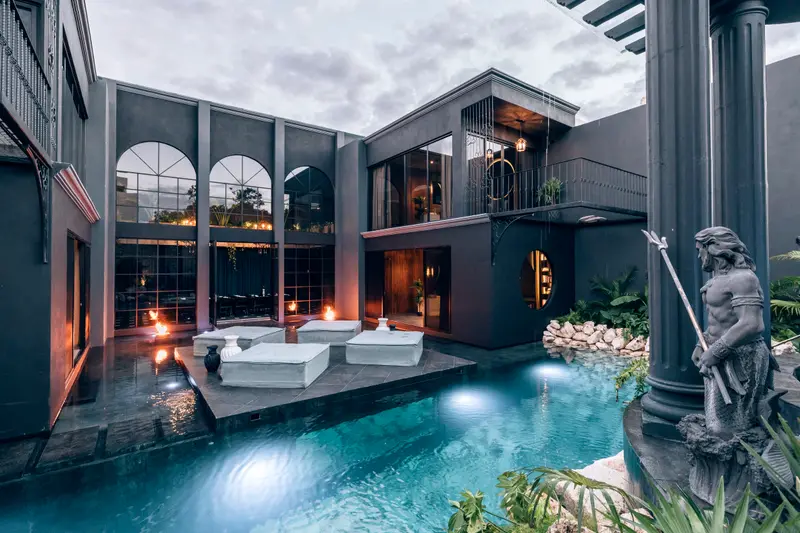
Candlelit terrace seating with low tables in the Tulum jungle
Casa Shalva, Tulum

The Sustainability Problem Nobody Puts on the Menu

This deserves to be said plainly, because it is rarely said at all in Tulum. Mezcal demand has grown enormously and the agave cannot keep up. Espadin is cultivated and can be planted and replanted, so it carries most of the load. The wild varieties cannot. Tepeztate can take fifteen years or more to mature, tobala takes over a decade and propagates through bats and animals rather than being farmed easily, and when a wild plant is cut before it flowers it never reproduces. Harvest pressure on those species is running well ahead of regeneration in parts of Oaxaca.
Producers working seriously on this replant, leave a proportion of plants to flower for the bats, and cultivate wild varieties rather than only foraging them. Some bars know which of their bottles come from producers doing that work. Asking the question is not preachy and it is not difficult. If the person pouring has an answer, that is a good bar. If nobody in the room has ever been asked, that is worth knowing too. Drinking espadin rather than a rare wild variety every night is a perfectly reasonable response and it is also usually the better value pour.

Beach Road Versus Town

This is the practical recommendation that will save you the most money and give you the best evening. The beach road is where the expensive version of everything lives, and mezcal is no exception. You will pay considerably more for a pour, the selection will be narrower, the lighting will be better than the bottles, and the staff turnover is high enough that deep product knowledge is rare. The beach road is very good at atmosphere. It is not where the mezcal is.
Tulum Pueblo, the town side, is where the specialist bars are. The rooms are smaller, the back bars are deeper, the people behind them are more likely to be there because they care, and the pours cost a fraction of the beach equivalent. Go in the evening, sit at the bar rather than a table, order one thing and ask for a recommendation for the second. The gap in quality between a town bar and a beach club pour is larger than almost any other gap we could point you at in Tulum.
The same applies to the organised mezcal tasting experiences advertised along the beach road. Some are good. Many are a fixed flight of three or four widely available bottles, delivered with a script, at a price that would buy you an evening of far better pours in town with a person who actually knows the category. If a tasting is hosted by a specific maker or a specific bar with a named list, it can be excellent. If it is sold as a generic experience by a venue whose main business is something else, treat it accordingly.

Doing It From the Villa

Plenty of our Tulum guests would rather do this at the house than in a bar, and it works well if it is set up properly. What works is asking us to arrange a maker led or bar led tasting at the villa, with someone who brings their own bottles and talks about them. What does not work is buying six bottles at the supermarket and pouring them yourself, because without the guidance you are drinking labels rather than learning anything. If you do want bottles in the house, buy fewer and better, and buy them in town rather than at the airport.
Our Tulum houses all sit within easy reach of the town side, which matters more than it sounds given everything above. Casa Arka and Casa Shalva are the jungle houses with the outdoor bar space that suits this kind of evening. Casa Don Rey handles a larger group. El Gaston is the one we suggest when the group wants somewhere to sit outside late without disturbing anybody.
Outdoor seating area lit at night beside a Tulum villa pool
El Gaston, Tulum
One last honest note. If you do not enjoy strong spirits neat, mezcal is probably not going to convert you, and no amount of provenance will change that. It is a demanding drink and it is fine to decide it is not for you after two tastes rather than spending an evening being polite about it. The bars we have recommended will not mind. They would much rather pour you two tastes and have you order a beer than watch you work through a flight you are not enjoying.
Key Takeaways
Mezcal and tequila are both agave spirits, but tequila is made from one agave in a defined region while mezcal covers many maguey varieties across several states.
The smoke everybody associates with mezcal comes from roasting the agave hearts in an earth pit over hot stones, and a heavily smoky pour is a production signature rather than a mark of quality.
A bar that takes mezcal seriously will pour you tastes, name the village and the maguey, and tell you who made it, and a bar that does not will hand you a smoky cocktail.
Drink it neat at room temperature in small sips with a little water alongside, and treat the worm and the salt rituals as tourist theatre.
Wild agave varieties take many years to mature and are being harvested faster than they regenerate, which is a genuine sustainability problem worth asking about.

Frequently Asked Questions

What is the difference between mezcal and tequila?
Both are agave spirits. Tequila comes from one species, blue weber agave, within a defined region centred on Jalisco, and is largely industrial in scale. Mezcal is the broader category made from many maguey varieties across several states, with Oaxaca dominating, and much of it is made at small scale by families. Tequila is a type of mezcal in the original sense of the word.
Why is mezcal smoky?
Because the agave hearts are roasted in an earth pit over hot volcanic stones for several days before fermentation, and the spirit picks up smoke from that process. Tequila producers usually steam their agave instead. The strength of the smoke reflects the roast and the wood, not the quality of the mezcal.
Is a very smoky mezcal a better one?
No. Heavy smoke is often pushed forward because visitors read it as authentic, and it can cover flaws. The best examples tend to be restrained, with smoke sitting behind fruit, mineral and green notes. If your glass tastes only of bonfire, that is a production choice aimed at you rather than a mark of quality.
How should I drink mezcal?
Neat, at room temperature, in small sips, with water beside it. Do not shoot it or add ice, because cold suppresses the aromatics. Let it sit in the glass and come back to it, because mezcal opens up over several minutes. Orange with sal de gusano is a genuine regional accompaniment; the worm in the bottle is a marketing invention.
How do I know a bar takes mezcal seriously?
They pour you tastes before you commit, they name the village, the maguey and the maker, they carry bottles you have not seen advertised, and they serve in a copita rather than a shot glass with lime. Warning signs are a bar that only lists mezcal inside cocktails, three heavily marketed bottles on the back bar, and staff who answer only with a brand name.
Is there a sustainability issue with mezcal?
Yes, and a real one. Cultivated espadin can be replanted, but wild varieties like tepeztate and tobala take a decade or more to mature and are being cut before they flower, which stops them reproducing. Responsible producers replant and leave plants to flower for the bats. Ask the bar whether they know which of their bottles come from producers doing that work.
Should I drink mezcal on the beach road or in town?
In town. Tulum Pueblo has the specialist bars with deeper selections and staff who know the category, at a fraction of beach road prices. The beach road excels at atmosphere but rarely at product knowledge or range. This is one of the largest quality gaps between the two sides of Tulum.
Are the organised mezcal tastings worth it?
It depends entirely on who is hosting. A tasting led by a maker or a specialist bar with a named list can be excellent. A generic experience sold by a venue whose main business is something else is usually a fixed flight of widely available bottles with a script attached, and the same spend goes much further at a town bar.
Follow the journey @erentalsexclusive + @aurelseyez
Villa tours, destination guides, and behind-the-scenes content from the team on the ground
Cameron Elder
Founder, ERentals Exclusive
tulum
mezcal
drinking

See it in motion

From the feed

Real stays, real light. Tap any film to watch it full screen.

Stay in the loop
© 2026 ERentals Exclusive