Positano vs Amalfi vs Praiano

The honest three-way Amalfi Coast base comparison. Positano the postcard, Amalfi the historical anchor, Praiano the quiet one. Villas, crowds, prices, and ferry access compared.

The short answer, from an operator who runs villas on this coast: Positano if you want the postcard and will pay for it in crowds and stairs, Amalfi if you want the history and a flatter town that functions as a real place, and Praiano if you want to be near both while sleeping somewhere quiet at a lower rate. All three sit on the same SS163 coastal road and the same ferry network, so the practical differences are crowd density, vertical terrain, price, and character rather than access. This guide walks each one honestly and says which trip fits which base. Villa Oliviero, Positano Positano: The Postcard Positano is the image everyone has in their head: pastel houses stacked up a near-vertical bowl, the majolica dome of Santa Maria Assunta at the bottom, Spiaggia Grande below it, and the Li Galli islands offshore. It is genuinely beautiful and it is also the busiest town on the coast by a wide margin. Day-trippers arrive by ferry and bus from May through October, the single main street narrows to a shuffle at midday in August, and the beach clubs sell out weeks ahead in peak. The thing nobody tells first-time visitors is the vertical. Positano is stairs. Hundreds of them. Getting from a hillside villa to the beach can be a twenty-minute descent and a much longer climb back, and the town has effectively no flat ground. For travellers with mobility considerations or very young children, this matters more than the view does. A villa with its own driver and a road-level access point solves it; a hotel halfway up the hill often does not. Where Positano wins: the setting is unmatched, the restaurant scene is the strongest of the three, the boat access to Capri and the Li Galli is immediate, and the villa market above the town is the best on the coast. Villa Oliviero on the west cliff and Villa Mon Repos on the hillside above Spiaggia Grande both sit above the crowd with their own access and views straight down the bay. Amalfi: The Historical Anchor Amalfi town gave the coast its name and was a maritime republic that rivalled Venice and Genoa in the eleventh century. The Cathedral of Sant Andrea with its striped Arab-Norman facade and the sixty-two step staircase up to it is the centrepiece, and the Cloister of Paradise behind it is one of the most beautiful small spaces in Italy. The Paper Museum in the valley behind town documents an industry that ran here for seven centuries. Practically, Amalfi is the flattest of the three towns and the easiest to walk. The piazza is at sea level, the main street runs back into the valley on a gentle grade, and the ferry terminal is right there. It is the coast's transport hub: ferries to Positano, Capri, Salerno, and Sorrento all run from here, and the bus network radiates out. For a traveller who wants to move around the coast a lot, Amalfi is the most convenient base by some distance. Where Amalfi loses: it is less photogenic than Positano, the day-tripper volume is also high (it is the ferry hub, so everybody pa

The short answer, from an operator who runs villas on this coast: Positano if you want the postcard and will pay for it in crowds and stairs, Amalfi if you want the history and a flatter town that functions as a real place, and Praiano if you want to be near both while sleeping somewhere quiet at a lower rate. All three sit on the same SS163 coastal road and the same ferry network, so the practical differences are crowd density, vertical terrain, price, and character rather than access. This guide walks each one honestly and says which trip fits which base.

Positano: The Postcard

Positano is the image everyone has in their head: pastel houses stacked up a near-vertical bowl, the majolica dome of Santa Maria Assunta at the bottom, Spiaggia Grande below it, and the Li Galli islands offshore. It is genuinely beautiful and it is also the busiest town on the coast by a wide margin. Day-trippers arrive by ferry and bus from May through October, the single main street narrows to a shuffle at midday in August, and the beach clubs sell out weeks ahead in peak.

The thing nobody tells first-time visitors is the vertical. Positano is stairs. Hundreds of them. Getting from a hillside villa to the beach can be a twenty-minute descent and a much longer climb back, and the town has effectively no flat ground. For travellers with mobility considerations or very young children, this matters more than the view does. A villa with its own driver and a road-level access point solves it; a hotel halfway up the hill often does not.

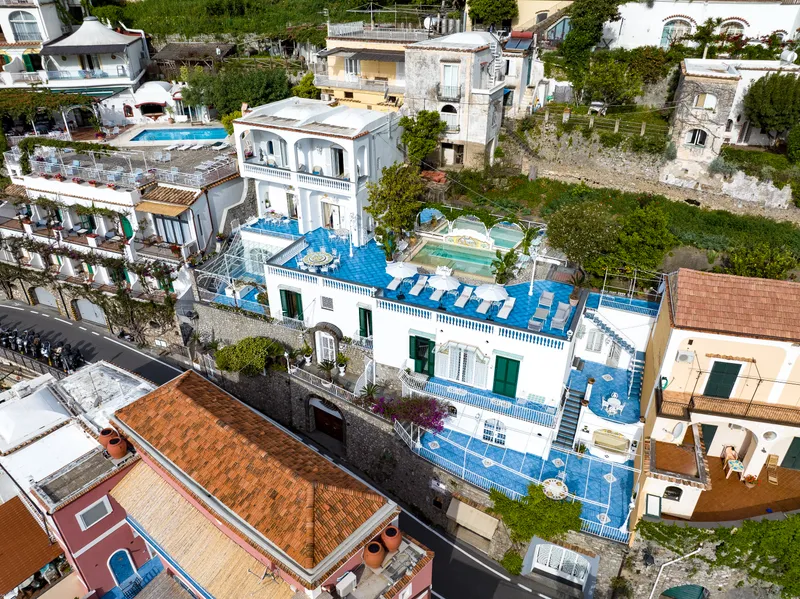
Where Positano wins: the setting is unmatched, the restaurant scene is the strongest of the three, the boat access to Capri and the Li Galli is immediate, and the villa market above the town is the best on the coast. Villa Oliviero on the west cliff and Villa Mon Repos on the hillside above Spiaggia Grande both sit above the crowd with their own access and views straight down the bay.

Amalfi: The Historical Anchor

Amalfi town gave the coast its name and was a maritime republic that rivalled Venice and Genoa in the eleventh century. The Cathedral of Sant Andrea with its striped Arab-Norman facade and the sixty-two step staircase up to it is the centrepiece, and the Cloister of Paradise behind it is one of the most beautiful small spaces in Italy. The Paper Museum in the valley behind town documents an industry that ran here for seven centuries.

Practically, Amalfi is the flattest of the three towns and the easiest to walk. The piazza is at sea level, the main street runs back into the valley on a gentle grade, and the ferry terminal is right there. It is the coast's transport hub: ferries to Positano, Capri, Salerno, and Sorrento all run from here, and the bus network radiates out. For a traveller who wants to move around the coast a lot, Amalfi is the most convenient base by some distance.

Where Amalfi loses: it is less photogenic than Positano, the day-tripper volume is also high (it is the ferry hub, so everybody passes through), and the private villa market immediately around the town is thinner than around Positano and Praiano. Ravello, up the mountain above Amalfi, is where the Amalfi-adjacent luxury accommodation concentrates, and that is a twenty-minute drive up a switchback road rather than a walk.

Praiano: The Quiet One

Praiano sits between Positano and Amalfi, about five kilometres east of Positano, spread along the cliff rather than stacked in a bowl. It has no single famous view and no day-tripper economy, which is precisely the point. The town is residential, the restaurants are mostly local, and the evenings are quiet. The two beaches, Marina di Praia in a narrow fjord-like inlet and Gavitella reached by a long staircase or a small boat, are both small pebble coves that never fill the way Positano does.

The practical case for Praiano is strong and underrated. Villa rates run roughly ten to twenty percent below equivalent Positano properties. The drive into Positano is five to ten minutes, which is often faster than walking down and back up from a mid-hill Positano hotel. The drive to Amalfi is fifteen minutes. The Sentiero degli Dei trailhead access is closer. And the sunset from the Praiano cliffs, looking west past Positano toward Capri, is arguably the best on the coast because you are looking at Positano rather than standing in it.

Where Praiano loses: there is no there there in the way Positano and Amalfi have a there. If you want to walk out of your door into a town with shops and a piazza and life, Praiano is thin. It is a base, not a destination. Villa Ferida sits on the Praiano cliff with a plunge pool and a view toward Capri and is the kind of property that makes the trade worth it.

Price, Compared

At retail on equivalent property tiers, Positano carries the highest rates on the coast, Praiano runs roughly ten to twenty percent below Positano, and Amalfi sits between them with a thinner high-end villa supply. Ravello, above Amalfi, prices closer to Positano because of the garden villas and the festival. The differential holds across seasons and widens slightly at peak, when Positano demand is at its most inelastic.

Restaurants follow a similar pattern: Positano is the most expensive, Praiano is meaningfully cheaper for comparable quality, and Amalfi sits in between with more mid-range options because it serves a resident population as well as visitors. A dinner for four that runs a certain number in Positano will commonly run a quarter less in Praiano for food of the same standard.

Ferry and Road Access

Amalfi has the best ferry access by a clear margin; it is the hub and almost every route calls there. Positano has good ferry service to Capri, Sorrento, Amalfi, and Salerno in season. Praiano has limited ferry service and most guests based there drive the ten minutes to Positano or fifteen to Amalfi to catch a boat. If you are planning a trip with several boat days, that ten-minute transfer is a real
Positano bay from a clifftop villa terrace at golden hour with pastel houses cascading down
Guides
POSITANO

Positano vs Amalfi vs Praiano

Where to Base on the Amalfi Coast
Cameron Elder
·
September 22, 2026
·
11 min read
The honest three-way comparison of the Amalfi Coast base towns. The postcard, the historical anchor, and the quiet one that most seasoned visitors end up choosing.
The short answer, from an operator who runs villas on this coast: Positano if you want the postcard and will pay for it in crowds and stairs, Amalfi if you want the history and a flatter town that functions as a real place, and Praiano if you want to be near both while sleeping somewhere quiet at a lower rate. All three sit on the same SS163 coastal road and the same ferry network, so the practical differences are crowd density, vertical terrain, price, and character rather than access. This guide walks each one honestly and says which trip fits which base.
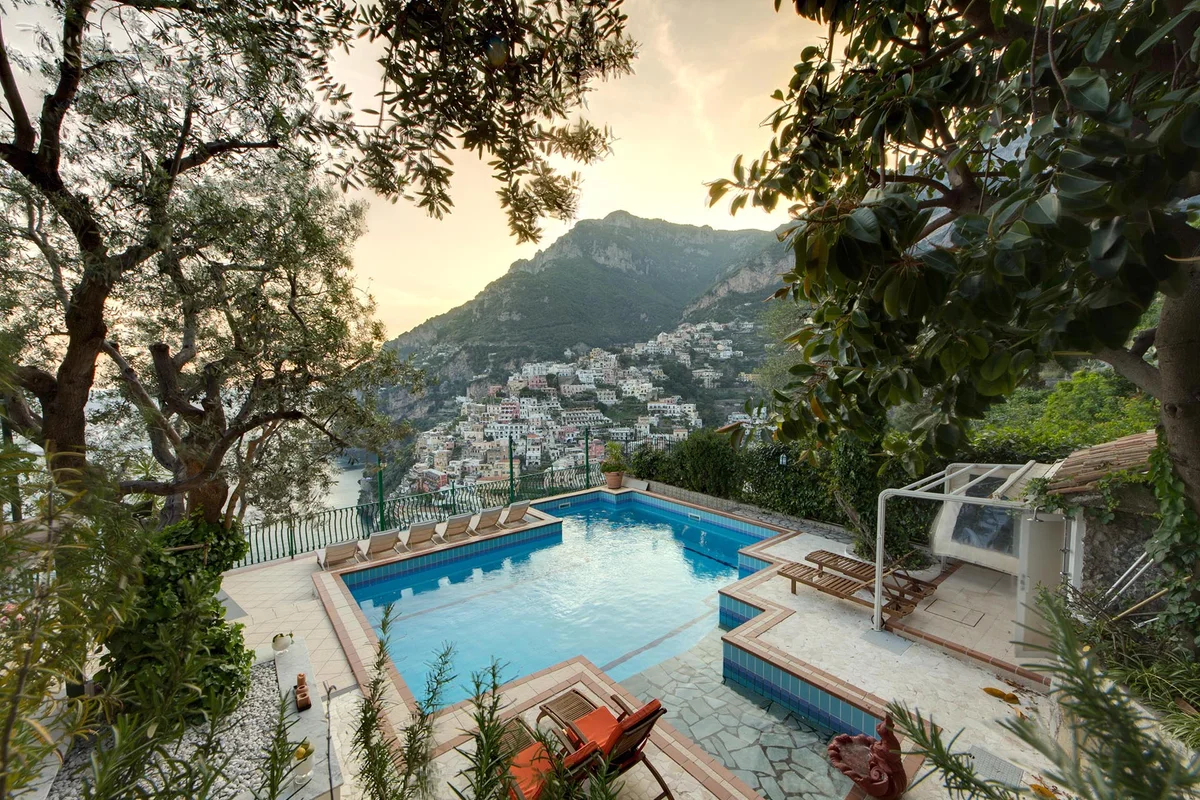
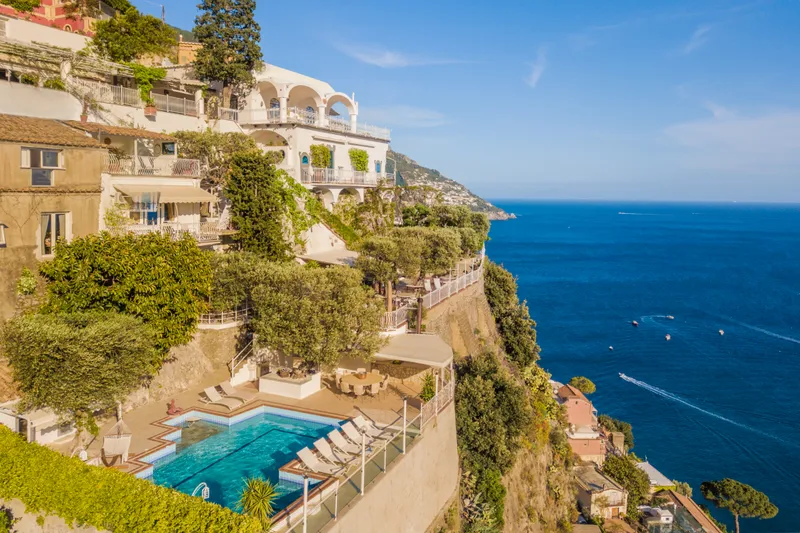
Villa Oliviero clifftop pool above Positano bay at sunset
Villa Oliviero, Positano

Positano: The Postcard

Positano is the image everyone has in their head: pastel houses stacked up a near-vertical bowl, the majolica dome of Santa Maria Assunta at the bottom, Spiaggia Grande below it, and the Li Galli islands offshore. It is genuinely beautiful and it is also the busiest town on the coast by a wide margin. Day-trippers arrive by ferry and bus from May through October, the single main street narrows to a shuffle at midday in August, and the beach clubs sell out weeks ahead in peak.
The thing nobody tells first-time visitors is the vertical. Positano is stairs. Hundreds of them. Getting from a hillside villa to the beach can be a twenty-minute descent and a much longer climb back, and the town has effectively no flat ground. For travellers with mobility considerations or very young children, this matters more than the view does. A villa with its own driver and a road-level access point solves it; a hotel halfway up the hill often does not.
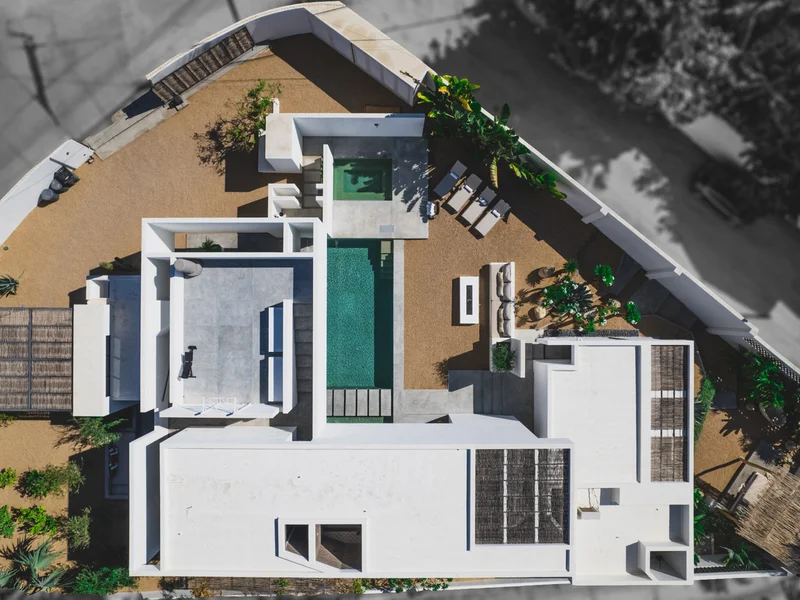
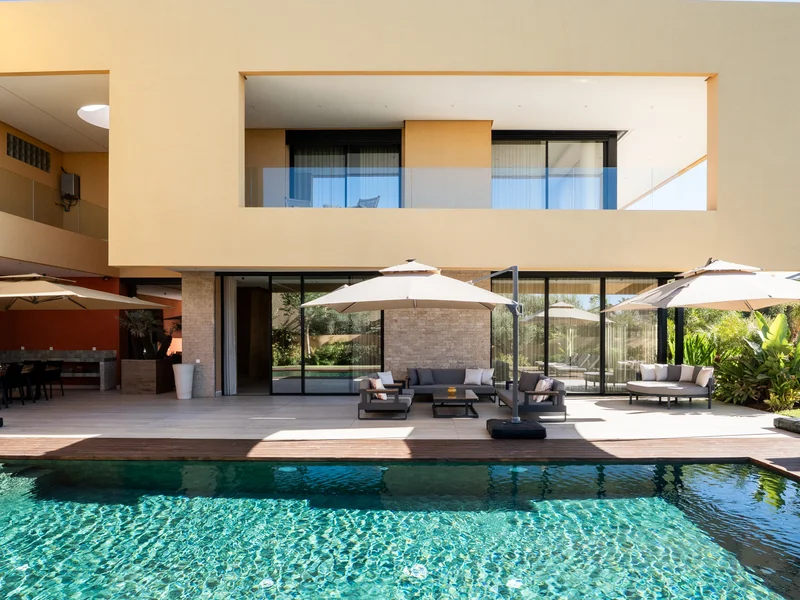
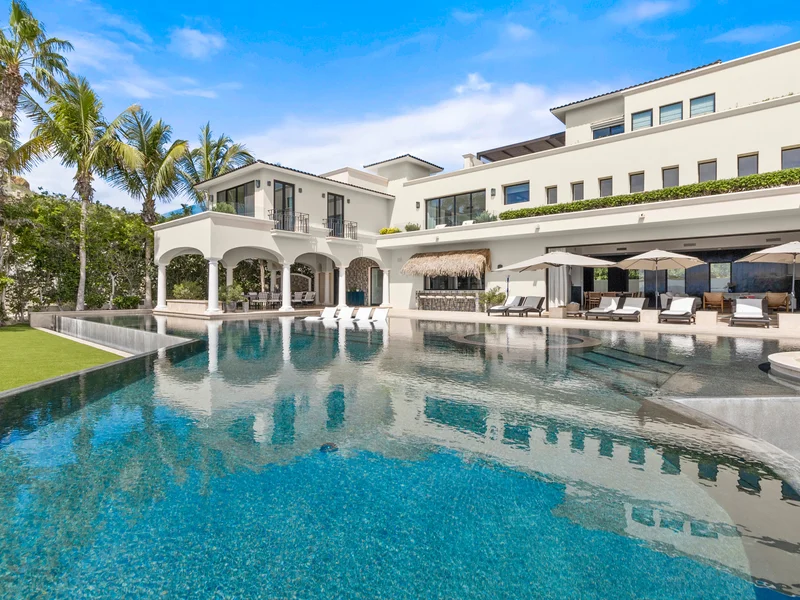
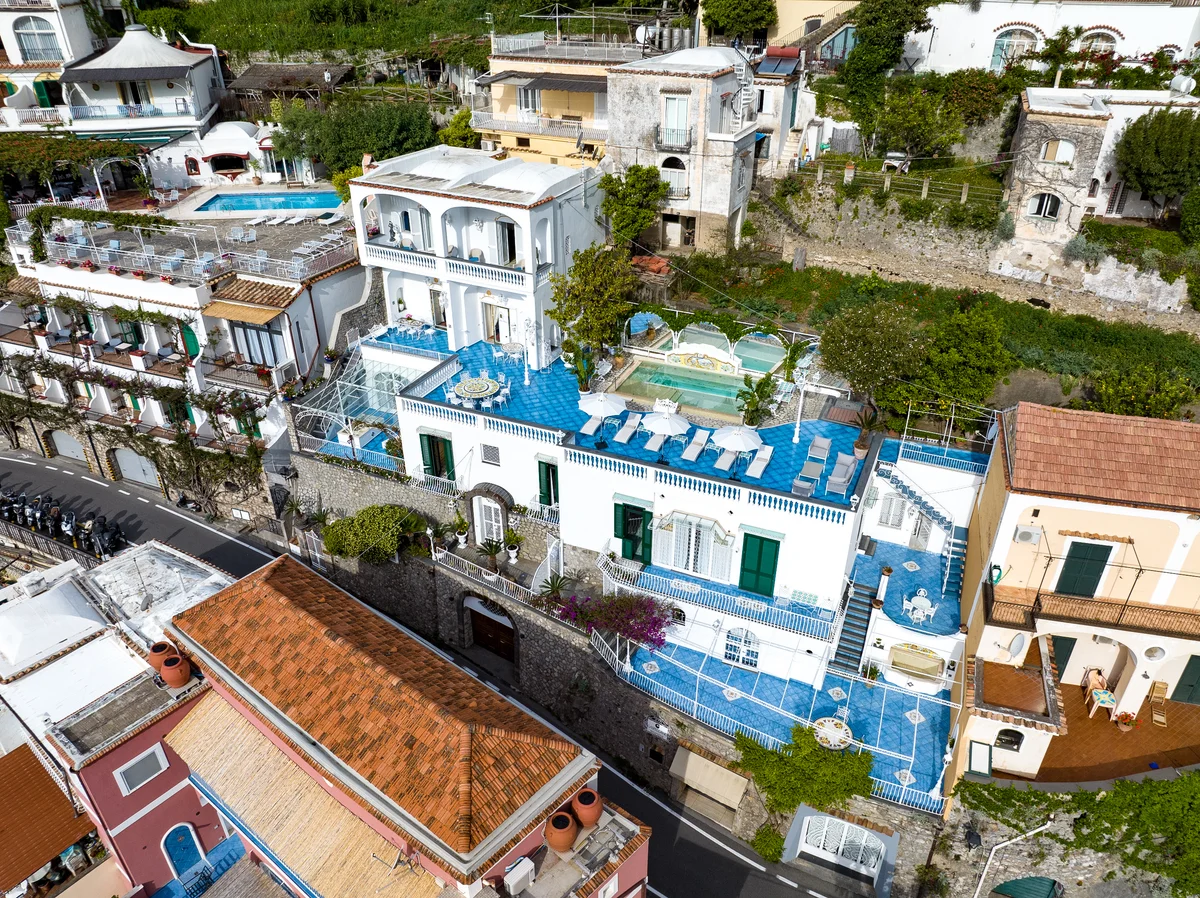
Where Positano wins: the setting is unmatched, the restaurant scene is the strongest of the three, the boat access to Capri and the Li Galli is immediate, and the villa market above the town is the best on the coast. Villa Oliviero on the west cliff and Villa Mon Repos on the hillside above Spiaggia Grande both sit above the crowd with their own access and views straight down the bay.

Amalfi: The Historical Anchor

Amalfi town gave the coast its name and was a maritime republic that rivalled Venice and Genoa in the eleventh century. The Cathedral of Sant Andrea with its striped Arab-Norman facade and the sixty-two step staircase up to it is the centrepiece, and the Cloister of Paradise behind it is one of the most beautiful small spaces in Italy. The Paper Museum in the valley behind town documents an industry that ran here for seven centuries.
Practically, Amalfi is the flattest of the three towns and the easiest to walk. The piazza is at sea level, the main street runs back into the valley on a gentle grade, and the ferry terminal is right there. It is the coast's transport hub: ferries to Positano, Capri, Salerno, and Sorrento all run from here, and the bus network radiates out. For a traveller who wants to move around the coast a lot, Amalfi is the most convenient base by some distance.
Where Amalfi loses: it is less photogenic than Positano, the day-tripper volume is also high (it is the ferry hub, so everybody passes through), and the private villa market immediately around the town is thinner than around Positano and Praiano. Ravello, up the mountain above Amalfi, is where the Amalfi-adjacent luxury accommodation concentrates, and that is a twenty-minute drive up a switchback road rather than a walk.

Praiano: The Quiet One

Praiano sits between Positano and Amalfi, about five kilometres east of Positano, spread along the cliff rather than stacked in a bowl. It has no single famous view and no day-tripper economy, which is precisely the point. The town is residential, the restaurants are mostly local, and the evenings are quiet. The two beaches, Marina di Praia in a narrow fjord-like inlet and Gavitella reached by a long staircase or a small boat, are both small pebble coves that never fill the way Positano does.
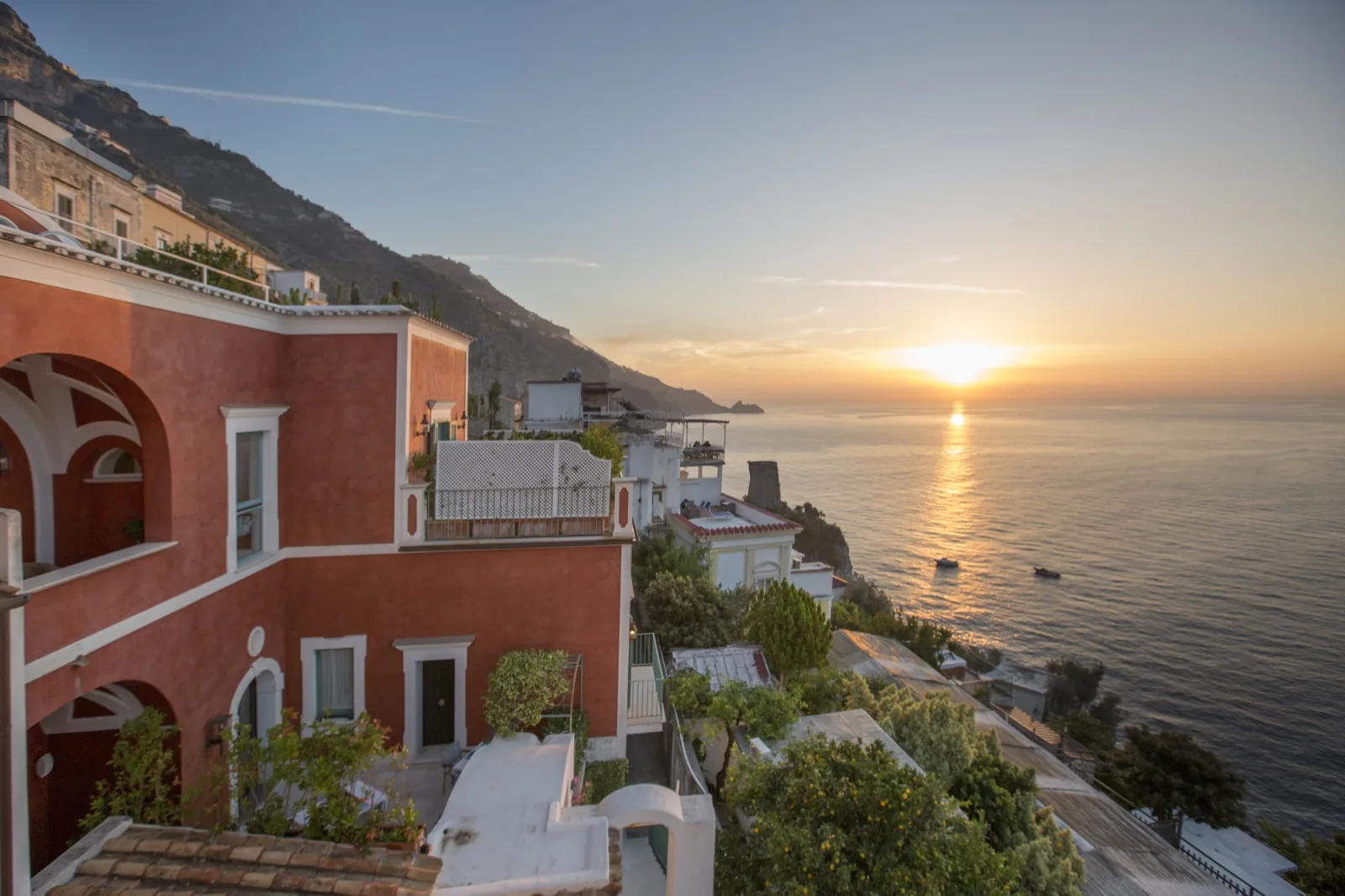
The practical case for Praiano is strong and underrated. Villa rates run roughly ten to twenty percent below equivalent Positano properties. The drive into Positano is five to ten minutes, which is often faster than walking down and back up from a mid-hill Positano hotel. The drive to Amalfi is fifteen minutes. The Sentiero degli Dei trailhead access is closer. And the sunset from the Praiano cliffs, looking west past Positano toward Capri, is arguably the best on the coast because you are looking at Positano rather than standing in it.
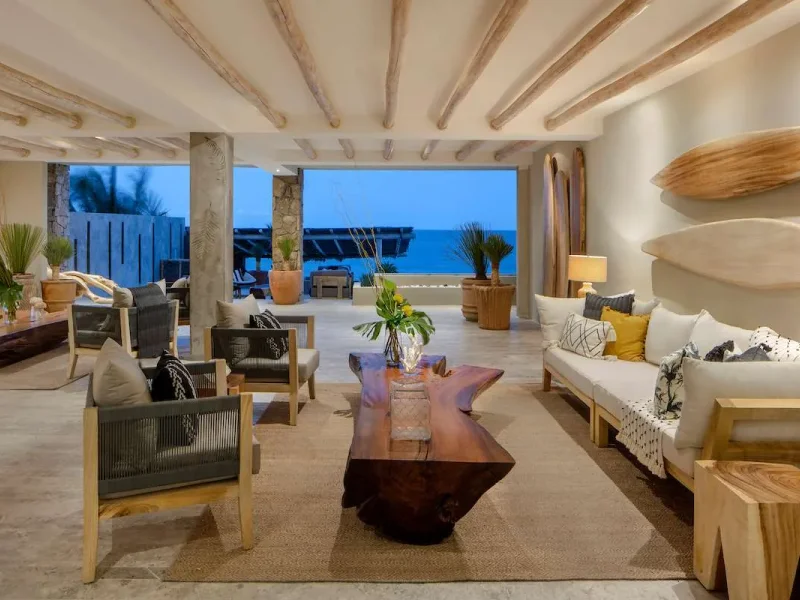
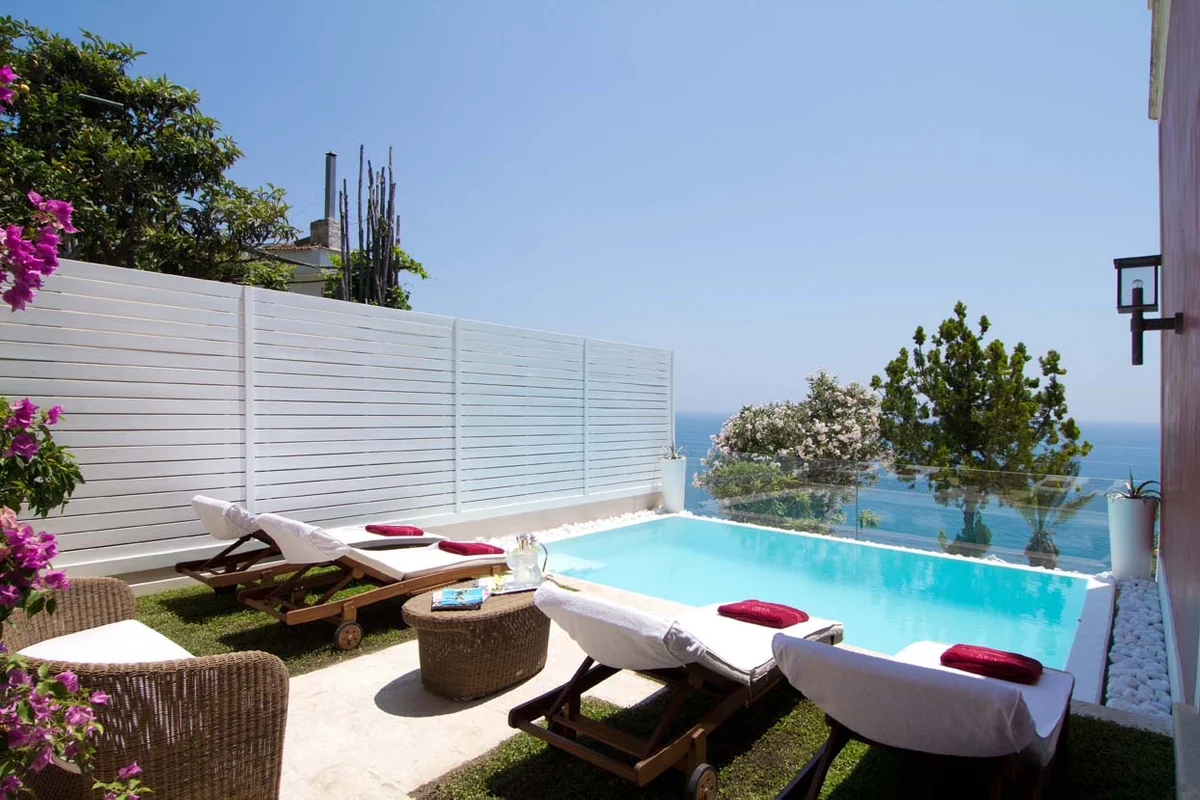
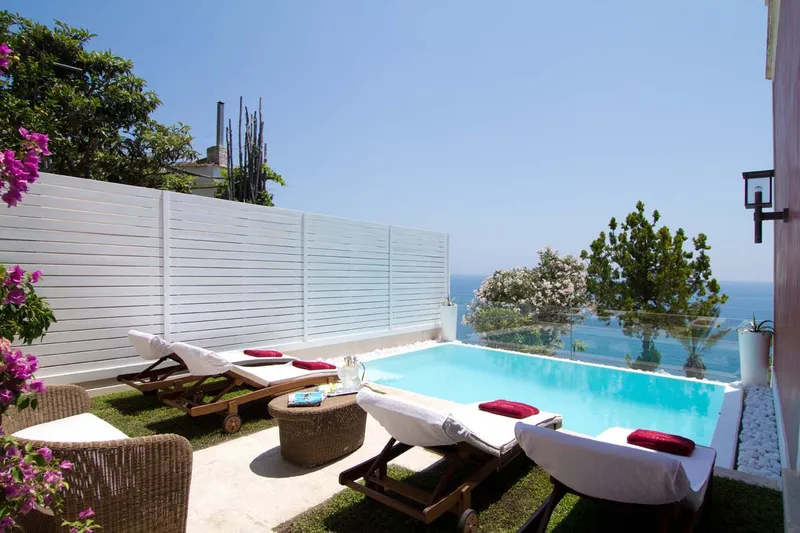
Where Praiano loses: there is no there there in the way Positano and Amalfi have a there. If you want to walk out of your door into a town with shops and a piazza and life, Praiano is thin. It is a base, not a destination. Villa Ferida sits on the Praiano cliff with a plunge pool and a view toward Capri and is the kind of property that makes the trade worth it.
Villa Ferida terrace above Praiano with plunge pool and view toward Capri
Villa Ferida, Praiano
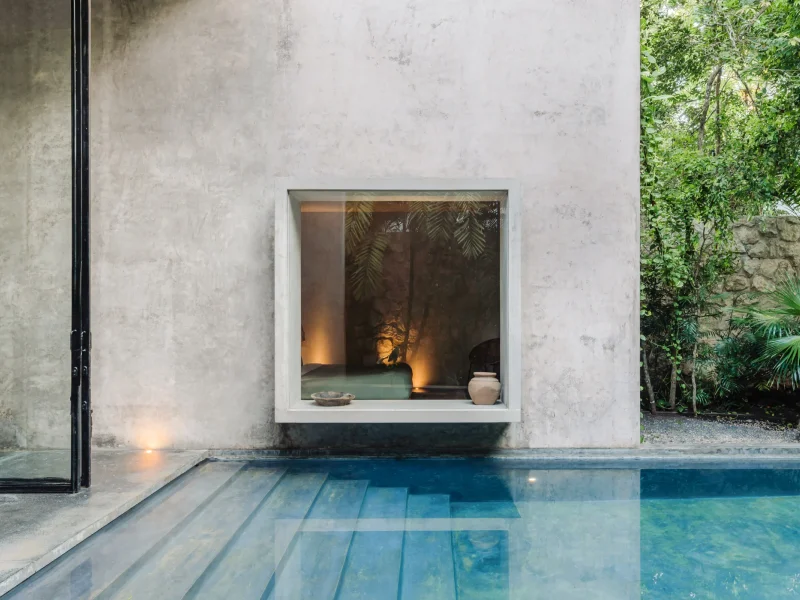
Villa Mon Repos terrace above Positano with stone pool deck and a view of the bay
Villa Mon Repos, Positano

Price, Compared

At retail on equivalent property tiers, Positano carries the highest rates on the coast, Praiano runs roughly ten to twenty percent below Positano, and Amalfi sits between them with a thinner high-end villa supply. Ravello, above Amalfi, prices closer to Positano because of the garden villas and the festival. The differential holds across seasons and widens slightly at peak, when Positano demand is at its most inelastic.
Restaurants follow a similar pattern: Positano is the most expensive, Praiano is meaningfully cheaper for comparable quality, and Amalfi sits in between with more mid-range options because it serves a resident population as well as visitors. A dinner for four that runs a certain number in Positano will commonly run a quarter less in Praiano for food of the same standard.

Ferry and Road Access

Amalfi has the best ferry access by a clear margin; it is the hub and almost every route calls there. Positano has good ferry service to Capri, Sorrento, Amalfi, and Salerno in season. Praiano has limited ferry service and most guests based there drive the ten minutes to Positano or fifteen to Amalfi to catch a boat. If you are planning a trip with several boat days, that ten-minute transfer is a real consideration.

By road all three sit on the SS163, the cliff-cut coastal highway covered in our Amalfi safety guide, and all three are served by villa transport and taxi. Nobody should be self-driving this road on a first visit. From Naples airport the transfer is roughly ninety minutes to Positano, one hundred to Praiano, and one hundred and ten to Amalfi, with peak-season traffic adding meaningfully to all three.

Which One for Which Trip

A first Amalfi Coast trip that wants the iconic view: Positano, in a villa above the town with its own access
A trip with several boat days to Capri and along the coast: Amalfi, the ferry hub
A second or third Amalfi trip: Praiano, and you will probably keep going back
A honeymoon that wants quiet evenings and a private pool: Praiano or a high Positano villa
Travellers with mobility considerations: Amalfi, the flattest town on the coast
A group wanting the best value on an equivalent villa tier: Praiano
A trip built around the Ravello Festival in July or August: Ravello above Amalfi
A family with very young children: Amalfi or Praiano, Positano stairs are genuinely punishing with a stroller

The Honest Bottom Line

Positano is worth seeing and worth staying in once, from a villa high enough above the town that the crowd is scenery rather than obstacle. Amalfi is the most functional base and the right answer for a trip with a lot of ferry movement or anyone who does not want to climb stairs all week. Praiano is what most people who have done the coast three or four times end up choosing: quieter, cheaper, a ten-minute drive from the postcard, and with the better sunset because you are looking at Positano instead of standing in it. Our villa roster sits in Positano and Praiano because that is where the private clifftop product actually is, and we will match the base to the group rather than defaulting to the famous one.
Key Takeaways
Positano is the postcard and pays for it in crowds, price, and stairs
Amalfi town is the historical anchor and the ferry hub, flatter and more functional than Positano
Praiano is quieter, roughly ten to twenty percent cheaper, and closer to Positano than most Positano hotels once you count the walk
All three sit on the same SS163 and the same ferry network; the practical difference is the crowd and the vertical
Our villa roster sits in Positano and Praiano, which is where the private clifftop product actually is

Frequently Asked Questions

Should I stay in Positano, Amalfi, or Praiano?
Positano for a first trip that wants the iconic view, staying in a villa high enough above the town that the crowd is scenery. Amalfi for a trip with a lot of ferry movement or anyone who wants a flat, walkable town. Praiano for a second or third trip, or for a group that wants roughly ten to twenty percent better value on an equivalent villa tier.
Is Praiano too quiet?
It depends what you want. Praiano is residential with local restaurants and no day-tripper economy, so evenings are genuinely quiet. There is no piazza with life in it the way Positano and Amalfi have. If you want to walk out of your door into a town, Praiano is thin. If you want a base with a five to ten minute drive into Positano, it is the best value on the coast.
How far is Praiano from Positano?
About five kilometres, which is a five to ten minute drive on the SS163 outside peak traffic. In practice that is often faster than walking down and back up from a mid-hill Positano hotel, because Positano has effectively no flat ground and the climb back from the beach is long.
Which town is easiest to walk around?
Amalfi by a clear margin. The piazza is at sea level, the main street runs back into the valley on a gentle grade, and the ferry terminal is right there. Positano is hundreds of stairs and no flat ground. Praiano is spread along a cliff with its own staircases down to the two beaches.
Which has the best ferry access?
Amalfi, which is the coast hub where almost every route calls. Positano has good in-season service to Capri, Sorrento, Amalfi, and Salerno. Praiano has limited service and most guests based there drive ten minutes to Positano or fifteen to Amalfi to catch a boat.
Is Praiano cheaper than Positano?
Yes, at retail on equivalent property tiers, roughly ten to twenty percent below Positano, and the differential widens slightly at peak when Positano demand is most inelastic. Restaurants follow a similar pattern, with comparable food commonly running about a quarter less in Praiano.
Where should we stay with young children?
Amalfi or Praiano. Positano stairs are genuinely punishing with a stroller or a toddler, and there is no flat route from most accommodation to the beach. Amalfi is flat at sea level. Praiano villas with private pools handle the midday nap window better than a town-centre hotel in any of the three.
What about Ravello?
Ravello sits up the mountain above Amalfi, about twenty minutes by switchback road. It is cooler in summer, has the Villa Cimbrone and Villa Rufolo gardens, and hosts the Ravello Festival in July and August. It is the right base for a trip built around the festival or for anyone who wants cool evenings, and it prices closer to Positano than to Praiano.
Follow the journey @erentalsexclusive + @aurelseyez
Villa tours, destination guides, and behind-the-scenes content from the team on the ground
Cameron Elder
Founder, ERentals Exclusive
italy
positano
praiano
amalfi-coast
comparison
travel-tips
See it in motion
From the feed
Real stays, real light. Press play or watch the full reel on Instagram.
Stay in the loop
© 2026 ERentals Exclusive