The Best Restaurants in Mykonos

Where to eat in Mykonos, from charcoal beach tavernas to the beach clubs, with the seasonal closures and booking rules that catch guests out.

Mykonos is one of the few islands where the food conversation is genuinely complicated. The raw material is excellent, because the fish comes off boats you can watch unloading and the vegetables come from farms fifteen minutes inland at Ano Mera. The pricing is not. Between late June and early September the island runs on a summer economy that has very little to do with the rest of Greece, and a plate of grilled fish on a beach terrace can cost several times what the same fish costs in Athens. We place guests in Mykonos every season and we have watched families spend an entire week eating badly at famous addresses. What follows is the working list we would give over the phone, including the parts that do not help us sell anything. Two Facts That Decide Everything Else Start here. Mykonos is punishingly expensive in high season, and Mykonos is punishingly seasonal. Most of the kitchens worth crossing the island for run from roughly late April or May to late September or October, and a serious share of the island simply closes for winter, including some of the tavernas people travel specifically to eat at. If you are coming in November, February or March, assume the island is a handful of year round rooms in Chora and Ano Mera and plan around that rather than around a list you found online in August. In July and August the reverse problem applies. Everything is open, everything is full, and the tables available at short notice are usually available for a reason. Chora, and the View Premium Chora, the main town, is where most guests eat most nights, and it is the easiest place in Greece to eat badly at speed. The rule is blunt. The closer a table sits to a sunset view in Little Venice, the more of the bill is buying the view rather than the cooking. That is not a scandal, it is simply worth knowing before you order. Kounelas has been grilling fish in the back lanes for decades and still does it properly. Sea Satin Market, sitting below the windmills, is a large, loud, long running operation that gets the fish right far more often than its size would suggest. The small kitchens in the lanes behind the main shopping street are better value than anything on the water, and you can find two or three of them in ten minutes on foot. Villa Lavan, Mykonos Ano Mera, the Inland Correction Ano Mera is the island's inland village, about twenty minutes from Chora, arranged around a square with the Panagia Tourliani monastery on one side. The tavernas on that square are where a good number of the island's own residents eat, and the cooking is plainer, slower and a great deal less expensive than anything on the coast. This is where to order goat in tomato, kopanisti, the sharp aged cheese Mykonos actually produces itself, and louza, the cured pork you will rarely see on a beach menu. It is also one of the few parts of the island with any real life in the shoulder months. If you are here in May or October and the beach places are shuttered, drive inland before you c

Mykonos is one of the few islands where the food conversation is genuinely complicated. The raw material is excellent, because the fish comes off boats you can watch unloading and the vegetables come from farms fifteen minutes inland at Ano Mera. The pricing is not. Between late June and early September the island runs on a summer economy that has very little to do with the rest of Greece, and a plate of grilled fish on a beach terrace can cost several times what the same fish costs in Athens. We place guests in Mykonos every season and we have watched families spend an entire week eating badly at famous addresses. What follows is the working list we would give over the phone, including the parts that do not help us sell anything.

Two Facts That Decide Everything Else

Start here. Mykonos is punishingly expensive in high season, and Mykonos is punishingly seasonal. Most of the kitchens worth crossing the island for run from roughly late April or May to late September or October, and a serious share of the island simply closes for winter, including some of the tavernas people travel specifically to eat at. If you are coming in November, February or March, assume the island is a handful of year round rooms in Chora and Ano Mera and plan around that rather than around a list you found online in August. In July and August the reverse problem applies. Everything is open, everything is full, and the tables available at short notice are usually available for a reason.

Chora, and the View Premium

Chora, the main town, is where most guests eat most nights, and it is the easiest place in Greece to eat badly at speed. The rule is blunt. The closer a table sits to a sunset view in Little Venice, the more of the bill is buying the view rather than the cooking. That is not a scandal, it is simply worth knowing before you order. Kounelas has been grilling fish in the back lanes for decades and still does it properly. Sea Satin Market, sitting below the windmills, is a large, loud, long running operation that gets the fish right far more often than its size would suggest. The small kitchens in the lanes behind the main shopping street are better value than anything on the water, and you can find two or three of them in ten minutes on foot.

Ano Mera, the Inland Correction

Ano Mera is the island's inland village, about twenty minutes from Chora, arranged around a square with the Panagia Tourliani monastery on one side. The tavernas on that square are where a good number of the island's own residents eat, and the cooking is plainer, slower and a great deal less expensive than anything on the coast. This is where to order goat in tomato, kopanisti, the sharp aged cheese Mykonos actually produces itself, and louza, the cured pork you will rarely see on a beach menu. It is also one of the few parts of the island with any real life in the shoulder months. If you are here in May or October and the beach places are shuttered, drive inland before you conclude that the island has nothing left to offer.

The Charcoal Tavernas Worth the Drive

The single most quoted address on the island is Kiki's Tavern at Agios Sostis, which runs without mains electricity, cooks everything over charcoal, does not take reservations and historically does not take cards. The queue in August can run past an hour and there is no mechanism to shorten it, which is either charming or infuriating depending on how hungry the group is. Nikolas at Agia Anna is the calmer version of the same idea, right on the sand, and much easier to get into. Fokos, on the exposed north coast, sits at the end of a road surface that will make a rental car nervous, and the reward is a quiet lunch on a beach that never fills up. All three of them close for the winter.

Beach Clubs, and What You Are Actually Buying

Nammos at Psarou, Scorpios at Paraga and Principote at Panormos are not restaurants in any normal sense, and treating them as restaurants is how people get hurt. Minimum spends on beds and front row tables are real, they move with the calendar, and they are usually confirmed by message rather than published anywhere you can check in advance. The food is competent. The setting, the sound and the shape of the afternoon are the actual product, and on that measure they deliver what they promise. If what you want is lunch, this is a very expensive way to get lunch. If what you want is the afternoon, it works, and it is worth paying for once rather than four times in a single week.

The High End, Honestly Assessed

Mykonos has a serious fine dining layer now, concentrated in the hotels above Chora. Matsuhisa at the Belvedere brought the Nobu style kitchen to the island years ago and remains one of the most consistently well run rooms here. Bill and Coo and Interni both cook at a high level with proper service to match. The honest caveat is that a lot of the top end on this island is imported, and you can eat a near identical meal in London, Dubai or Miami. If you have four nights and you want to remember Greece rather than remember a good restaurant, spend one of them on the imported high end and the other three on fish, tomatoes and a hillside.

What to Order Once You Sit Down

Fish is sold by weight almost everywhere, so ask for the price per kilo and ask to see the fish before it is cooked. A whole fish chosen at the counter and grilled plainly with oil and lemon is the entire point of eating here, and anything arriving under a heavy sauce is usually hiding something. Beyond that, order the local things rather than the international ones. Kopanisti on bread, louza, fava from Santorini, tomato fritters, wild greens with lemon, and whatever is chalked on a board rather than printed on a laminated menu. Greek wine has improved enormously in the last decade and the Assyrtiko on most lists is better than the imported white sitting next to it at a lower price point.
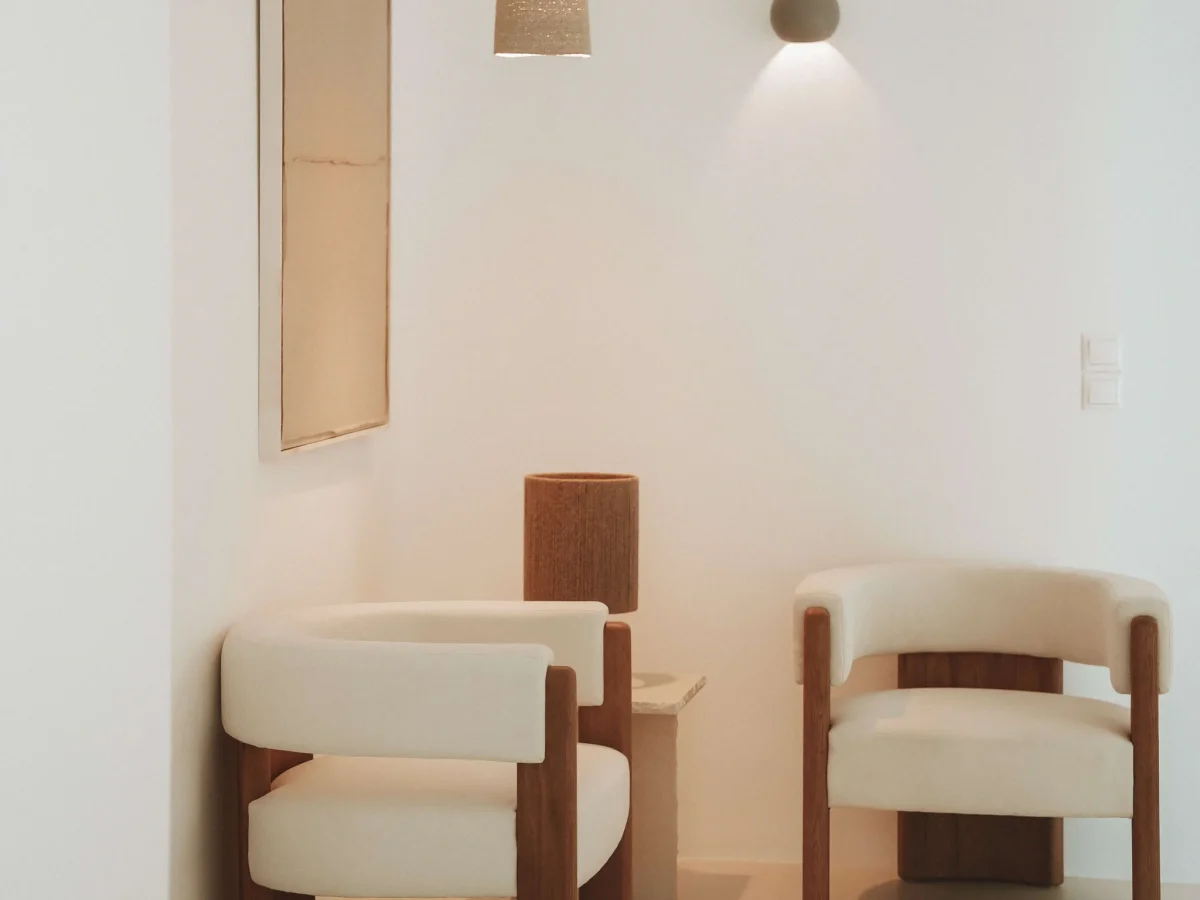
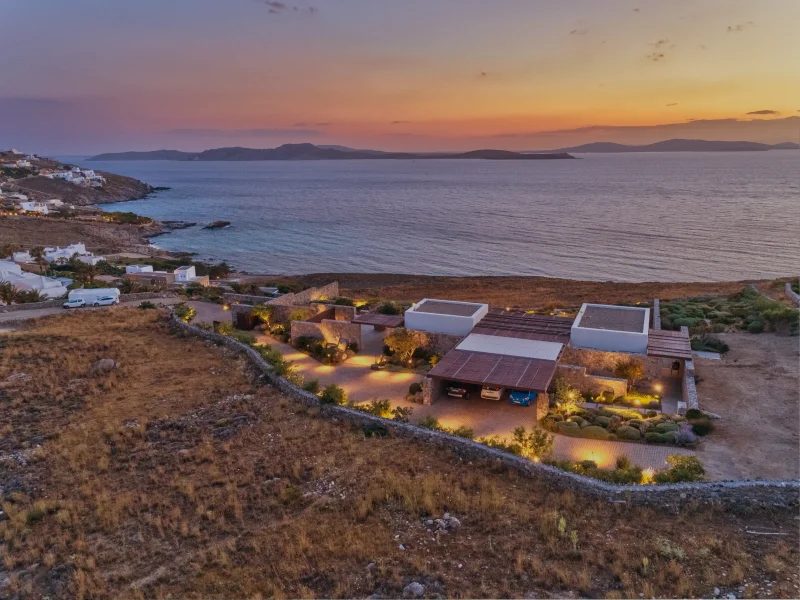
Evening table set on a Mykonos villa terrace above the Aegean
Guides
MYKONOS

The Best Restaurants in Mykonos

Where to Eat, What It Really Costs You, and What Shuts
Cameron Elder
·
September 25, 2026
·
11 min read
An operator's honest read on eating in Mykonos, from charcoal beach tavernas to the beach clubs, including what closes and what catches people out.
Mykonos is one of the few islands where the food conversation is genuinely complicated. The raw material is excellent, because the fish comes off boats you can watch unloading and the vegetables come from farms fifteen minutes inland at Ano Mera. The pricing is not. Between late June and early September the island runs on a summer economy that has very little to do with the rest of Greece, and a plate of grilled fish on a beach terrace can cost several times what the same fish costs in Athens. We place guests in Mykonos every season and we have watched families spend an entire week eating badly at famous addresses. What follows is the working list we would give over the phone, including the parts that do not help us sell anything.

Two Facts That Decide Everything Else

Start here. Mykonos is punishingly expensive in high season, and Mykonos is punishingly seasonal. Most of the kitchens worth crossing the island for run from roughly late April or May to late September or October, and a serious share of the island simply closes for winter, including some of the tavernas people travel specifically to eat at. If you are coming in November, February or March, assume the island is a handful of year round rooms in Chora and Ano Mera and plan around that rather than around a list you found online in August. In July and August the reverse problem applies. Everything is open, everything is full, and the tables available at short notice are usually available for a reason.

Chora, and the View Premium

Chora, the main town, is where most guests eat most nights, and it is the easiest place in Greece to eat badly at speed. The rule is blunt. The closer a table sits to a sunset view in Little Venice, the more of the bill is buying the view rather than the cooking. That is not a scandal, it is simply worth knowing before you order. Kounelas has been grilling fish in the back lanes for decades and still does it properly. Sea Satin Market, sitting below the windmills, is a large, loud, long running operation that gets the fish right far more often than its size would suggest. The small kitchens in the lanes behind the main shopping street are better value than anything on the water, and you can find two or three of them in ten minutes on foot.
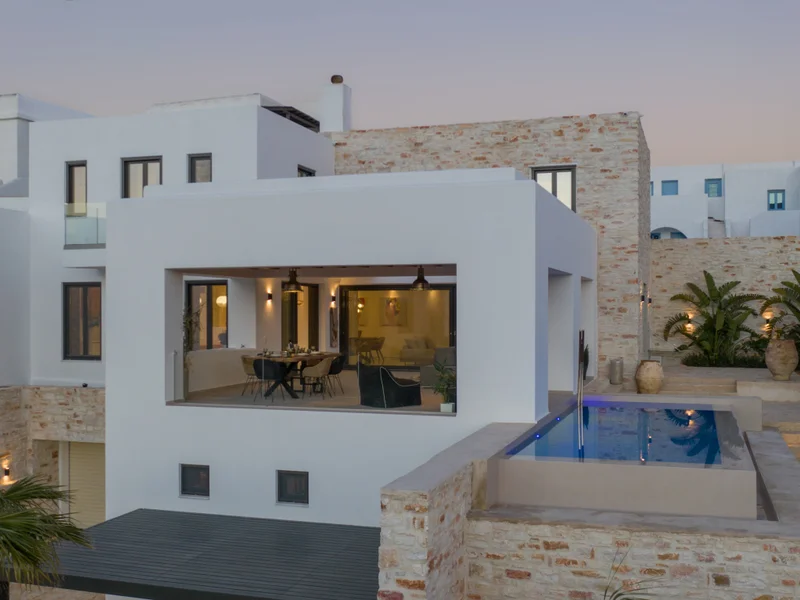
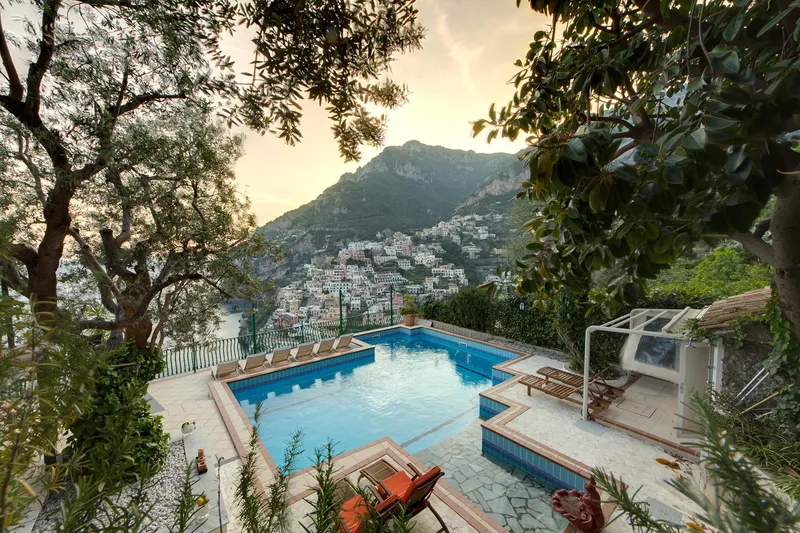
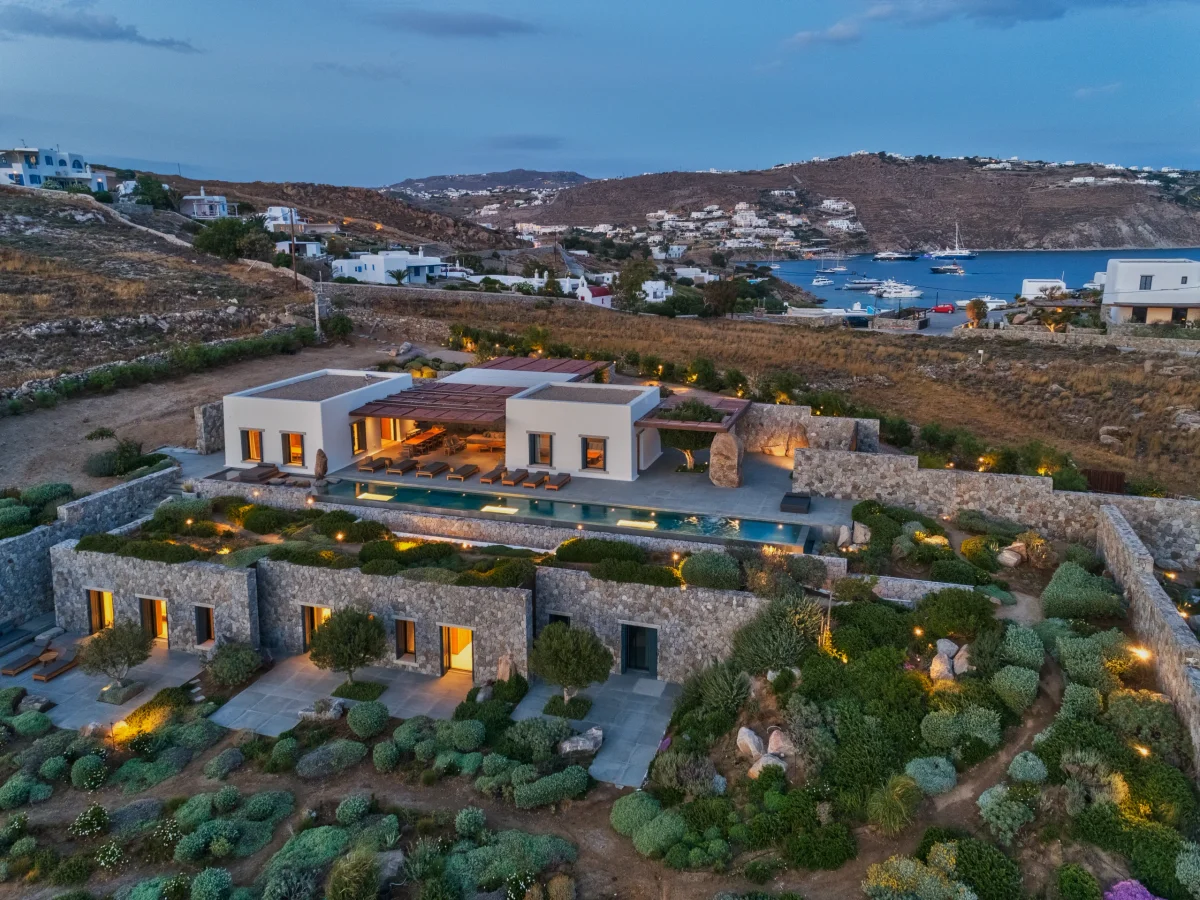
Terrace dining area looking out over the Aegean at dusk
Villa Lavan, Mykonos

Ano Mera, the Inland Correction

Ano Mera is the island's inland village, about twenty minutes from Chora, arranged around a square with the Panagia Tourliani monastery on one side. The tavernas on that square are where a good number of the island's own residents eat, and the cooking is plainer, slower and a great deal less expensive than anything on the coast. This is where to order goat in tomato, kopanisti, the sharp aged cheese Mykonos actually produces itself, and louza, the cured pork you will rarely see on a beach menu. It is also one of the few parts of the island with any real life in the shoulder months. If you are here in May or October and the beach places are shuttered, drive inland before you conclude that the island has nothing left to offer.

The Charcoal Tavernas Worth the Drive

The single most quoted address on the island is Kiki's Tavern at Agios Sostis, which runs without mains electricity, cooks everything over charcoal, does not take reservations and historically does not take cards. The queue in August can run past an hour and there is no mechanism to shorten it, which is either charming or infuriating depending on how hungry the group is. Nikolas at Agia Anna is the calmer version of the same idea, right on the sand, and much easier to get into. Fokos, on the exposed north coast, sits at the end of a road surface that will make a rental car nervous, and the reward is a quiet lunch on a beach that never fills up. All three of them close for the winter.

Beach Clubs, and What You Are Actually Buying

Nammos at Psarou, Scorpios at Paraga and Principote at Panormos are not restaurants in any normal sense, and treating them as restaurants is how people get hurt. Minimum spends on beds and front row tables are real, they move with the calendar, and they are usually confirmed by message rather than published anywhere you can check in advance. The food is competent. The setting, the sound and the shape of the afternoon are the actual product, and on that measure they deliver what they promise. If what you want is lunch, this is a very expensive way to get lunch. If what you want is the afternoon, it works, and it is worth paying for once rather than four times in a single week.

The High End, Honestly Assessed

Mykonos has a serious fine dining layer now, concentrated in the hotels above Chora. Matsuhisa at the Belvedere brought the Nobu style kitchen to the island years ago and remains one of the most consistently well run rooms here. Bill and Coo and Interni both cook at a high level with proper service to match. The honest caveat is that a lot of the top end on this island is imported, and you can eat a near identical meal in London, Dubai or Miami. If you have four nights and you want to remember Greece rather than remember a good restaurant, spend one of them on the imported high end and the other three on fish, tomatoes and a hillside.
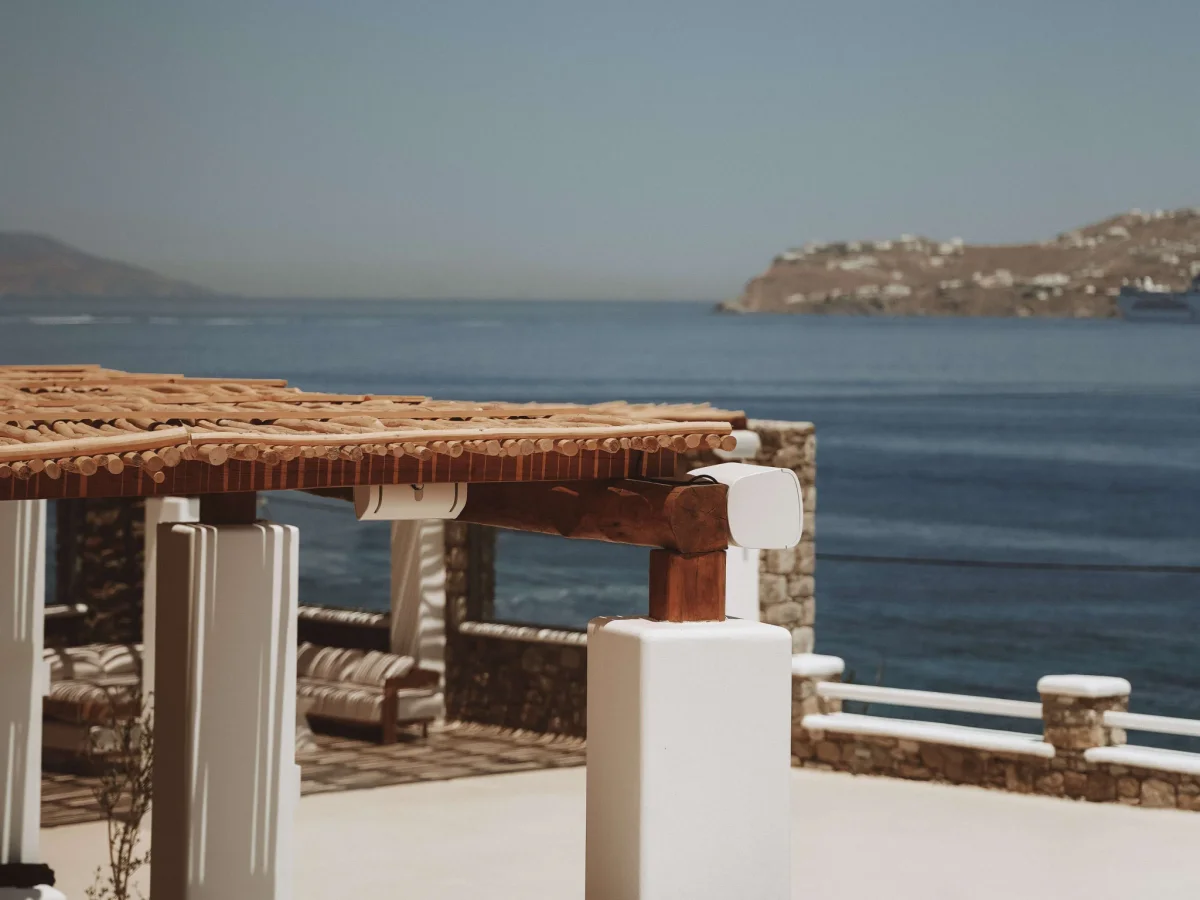
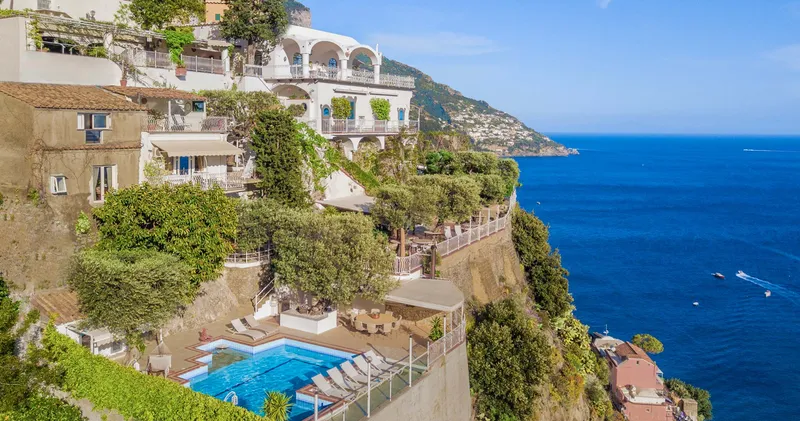
Outdoor dining table shaded by a pergola at a Mykonos villa
Villa Mandra, Mykonos

What to Order Once You Sit Down

Fish is sold by weight almost everywhere, so ask for the price per kilo and ask to see the fish before it is cooked. A whole fish chosen at the counter and grilled plainly with oil and lemon is the entire point of eating here, and anything arriving under a heavy sauce is usually hiding something. Beyond that, order the local things rather than the international ones. Kopanisti on bread, louza, fava from Santorini, tomato fritters, wild greens with lemon, and whatever is chalked on a board rather than printed on a laminated menu. Greek wine has improved enormously in the last decade and the Assyrtiko on most lists is better than the imported white sitting next to it at a lower price point.
Booking Lead Times, Realistically

For July and August, the well known rooms in Chora and the hotel restaurants want four to six weeks of notice for a group of six or more, and a prime hour at a beach club can want considerably longer than that. Shoulder season is a different world and a day or two is usually enough. Three practical notes. Many places confirm over WhatsApp rather than by email or a booking widget, so expect the process to feel informal. A confirmed table is often held for fifteen minutes and no longer. And a table for eight is a completely different request from a table for four, because very few of these kitchens have the floor space to improvise on the night.

Cash, Cards and the ATM Problem

Cards are accepted almost everywhere in Chora and at every hotel restaurant. They are not accepted at several of the beach tavernas that people specifically travel to eat at, and the phrase you will hear is that the card machine is not working today, which may or may not be literally true. Carry enough cash for a full lunch for the whole group before you drive to Agios Sostis, Fokos or Agia Anna, because the nearest reliable cash machine is back in town and the round trip will cost you the table. Tipping is not obligatory in Greece the way it is in the United States, and rounding up or leaving five to ten percent for good service is normal and welcome.

Getting There and Parking

The island has one real road network and it was not designed for the volume it now carries. In August, the approach to Psarou and the lanes around Ornos can gridlock at lunchtime, and the walk from wherever you eventually park is always longer than the map suggested. Quad bikes and scooters are everywhere and the accident rate is exactly what you would expect on a hot island with unfamiliar roads and a lot of drinking. If the group is going to drink, book a driver in advance rather than assuming a taxi will appear, because the taxi fleet here is famously small and at two in the morning outside a beach club there is effectively no supply at all.

Timing, Dress and Other Small Traps

Greeks eat late. A nine thirty or ten o clock table is normal and an eight o clock table will be mostly other visitors. Lunch runs long on this island and a table booked for two often finishes at five, so do not stack a lunch and an early dinner on the same day. Dress codes at the beach clubs are not written down anywhere but they are enforced socially, and wet swimwear at a lunch table is the one thing that reliably gets a group moved. Most terraces are open to the wind, and the meltemi in July and August can be strong enough to close an exposed terrace at short notice, which is normal here rather than a sign of bad management.

The Argument Against This Entire List

Here is the thing we tell guests that costs us nothing and costs the restaurants a great deal. On an island this expensive and this crowded, the best meals of a week in Mykonos are often eaten at the house. A cook who buys the fish at the port that morning and grills it on the terrace will beat most of the beach restaurants on quality, will beat all of them on price, and removes the two worst parts of the day, which are the drive and the wait. If a group of eight goes out six nights in August, the food bill will be startling and at least two of those dinners will be forgettable. Cook at home three nights and go out three, and the week is both better and cheaper.

Where We Can Actually Put You

We will be straight about our own position. Mykonos is a hard island to hold inventory in and we have two houses here rather than twenty. That is not a sales pitch and we would rather say it than pretend otherwise, because the worst outcome for everyone is a guest who arrives expecting a choice we do not have. What we do have is a properly worked local network for the parts that are hard to arrange from abroad, which is the table nobody can get, the driver who actually turns up, the boat day that does not fall apart at eleven in the morning, and a cook who knows which stall at the port has the good fish on a Tuesday.
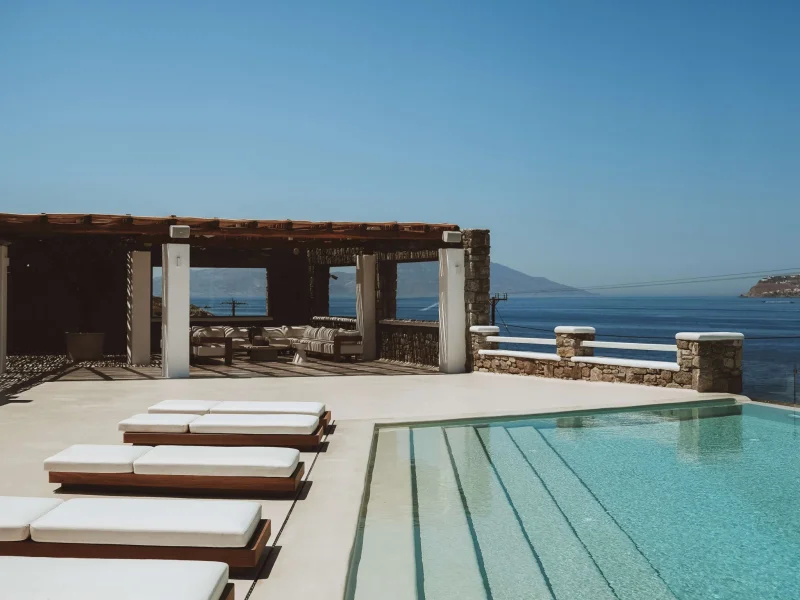
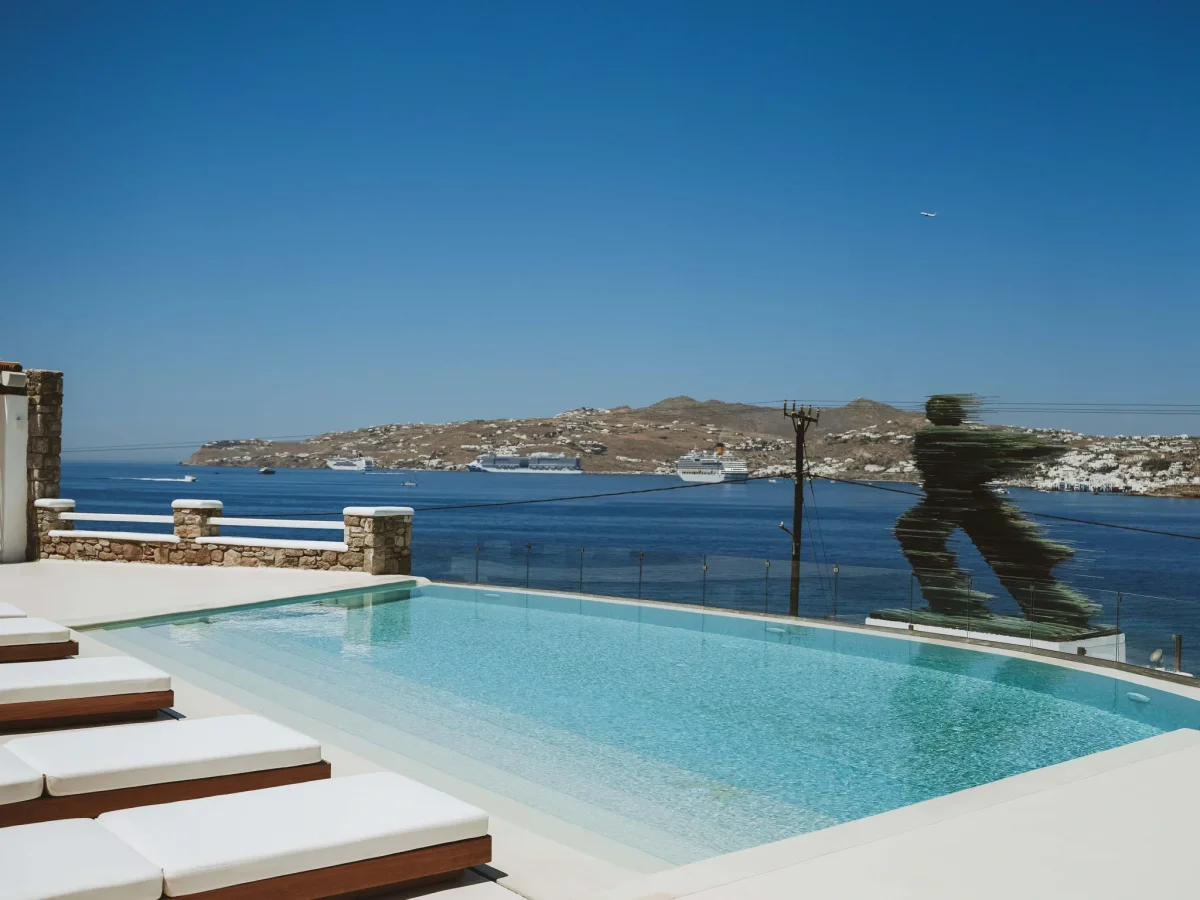
Sun loungers and a pool terrace overlooking the sea in Mykonos
Villa Lavan, Mykonos

A Necessary Caveat

Every list of restaurants on a Greek island is a snapshot with a short shelf life. Rooms change hands over winter, chefs move between hotels, a taverna that was the best on the island for fifteen years can sell and lose everything that made it work, and a place that reopens under the same name is not always the same place. Treat this as a starting point rather than a guarantee. We re-check openings, ownership and booking policy before we put a guest anywhere, and we would encourage you to do the same or to let us do it, because arriving somewhere that closed in March is a poor way to spend an evening on an island this hard to move around.
Key Takeaways
Mykonos is brutally seasonal, and a large share of the island's best kitchens shut completely between roughly late October and late April.
Beach club minimum spends are real and are the fastest way for a group to lose control of what it is spending on food.
The best fish on the island is usually eaten at a paper tablecloth taverna, not at the address with the loudest sound system.
Book the well known rooms four to six weeks ahead for July and August, because short notice availability in peak season usually exists for a reason.
Carry cash, because several tavernas worth the drive still take nothing else and the nearest working ATM can be a long way back.

Frequently Asked Questions

When do restaurants in Mykonos actually close for the season?
Most beach tavernas and beach clubs run from roughly late April or May to late September or October, and many close completely outside that window. Chora keeps a smaller number of rooms open year round, and Ano Mera keeps more than people expect. Dates move every year with the weather and with the ferry schedule, so check directly rather than trusting a list you found online.
Do I need to book restaurants in Mykonos in advance?
For July and August, yes. Four to six weeks is a realistic lead time for the well known rooms with a group of six or more, and prime beach club hours want longer. In May, June and late September a day or two is usually enough. Several places confirm over WhatsApp rather than email, so expect an informal process rather than a booking widget.
Are beach club minimum spends in Mykonos real?
Yes, and they are one of the most common budget shocks we see. Beds and front row tables carry a minimum that moves with the date and the position, and it is usually quoted by message rather than published. Ask for the number in writing before you confirm, and treat a beach club as an afternoon you are buying rather than as a lunch.
Which Mykonos restaurants are cash only?
Several of the charcoal beach tavernas, including some of the most talked about ones, have historically taken cash only or run an unreliable card machine. Agios Sostis, Fokos and parts of Agia Anna all fall into this category. Draw cash in town before you drive out, because there is no convenient machine at any of them and the drive back is long.
Where do locals eat in Mykonos?
Ano Mera, mostly, and the back lanes of Chora away from the waterfront. The inland village serves goat, wild greens, kopanisti cheese and louza at prices that bear no relation to the beach, and it stays open further into the shoulder season. It is a twenty minute drive from town and it is the single best value decision most visitors never make.
Is the food in Mykonos worth what it costs?
Sometimes. The fish is genuinely excellent and a plainly grilled whole fish at a beach taverna earns its money. A lot of the high end is imported and you could eat the same meal in several other cities for less. Our honest advice is to pick two or three set piece meals and eat simply for the rest of the week.
What should I order at a Mykonos fish taverna?
Ask the price per kilo, go to the counter, choose the fish yourself and have it grilled plainly with oil and lemon. Add kopanisti on bread, tomato fritters, wild greens and a local Assyrtiko. Anything arriving under a heavy sauce is usually solving a problem that a good fish would not have had in the first place.
Should we eat out every night in Mykonos?
We would say no, and that argues against our own restaurant list. A cook at the house buying fish at the port that morning will beat most beach restaurants on quality and all of them on price, and removes the drive and the wait. Three nights out and three nights in makes for a better week than six nights out.
Follow the journey @erentalsexclusive + @aurelseyez
Villa tours, destination guides, and behind-the-scenes content from the team on the ground
Cameron Elder
Founder, ERentals Exclusive
greece
mykonos
food
restaurants

See it in motion

From the feed

Real stays, real light. Tap any film to watch it full screen.

Stay in the loop
© 2026 ERentals Exclusive